Years ago, I stumbled upon a sentence in the results section of a study looking at the obesogenic effects of soy oil. It mentioned that the enzyme pyruvate dehydrogenase kinase (PDK) was upregulated by these types of oils. I thought to myself, ‘so, that’s why everybody struggles thiamine sufficiency.’ PDK downregulates the key thiamine-dependent enzyme called pyruvate dehydrogenase complex (PDHC). Around that time, I also learned that a cancer drug called DCA was able to reduce, if not eliminate tumor growth by blocking PDK. I filed both of those knowledge points away for a few years, not fully appreciating the impact of this enzyme on health or its role as a sensor of environmental toxins and nutrient deficiencies. Recently, however, I began studying the metabolic underpinnings of adenomyosis and endometriosis and I’ll be damned if this enzyme isn’t central to these and a long list of other disease processes as well. Importantly, upregulation is largely environmentally triggered and is acutely sensitive to thiamine status.
What Is Pyruvate Dehydrogenase Kinase?
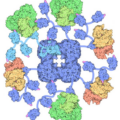
PDK is a metabolic sensor enzyme located within the mitochondria in cells throughout the body. Its job is to redirect glucose from oxidative phosphorylation pathway (OXPHOS) in the mitochondria towards cellular glycolysis in order to conserve carbohydrates during starvation. Here, starvation can refer to actual starvation from the absence of food or to a functional starvation associated with the inadequate intake of specific nutrients and/or in presence of a variety of toxicant exposures.
PDK comes in four different shapes or isoforms (PDK1-4), coded by four different genes. Though largely similar to each other (70% homology), each isoform is believed to exhibit tissue distribution preferences. There appears to be a lot of overlap, however. That said, most research suggests that PDK1 prefers to hang out in the mitochondria of the heart, pancreatic islets, and skeletal muscles, along with PDK4, but PDK4 has also been found in the liver, kidney, and in the lactating mammary gland. PDK2 seems to be everywhere, except in the spleen and lung, while PDK3 is confined to the testicles, kidneys and brain. Though not always mentioned, there is an awful lot of research on the role PDK1 in the brain, where it is critical to neurodevelopment and across the lifespan (here, here, here).
Not unexpectedly, over expression of each of the PDK isoforms has been found in different types of cancer. For our female readers, PDK1 and PDK4 have been found to be over expressed in the uterine or ovarian tissues in a wide variety of reproductive disease processes including adenomyosis, endometriosis, fibroids, and PCOS and dysregulated with infertility and with pregnancy complications (here, here, here). In the ovaries, and depending upon the type of cancer, both PDK1 and PDK2 appear to be overexpressed. Finally, male infertility appears associated overexpression of PDK2 and PDK4 in sperm, which coincidently can be stress related.
Taken together, PDK over-expression is a key driver in a variety of metabolic diseases processes marked by poor mitochondrial energetics, often leading to unbridled cell growth.
Why Is PDK Important?
PDK exerts its influence over mitochondrial energetics by blocking the PDHC. The PDHC is the gatekeeper to mitochondrial energy metabolism. Its job is to decide whether pyruvate, the end product of intracellular glucose metabolism, is metabolized into ATP in the mitochondria or whether it stays in the cell and is diverted towards producing molecules for cell function and growth through what is called the pentose phosphate pathway (PPP). The PDHC is the tether between the two pathways responsible for maintaining the balance between energy production and molecule synthesis.
When the PDHC is open for business and pyruvate is allowed into the mitochondria, we get up to ~32 molecules of ATP and managed cell substrate synthesis through the PPP. This is compared to only 2 ATP, plus a lot of lactate, and (hyper) activation of the PPP when the PDHC is closed.
Since there are other pathways to ATP and to oxidative metabolism, including fatty acids, amino acids and ketones, blocking the glucose pathway by closing the PDHC is not immediately or recognizably problematic, so long as the other pathways remain active. Indeed, cells switch between substrates regularly depending upon need and fuel preference. The heart, for example, derives up to 70% of its ATP from fatty acids. It is the loss of the ability to switch between fuel sources, along the loss of efficiency in glucose oxidation and the continuously activated PPP pathway that wreak havoc on cell function when the PDHC is inoperable.
A Functional Thiamine Deficiency via PDK Upregulation
The PDHC is comprised of three subunits and each requires a nutrient cofactor in order for the enzyme to work. The first requires thiamine and second and third require lipoic acid and riboflavin, respectively. Although deficiencies in lipoic acid or riboflavin will cause problems with the PDHC, and effectively limit pyruvate entry into the mitochondria, inadequate thiamine, because it is required for the very first subunit, which controls the first step of this transfer process, is absolutely detrimental to energy metabolism and to health.
PDK activation blocks the first, thiamine-dependent subunit of the PDHC, evoking a functional thiamine deficiency, which not only elicits all of the consequent shifts in glucose metabolism discussed above and associated symptoms discussed throughout this website, but in so doing also guarantees its own continued activation because PDK is allosterically regulated by thiamine status, meaning although it does not directly bind to the enzyme, it influences the molecules that do and effectively shuts everything down.
Specifically, thiamine deficiency reduces PDHC capacity and diminishes mitochondrial OXPHOS. This then decreases the feedback control exerted by acetyl-CoA NADH, and ATP molecules on PDK activation, effectively unleashing it. Thiamine deficiency also shifts energy production to glycolysis, increasing acidification the cell by amassing large concentrations of lactate. This in turn, upregulates and untethers the PPP to compensate resulting in the excessive cell proliferation. Finally, thiamine deficiency induces molecular hypoxia, which prompts HIF stabilization that then also increases PDK activity.
All of these shifts in metabolism are the result of a simple vitamin deficiency. Importantly, however, the vitamin deficiency may not be a frank deficiency caused by reduced intake or starvation, although this is entirely more common than recognized these days, it may be relative to increased demand driven by the chemical induction of PDK. PDK upregulation is exquisitely sensitive to environmental and pharmaceutical chemicals and components of processed foods. In other words, environmentally upregulated PDK may be driving a PDHC blockage at the thiamine dependent subunit, effecting all of the same metabolic patterns as deficiency, but in the face of presumably sufficient thiamine.
What Upregulates PDK?
Just about everything that makes modern life easy, not necessarily healthy, but easy – upregulates PDK. Among the most pervasive effectors are soybean oils, plasticizer chemicals, and certain classes of pharmaceuticals.
Soybean oil (SO), which is the most common seed oil in vegetable oils and is used ubiquitously in processed foods as well as in home cooking, upregulates PDK4 at 4x the rate of other fats while simultaneously re-regulating a number of genes associated with disease processes such as obesity, diabetes, inflammation, mitochondrial dysfunction, and/or cancer. More generally, fats tend to upregulate PDK2 and PDK4 in muscle, but it is only recently that investigators have been looking specifically at the composition of the fats. The high linoleic acid content of SO, but not other fats, likely accounts for the stronger and more persistent upregulation of PDK.
Phthalates, a class of chemicals used in plasticizers to make PVC more pliable, upregulate PDK by upregulating peroxisome proliferator activated receptors (PPARs). PPARs are a group of nuclear proteins that regulate gene expression, which in turn upregulates PDK. Phthalates are especially problematic because they are everywhere and almost unavoidable. Phthalates are in home products (vinyl flooring, adhesives and synthetic leather products), toys, personal care products (nail polish, perfumes, deodorants, hair gels, shampoos, soaps, hair sprays, and body lotions, to help lubricate other substances in the formula and to carry fragrances), food packaging, and medical devices (IV tubing, blood bags, and catheters). Exposure comes from skin absorption, ingestion, or injection (leaching from plastic containers/medical products), and inhalation. The highest exposure for most people, outside of chemical factories or medical exposures, is off-gassing from products within the home, particularly during hot and humid months. Oh, and phthalates are also endocrine disruptors, obesogenic, oncogenic and linked to neurodegeneration.
BPA and BPA alternatives used to make the plastic resins for food/drink packaging, to line metal food cans, in eyewear, and in thermal receipts activates PPAR and thus are likely to also activate PDK.
Dexamethasone, a long acting corticosteroid that mimics the effect of endogenous cortisol, is used to reduce inflammation in allergies, asthma, autoimmune and some cancers like multiple myeloma. It upregulates PDK4 in muscle tissue and in the heart, but downregulates PDK1 in bone.
A class of medications called fibrates are PPAR agonists and thus upregulate PDK. Ironically, these medications are used to treat diabetes and hyperlipidemia, conditions precipitated by low thiamine, reduced PDHC activity and PDK upregulation. Similarly, in addition to their primary effect of lowering LDL and cholesterol via the HMG-CoA pathway, statins are PPAR agonists. Equally ironically, that action is considered cardio-protective.
Fatty acids increase PDK activity short term, especially in the heart and the liver. In the longer term, high fat intake, likely when paired with high carbohydrate intake, and I suspect, low relative thiamine intake, disrupts feedback mechanisms leaving PDK upregulated and resulting in metabolic inflexibility and insulin resistance. Ketones, synthesized in the liver in response to low carbohydrate, high fat diets, and fasting also upregulate PDK. In cases of high fatty acid intake, fasting, or ketogenesis, PDK is elevated in neurons and glial cells.
What Downregulates PDK?
In general, nutrient sufficiency and health more broadly appears to keep PDK in check, along with reduced toxicant exposures. Adequate thiamine is a key regulator in this pathway for the reasons mentioned above, but vitamins A and C also play a role.
Retinol, the active form of vitamin, has perhaps the most direct, albeit somewhat complicated influence on PDK2 and PDK4 via its own receptors on the enzymes. In cell culture models, deficiency appears to upregulate PDK4 in the heart, kidney, liver and adipocytes. PDK2 may be downregulated relative to vitamin A, but this is not clear, at least to me. PDK1 and 3 have not been studied that I can tell. The role of vitamin A in modulating PDK behavior may be context and tissue specific.
Insulin suppresses PDK2 and PDK 4 in skeletal muscle, independently of other factors.
High dose vitamin C downregulates PDK in cancer cells, potentially via the reduction of HIF proteins, which then reduces the expression of KRAS oncogenes. Notably, KRAS mutations drive uncontrolled cell growth in a variety of cancers, as well as in adenomyosis and endometriosis.
Dichloroacetate (DCA), is a drug designed specifically to block PDK, and it does. In so doing, it increases mitochondrial capacity, reduces lactate, reregulates the PPP, and importantly, reduces cell proliferation and migration in tumors. It also reduces insulin resistance. Other compounds, based upon the DCA molecule, have not been as successful.
Pyruvate dehydrogenase phosphatase, is an endogenous regulator of PDK activity, deserving of its own post. Briefly, however, the two isoforms of the PDP block PDK activity to restore OXPHOS and redirect energy metabolism from the cell back to the mitochondria. PDP is dependent upon adequate magnesium to function and is activated by the influx of calcium, as with muscle contraction or other excitatory impulses. Polyamines, products of amino acid metabolism, used to fuel rapid cell growth, activate PDP as well, except, apparently, in cancer and other disease processes of unhindered cell growth. In plants, a specific polyamine transporter that requires thiamine, is involved in this process, but I do not see evidence of its existence in humans. That said, the magnesium requirement is intriguing, particularly when one consider over half of the population is deficient in magnesium and magnesium is required for the activation of thiamine.
Final Thoughts
From every angle, inadequate thiamine appears central to disease in general, but especially in disease processes marked by metabolic dysfunction and unfettered cell growth – and why wouldn’t it be, given its role in mitochondrial energetics? Persistent PDK upregulation, driven in large part, if not entirely, by modern environmental and dietary exposures may be culpable. Sadly, it is but one of many mechanisms whereby environmental, pharmaceutical, and dietary components increase the demand for thiamine. Thiamine insufficiency, along with all of metabolic cascades initiated in response, PDK upregulation included, is modifiable with increased intake. When combined with a reduction in toxicant load e.g. avoiding substances that reduce thiamine transport or absorption, impair mitochondria, limit thiamine activation, along with those that increase PDK activity, metabolism improves, and systems previously activated to compensate for the reduction in mitochondrial capacity, unwind and reregulate.
We Need Your Help
More people than ever are reading Hormones Matter, a testament to the need for independent voices in health and medicine. We are not funded and accept limited advertising. Unlike many health sites, we don’t force you to purchase a subscription. We believe health information should be open to all. If you read Hormones Matter, like it, please help support it. Contribute now.
Yes, I would like to support Hormones Matter.
Photo by Milivoj Kuhar on Unsplash