

How much of our understanding of molecular mechanisms related to mitochondrial energy metabolism is wrong because the chow fed to the mice and rats used for this research is heavily supplemented with vitamins and minerals at quantities exceeding that of an equivalent human diet? I have been pondering this question for a few years now, but this morning the magnitude of the problem became clear when the pathway I had been studying was viewed positively when (hyper) activated in rodent research, but one that was clearly not so in humans. This is a pathway for which drugs had been designed to activate based upon the patterns identified in said research; research where the animals are fed a steady diet containing markedly higher concentrations of vitamins and minerals than humans will ever get, unless supplementing, and where the animals are sheltered from the bevy chemical stressors that deplete those same nutrients. So, on top of all of the other challenges associated with extrapolating data from animal research to humans, deriving data about the ‘normal’ behavior of molecular pathways that are incredibly sensitive to nutrient status and chemical exposures from well fed and environmentally isolated animals is extraordinarily problematic.
An Eye Opening Experience
As someone not trained in animal research, I never considered chow composition as influencing variable on all research. Sure, if the research question involved diet or nutrients specifically, the composition of the chow would obviously affect outcomes, but that there were would such stark differences in relative micronutrient content compared to humans is something I had not contemplated. A few years ago, however, I worked briefly with a foundation sponsoring some research into the various effects of thiamine supplementation on health. One series of investigations looked into genetic and metabolomic changes, along with variety of cognitive and behavioral measures, relative to a diet high in soybean oil, with and without thiamine supplementation. Since the foundation disbanded and the funding was cut, except for a few posters and abstracts, the results were never published. It was disappointing, because the results were remarkably enlightening – despite the issues with the chow.
That said, what struck me early on was the high intake of thiamine even in the control mice. In this particular set of experiments, the control mice were getting ~2.5mg/kg of bodyweight, while the mice in the two experimental ‘high thiamine’ groups were getting 51 and 102 mg/kg of bodyweight. This is an insane amount thiamine, even in the control group. By comparison, the average human eating a lot of processed and fortified foods, which is never a good idea, may get up to 4mg per day total and a large majority Americans get less than recommended daily allowance (RDA) of 1.1-1.2 mg/d. If he/she weighs 70kg that works out to between .02mg/kg and .06mg/kg daily – a minute fraction of what a lab mouse is given.
Why such a high intake of thiamine? It was explained to me that mice need more thiamine because they have a higher metabolism than humans.
Okay. Sure. But…
This never sat right with me, but not having the experience lab animals, I let drop and moved on. And then I began studying some molecular pathways that just happened to be influenced by thiamine and it occurred to me that conclusions drawn may not accurately reflect the true behavior of those pathways because of the chow fed to these animals. I began digging, and oh, what a mess this is. Not only do most of the published studies not list the vitamin concentrations in the particular chow used and make the assumption that all them contain equivalent amounts, they do not, but some may misinterpret the metrics. Most chow labels report nutrient doses in mg/kg of diet consumed by the animal. I suspect, in some studies they are using, or at least reporting, mg/kg of the animal’s body weight. Is the animal really consuming 5mg/kg of body weight or 5mg/kg of food? It is not always clear. Alternatively, other studies, including the one I reviewed for the foundation, scale the doses between the species using a multiple of 12. Apparently, this is to account for differences in body surface area. It is based upon the presumed rate of which organisms convert food into energy (heat dissipation) and it relies heavily on measures of body mass relative to caloric intake such that while larger animals consume more calories, their ‘metabolism’ by unit of mass is lower. This is a linear metric developed to estimate drug toxicity and may not accord with nutrient needs. Importantly, kcal burn and body mass are poor indicators of metabolic energy (here, here, here).
Reviewing methods sections from random studies that I have reported on in the past, there is no way to tell how much thiamine or other nutrients the animals actually consumed, unless the study was specifically designed to assess something related to thiamine. Even then, however, most studies assessing thiamine deficiency experimentally either use diets that include no thiamine and/or induce deficiency by administering anti-thiamine molecules like oxythiamine or pyrithiamine. That said, whatever the actual amount, even at the lowest possible intakes to prevent deficiency, the animals were consuming far more than a human would consume, and this is what troubles me most. Do lab rodents really require more thiamine than humans or have we simply underestimated human requirements? I believe it is the latter, but let us explore the basis for this argument before drawing conclusions.
Thiamine Requirements For Mice
According to the literature, the daily thiamine requirement for mice used experimentally ranges from ~2ug of thiamine per day up to 6ug per day. This does not sound like much unless we consider that mice weigh only about 25g. This means that a lab mouse gets at least somewhere between .08 -.48 mg/kg. In a 70kg human, this equals 5.6 – 33 mg daily. The human RDA or DRI (daily reference intake) is only 1.1-1.2 for women and men respectively, per day, and accumulating research shows that many people do not even get that much. Nevertheless, by these metrics, the lab mouse is getting 5 -~30x the amount of what is considered necessary for the average human, and as was illustrated previously, if other metrics are used, these animals get even more thiamine.
This begs the question, how are we calculating the metabolic needs of these animals such that they require more nutrients than we do? It turns out that, like anything, the answer depends upon what assumptions we make and how we factor those assumptions into the math we create to estimate those values. As I mentioned previously, the research I reviewed was using a drug toxicity metric that included surface area differences to calculate dosages between humans and mice. This, apparently, is a common metric. Others include different allometric variables like bodyweight and/or caloric intake to calculate metabolism. All of these are linear calculations where the change in one variable is assumed to perfectly and linearly correspond to the other. Biology is not linear, and at some point researchers recognized this and began multiplying the exponents of the body surface area. Needless to say, multiplying by different exponents changes the result dramatically. Whether it changed its accuracy, however, is questionable.
Just How Much Does Nutrient Intake Vary?
Per a review of such things, rodents get between .2 -.26ug of thiamine daily with three different chow formulas. The human equivalent dose (HED) for these values ranges anywhere from 2.8 mg/d to 69 mg/d depending upon which variables are included in the calculations.
For example, if the calculation considers kcal required per day to maintain function (a 25g mouse requires 15kcal daily, while a 70 kg human requires 2000 kcal per day), the human equivalent for daily thiamine intake would be from 2.8-3.3 mg – double and triple the current RDA/DRI. In contrast, if the calculation uses body weight as the key variable, the human equivalent would be 56-69mg per day, or more, as bodyweight increases. This is ~50x more than current RDA/DRI values.
Conversely, if we run the math backwards, the 1.2 mg per day thought to be acceptable male humans weighing 70kg equals only .017mg/kg or .0004mg per day total – clearly below the intake of the chow fed lab mouse (likely below that of the wild mouse), but also, well below what is required prevent deficiency in the mouse. Although I am focusing on thiamine, because that is what I know best, the issues with scaling dosages between mice and humans carries the same problems for each of the micronutrients.
…extrapolations of nutrients from mice to humans overestimate the nutrient intake for a human, while scaling for humans to mice would underestimate nutrient intakes for a mouse and theoretically result in nutrient deficiencies.
I will ask the question again: are we really overestimating nutrient doses when scaling from mice to humans or have we fundamentally underestimated the nutrient requirements of humans all along?
The Development of Human Nutrient Requirements
The nutrient estimates of humans to which all animal research is compared is equally flawed but for entirely different reasons than those of animal estimates. Not only was metabolism not considered as variable in human dosing, and is thus not scalable in either men or women of difference sizes or from humans to mice or any other species, but our assumptions regarding the accuracy allometric models of metabolism are likely incorrect as well.
Nutrient requirements for humans were developed using food surveys of different populations. From the average caloric intake of an average man (70kg), thiamine and micronutrient consumption more generally, were estimated. Adequacy was determined purely upon the absences of observable symptoms of deficiency. A number just above the point at which deficiency symptoms were observable became the recommended daily dose. Doses for women and for pregnancy were largely guestimates based upon presumed differences between male and female size, activity levels, and calorie consumption.
There was never a mg/kg dosing strategy developed for micronutrients for humans, so there is no ability to scale relative to bodyweight, caloric intake, or surface area, as there is with lab animals. Neither were there ever any attempts to calculate the actual metabolic rates relative to micronutrient needs, then or since. The human micronutrient standards were developed based entirely on observational data and the absence of deficiency symptoms. Like many accepted medical truths, there was no math, just observation, some contention, but ultimately, consensus, and eventually, entrenchment – even when data suggested otherwise. Notably, there have been no changes to the RDA/DRI for thiamine for over 80 years.
That said, how do we really know if the thiamine requirements for humans are less than that of rodents? Could the recommended dose in humans, which causes deficiency in mice, also be causing deficiency in humans but the complexity of our biology and variability of our environment, paired with the longevity differences between the species, mask that deficiency – sometimes indefinitely? Possibly.
A Question of Metabolism
And then there is this: how do we really now that mice have a higher metabolic rate than humans? We don’t, and that is the other problem with scaling micronutrient needs between rodents and humans. We simply have no logical basis upon which to make these calculations. Certainly bodyweight, surface area and caloric intake differences are important, but those variables do not, in any way, address the fundamental question about metabolism, which is energy used. Energy is the basis for metabolism. Energy usage should be in the calculations we use to estimate nutrient requirements and it is not.
In study published in 2024, researchers did something almost heretical – they added energy variables to metabolic calculations and standardized for body mass, fat free mass, and environmental temperature to more appropriately estimate the energetic needs of rodents, versus other animals, versus humans. In doing so, they were able to calculate expenditures with a common metric that could compared across species: megajoules per day (MJ/d). From there, they calculated total energetic expenditure (TEE), resting energetic expenditure (REE) and active energetic expenditure (AEE).
By these estimates, humans have higher metabolic demands than rodents (and many other animals including apes). Per their research, the TEE of humans globally was ~27% greater than that of rodents. In the US, where the population is largely sedentary and overweight, TEE for humans was still 18% higher than that of rodents. While the AEE are largely the same between rodents and humans (~1% difference), the differences in resting metabolic needs are huge. Humans require 40-45% more energy at rest (US and global, respectively) than rodents.
Per the authors of the study, humans evolved to be an ‘energetically extravagant species’ due in part to our larger brains, which consume an awful lot of energy, even when we do not use them. None of the previous studies considered this variable (or several others) when calculating the presumed metabolic differences between the species.
If humans do indeed have higher metabolic needs than rodents, then shouldn’t we also need comparably higher micronutrient intakes to sustain optimal energetic capacity?
Comparing Well Nourished Mice to Malnourished Humans
To the original question that sent me down this rabbit hole, how do we know what we think we know about the activity of different nutrient- sensitive and nutrient – dependent proteins, either in isolation or within a pathway, when we study those proteins in animals that are very well nourished and the species to which we are extrapolating those findings is most decidedly not? And a question that I did not address, how do we know what we think we know when the study animals are never exposed to the bevy of nutrient depleting chemicals that the human is exposed to? We do not, and that is the problem.
This means that all of the conclusions I (and others) have drawn based upon animal research, where the animals receive far and above the nutrients that a human might, are likely skewed, if not entirely incorrect. That is a sobering realization, particularly when one considers all of the other problems associated with extrapolating data from lab animals to humans. Moreover, this is yet another reason why humans need more thiamine and other nutrients than are currently recommended by governmental entities.
We Need Your Help
More people than ever are reading Hormones Matter, a testament to the need for independent voices in health and medicine. We are not funded and accept limited advertising. Unlike many health sites, we don’t force you to purchase a subscription. We believe health information should be open to all. If you read Hormones Matter, like it, please help support it. Contribute now.
Yes, I would like to support Hormones Matter.
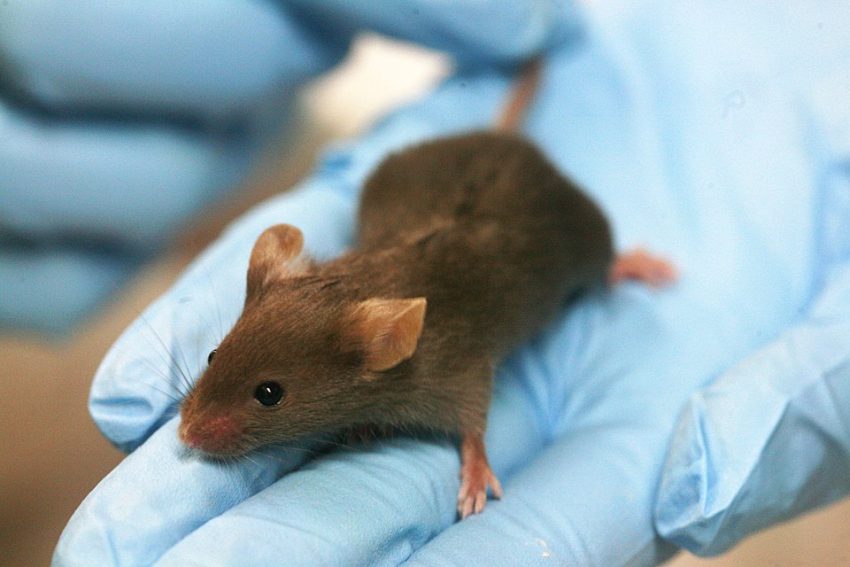
Image: Rama, CC BY-SA 2.0 FR, via Wikimedia Commons












It might seem that lab mice live in more favorable conditions, but it’s very easy to put them under chronic physiological stress. Mice must be kept in a warm environment, as high as 31°C, but most labs maintain only 22°C due to outdated and ill informed guidelines by the National Research Council.
At room temperature their sympathetic nervous systems remain in a state of emergency in response to perceived cold stress. Chronic stress wastes energy, increases nutritional demands and accelerates aging, but there is also a consequence specific to mice – catecholamines are known to cause rapid tumefaction in mice. Otto Warburg’s research indicated that metabolic derangement is a universal feature of all tumor cells.
As an aside, we may consider much of research conducted on mice to be misguided or even fraudulent.
The impact of housing temperature induced chronic stress on preclinical mouse tumor models and therapeutic responses: An important role for the nervous system
Adv Exp Med Biol. 2017;1036:173–189
https://pmc.ncbi.nlm.nih.gov/articles/PMC9423006/
I agree, there is much about comparing lab animals to humans that is problematic.
Mice also get way more zinc than humans, apparently about 10 mg/kg. Hmmm