thiamine

Thiamine Deficiency, Fatigue, and Erectile Dysfunction

13.7K views

Hello, I am a 33 year old male who has been experiencing a vast range of symptoms over four years including progressively worsening fatigue, brain fog, muscle weakness, body pain and erectile dysfunction. Only a few months ago, I discovered that there could be a relevance of thiamine in all of my issues. All of my health problems worsened at the age of 29 years old. More context can be found below.

Childhood Problems

I had problems with:

  • Concentration and focus
  • Emotionally down
  • Prone to common cold (infection)
    • Unfortunately I was put on antibiotics more often every few months as a kid (amoxicillin)
  • Brain fog
    • My brain is slow at processing things, there is always a latency associated with me to perceive things.

Health Journey

My health journey is complex. In the sections below I have tried my best to capture the sequence of events and diagnostic data we have so far. I began developing fatigue, not feeling refreshed even after sleep in my early 20’s but I continued pushing myself – not knowing how to address this. Irrespective of these limitations, I was an active adult – I was working out regularly, lean and athletic. My food habits were clean i.e., no processed foods, no alcohol, but majority of my calories were from carbs. My macro mix was approximately 50% carbs, 25% fat, 25% protein. Being a South Asian, white rice is part of my staple diet.

Things started to go really bad around 29 years of age when my fatigue, brain fog, muscle weakness, body pain worsened and nocturnal erections started to degrade. I was not able to obtain erection without Viagra. I started my health journey to fix my erectile issues. Because of my appearance (lean and athletic) all the doctors refused to even work with me, saying the issues were psychological. I found an alternative doctor who ordered blood work and we found few biomarkers that were off.

  • Very low Vitamin-D3 – 12.8
  • Low Platelets – 60,000 – 80,000 x10E3/uL
  • Subclinical Hypothyroidism (Elevated TSH – 9.5 uIU/mL and Reverse T3 – 33.8 ng/dl)
  • Testosterone was low for my age but not below reference range – 525 ng/dl

Unfortunately, this is the first time I had a comprehensive health checkup, so I don’t have any previous data to compare against. Since I was in the Pacific Northwest area where there is not much sun, I was living with low D3 for years. I worked with a hematologist to ensure low platelets were not as a result of any major illness. I started addressing my thyroid using levothyroxine and low vitamin-D3 with a vitamin-D3 supplement.

Subclinical Hypothyroid and Low D3

We developed a plan to address vitamin-D3 deficiency via supplements and also thyroid via levothyroxine. We started with 50 mcg of levothyroxine, which improved some of my symptoms slightly. The fatigue, brain fog and erectile issues improved somewhat. Unfortunately this was short lived and after ~4-6 weeks, my health started deteriorating again. Since I saw initial progress with thyroid, the doctors assumed my health issues were related to thyroid and started treating me with different thyroid formulations, different forms etc., to improve thyroid function.

After looking at my thyroid labs, doctors always mention that my thyroid hormones – FreeT3, FreeT4 were good but my reverseT3 and TSH were always elevated.

Neuropathy and Disc Herniation

In the end of 2020, I began developing burning pain in my lower back, which eventually started flowing to both my feet. MRI confirmed that disc herniation in my L5-S1 layer impacted S1 nerve root. I also took EMG that confirmed there is mild impact on S1 nerve root. The burning pain coincided with worsening erectile dysfunction. I was no longer responding to Viagra and I was in immense burning pain. After a few months of intense pain, the pain has begun to recede, but I am still experiencing a constant burning sensation, except when I sleep.

Disc herniation or burning pain was not as a result of any incident. It seemed to develop gradually, like everything else. A straight leg test or no movement worsened it immediately. One neurologist had an alternate theory that burning pain was not coming from disc herniation but because my D3 was low for a long time my microbiome was affected. Since gut bacteria synthesize B vitamins, she suspected that I was deficient. Her theory was I was deficient in vitamin-B5, which was resulting in burning pain and sleep issues. It is also possible that burning pain is caused by thiamine deficiency. I talk about this in the thiamine supplementation section below.

Neurological Issues

During this time period when I developed burning pain, I was also struggling with temperature regulation issues. When I moved from outside ~90f to inside ~70f, I would get chills. I was feeling cold most of the time, cold hands and feet, and sweating profusely.  I used to get pins and needles randomly when out in the sun or while walking.

Gastrointestinal Issues

When I developed burning pain, I also started experiencing bad constipation. I was not able to empty my bowel at all. I had to take herbal laxatives every day for my bowel movement. I have also been experiencing bloating, seeing undigested foods in stool, chronic bad breath – potentially from SIBO. In the last three years, I have lost more than 20 pounds. I look more lean and weak at this point.

Sleep Issues

It has been years since I woke up feeling refreshed. I rarely dream. I have noticed that I am able to easily fall asleep and stay asleep most of the time but my sleep quality is bad, especially the later half of the sleep where REM sleep occurs.

Erectile Dysfunction

I have no nocturnal erections at this point and have not had any over the last several years. I still rely on Viagra and am now taking more than 100 mg, which is the max dosage of Viagra. On some days I don’t respond to Viagra as well. All other obvious issues associated with erectile dysfunction were ruled out including hypertension, heart issues, and hormonal issues. Essentially, I am a ‘healthy’ individual suffering from erectile dysfunction. With all of the other issues, am I really healthy? I don’t think so, but the doctors do.

Toxins and Micronutrient Deficiencies

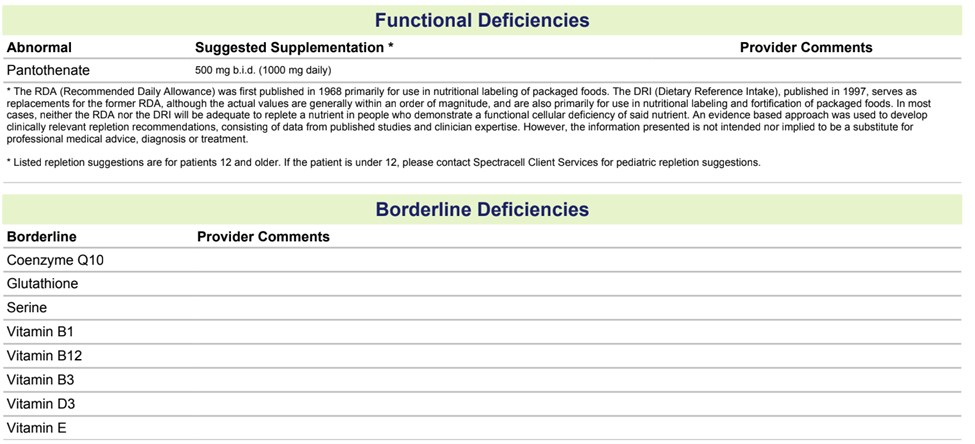
One of the theories of a doctor who evaluated me was that I was exposed to some toxins. Testing revealed that I had high levels of ochratoxin A, a mycotoxin, which is usually from aspergillus but may be impacted by glyphosate exposures. Based on my blood and urine markers, they confirmed that my detox pathways were impaired and in need of more B-vitamins. I also did a Spectracell testing, which looks at the vitamins and minerals in the cell level, and it did show a deficiency in vitamin-B5, and borderline deficiencies in few other vitamins, which supplementing with a multi-vitamin didn’t appear help.
 

Thiamine (Benfotiamine) Supplementation

 I began supplementing with Life Extension – 250mg of Benfotiamine and many things happened.

  • My sleep quality improved and I felt slightly refreshed the next morning.
  • I started getting partial nocturnal erections.
  • I started responding to the same dosage of Viagra much better than before taking Benfotiamine.
  • Better energy and mood.
  • Burning pain in my feet reduced greatly.

The problem, from second day onwards my sleep quality fell apart. I was easily able to fall asleep but was not able to sleep for more than ~5-6 hours and my REM + Deep sleep was less than 90 minutes.

I increased electrolytes

  • Potassium
    • Add 1 litre of coconut water
    • Added 1 teaspoon of cream of tartar
  • Magnesium
    • Increased from 250 mg to 375 mg – I am taking Magnesium Malate

This improved my sleep quality slightly, but I still struggled. I couldn’t sustain taking Benfotiamine at the same dosage for a long time. So I had to stop.

Current State

Supplements I take currently:

  • Vitamin B12 – 1000 mcg
  • Vitamin D3 – 10,000 IU
  • Magnesium Malate – 375 mg
  • Creatine (~3 grams)
  • Athletic Greens (Multi Vitamins)

I am still suffering with all the issues mentioned above and struggling to incorporate thiamine. How should I proceed here?

  • Should I try small dosages of TTFD and proceed from there? What cofactors to incorporate?
  • Should I work with doctors and take thiamine injections or incorporate IV?
  • Should I try Myer’s IV – which contains below formula once a week for few weeks to see if I can experience any improvement to validate this theory
    • 5 mL of magnesium chloride hexahydrate (20%)
    • 3 mL of calcium gluconate (10%)
    • 1 mL of hydroxocobalamin (1,000 μ/mL)
    • 1 mL of pyridoxine hydrochloride (100 mg/mL)
    • 1 mL of dexpanthenol (250 mg/mL)
    • 5 mL of vitamin C (500 mg/mL)
    • 20 mL of sterile water
    • 1 mL of B-complex 100 containing:
      • 100 mg of thiamine HCl
      • 2 mg of riboflavin
      • 2 mg of pyridoxine HCl
      • 2 mg of panthenol
      • 100 mg of niacinamide
      • 2% benzyl alcohol

I have been very determined to get myself out of these conditions. Any help or guidance here will be much appreciated?

We Need Your Help

More people than ever are reading Hormones Matter, a testament to the need for independent voices in health and medicine. We are not funded and accept limited advertising. Unlike many health sites, we don’t force you to purchase a subscription. We believe health information should be open to all. If you read Hormones Matter, and like it, please help support it. Contribute now.

Yes, I would like to support Hormones Matter. 

This story was published originally on July 27, 2023.

From Mother to Daughter: The Legacy of Undiagnosed Vitamin Deficiencies

20K views

This is a story of a mother with undiagnosed vitamin B deficiencies who gave birth to a daughter who was also born with undiagnosed vitamin B deficiencies. In the eyes of conventional doctors and labs, there was not much wrong with us, but we knew that life was harder than it should be. We lived managing debilitating dizziness, daily migraines, fibromyalgia pain, chronic fatigue, allergies, hormonal changes, anxiety, and depression. Until we discovered that we were both hypermobile with histamine issues, hypoglycemic, and had many vitamin B deficiencies. The biggest challenge was for my daughter to start taking thiamine (vitamin B1). Her heart rate was all over the place and she had such a bad paradoxical reaction to thiamine that we believe she had been living with undiagnosed beriberi along with POTS.

Mom’s Health Marked by Asthma, Anxiety, Migraines, and a Difficult Pregnancy

All I remember as a child is being afraid to talk in school even if I knew the answer to a question. I had allergies and could not exercise due to asthma. During college, I had to read over and over the same thing because I could not concentrate. I worked extremely hard because the fear of failure was too much to bear. I started to have hormonal imbalances and missing periods. I successfully finished college and moved away to another state. That is when migraines started. Later, I became pregnant with my first child and started having blood clots. Anxiety and depression would come and go with hormonal changes.

When I was pregnant with my second child, my daughter, I was sick every morning with nausea.  After 6 months of pregnancy, I had gained only 6 pounds. Ultrasounds showed that the baby was growing normally, but I was losing weight. At that point, I also could see blood clots on my leg. I was placed on bed rest. By the 8th month, my water broke and my daughter was born. She was jaundiced and placed under UV light for a week. I also stayed in the hospital for a week dehydrated, with blood clots, and with the “baby blues”. We left the hospital after a week, and she had a “normal” development. However, you could see that she was a baby that would not go with anyone, not even the people close to us, indicating some anxiety.

Daughter’s Early Health Issues: Selective Mutism, Asthma, Concentration Issues

When my daughter turned four years old, we moved out of state and that is when she stopped talking outside the house. I later found out that it is called selective mutism, a form of severe social anxiety. She started seeing a school counselor to try to help with her anxiety and self-esteem issues. I brought a girl scout group to my house so that she could start having friends and talk to others in her area of comfort. She also developed asthma and needed nebulizer/albuterol treatments frequently and daily QVAR for prevention. She was given Singulair, but it made her very depressed. Her grades in all classes were all over, from A to D.  She would spend the whole time after school trying to complete homework, but she couldn’t. Her teacher told me that she really did not have that much homework. I would ask her to watch the dog eating and to take her outside as soon as the dog finished but she would be wandering around the kitchen and could not pay attention to the dog. Her neurologist gave her Strattera and that helped a little. Her EGG also showed some abnormal activity. The doctor recommended anti-seizure medicine and said that she was probably having mal-petit seizures. I refused medication based on how she reacted to Singulair and because the doctors were using words like “probably” and “just in case”. I kept an eye on her and noticed when she ate ice cream and got asthma. I had her stop sugars and dairy.  Soon after that, a teacher called me, excited to tell me that my daughter was talking at school. She also was able to stop all asthma medication except for 2 weeks every year when seasonal allergies would hit. At this point, it had been already four years since she stopped talking outside our house. She started excelling in all classes and we were able to stop Strattera. However, the continuous anxiety remained.

The Teenage Years: Continuous Migraine, More Medications, and No Answers

At 16 years old, she got a cold that turned into asthma with a continuous headache that just would not go away. She started waking up every day with a migraine, depressed with no energy. We had to wait three months to see a pediatric neurologist. Meanwhile, I would take her to my chiropractor early in the morning, give her an Excedrin, and she would go to school whenever she felt better. She began drinking at least 2 cups of coffee every day to help with the pain. Sometimes she would go to school at 11am, sometimes at 1pm. Even if there was just one class left, she would go to school. At this point, she felt that she wouldn’t have a future.

When we finally went to the neurologist, he recommended amitriptyline. I had been on amitriptyline and woke up one day not knowing which year or season was, but I was told that the issue was the high dose given to me (125mg), after decades of it increasing it every year. I agreed as long as it was a low dose.  Amitriptyline lessened the continuous headache, but it was not really gone, and she still needed some Excedrin. She started daily aspirin as well. She was just getting by day to day trying to manage her pain and mood and trying to have a normal teenage life.

Increasing Weakness When Outdoors: Untangling Root Causes

She became very weak whenever we would go to the beach or to a park. We would have to drag her indoors and give her water. On some occasions, she would say that she could not see. Somehow, she successfully managed to graduate from high school. We started seeing functional doctors. We found that she had some variants related to mitochondria dysfunction, but we really didn’t know how to address this. We also found out that she had Hashimoto’s and antibodies against intrinsic factors, which was indicative of pernicious anemia. We knew right there, that she had issues that conventional doctors had missed.

We also did a Dutch test and found that all of her hormones were high. The functional doctors suggested sublingual B12, folinic acid, and a B complex. She said the vitamins made her feel awake for the first time. However, chronic fatigue was still a major struggle for her. Eventually, she had to stop folinic acid because it made her depressed and unmotivated. Meanwhile, she managed her anxiety with herbs, but it was a real struggle.  She also continued to have asthma requiring albuterol every fall season. She chose a very challenging career in cell biology with biochemistry. She went through college with many cups of coffee just to control migraines, have energy, and be alert.

Discovering Her POTS Symptoms

The summer of 2019, before her senior year of college, the nurse checked her vitals as part of her new summer internship. The nurse thought the pulse monitor was broken because her heart rate was 120 sitting down. After a few minutes, it went down to 99, so the nurse dismissed it. When she told me that, I started paying attention to her heart rate. We went to her physician and neurologist and in both instances, her heart rate was 100, just sitting down waiting for the doctor. I asked if it was normal, and they said that it was in the upper range but not a concern. I was still concerned and made an appointment with a cardiologist but also bought her an iwatch. She noticed right away how her standing heart rate would be over 100, and by only taking a few steps, her heart rate would go even higher and she would become fatigued and even dizzy. From the heart rate monitor on her iwatch, we could see how quickly her heart rate would climb upon standing and then slow a bit when sitting.

That is when I remember that I have read about POTS and hypermobile people. I remember that when she was a child, the neurologist had said that she was hypermobile, but never said that it could be a problem for her. It just seemed like a fun thing to have. I started asking in health groups and someone mentioned that her medications could also cause high heart rate. I searched and amitriptyline did have that side effect.  That is when my daughter showed me that her resting heart rate was in the 90s and it would fluctuate from 29 to 205 without exercising. When we went to the cardiologist and explained all of this, he said that he did not even know how to diagnose POTS because it is rare. He did testing and said that the heart was fine but there was some inefficiency due to some valve leaking but that it usually does not cause symptoms. I asked about amitriptyline and he confirmed that it could raise heart rate.  At that point, she stopped amitriptyline and her maximum heart rate was 180 instead of 205.

She went back to her last year of college when Covid hit. She came back home and we could see the lack of energy and how much doing any little thing or stress would crash her for days. Since I needed glutathione for chemical sensitivities, I decided to see if it would help her. Glutathione with co-factors helped her recover, instead of crashing for days, she would recover the next day. That is when she told me that every time she walked to school, she felt that she would pass out. When she gets up in the morning, she ends up lying on the floor because of dizziness. Despite her dizziness, daily muscle pain, daily migraines, and chronic fatigue, she had big dreams. She just kept pushing through day by day, with coffee, herbs, and whatever it took, but she knew that something had to change. She successfully graduated in May, Magna Cum Laude, and she had a couple of months to deal with her health before she would leave to start her graduate studies and research job. That is when I found people that knew about Dr. Marrs’ work and thiamine, and her life finally changed.

Introducing Thiamine and Other Micronutrients: Navigating the Paradox

A functional doctor recommended magnesium and niacin for her migraines and they significantly helped. This gave the functional doctor the idea to try tocotrienols. High doses of tocotrienols worked better for reducing her migraine pain than amitriptyline and aspirin combined. Then she started taking high doses of B6. This helped her muscle pain and improved her mobility. Despite being hypermobile, easy stretches gave her intense muscle cramps prior to starting B6. Guided by very knowledgeable researchers belonging to Dr. Marrs’ Facebook group, Understanding Mitochondrial Nutrients, we started Allithiamine. The first thing she said was “wait, the sun does not hurt?”.  I asked her what she meant.  She explained that all her life, being in the sun gave her pain in her eyes and forehead and that she couldn’t understand why people wanted to be outside. No wonder she never wanted to go outside. She also said her migraines were gone. We have waited 4 years to hear that!

After just a couple of days, she started having a lot of nausea and lower-intensity migraines returned.  The researchers knew right away that she needed more potassium. She started to eat apricots, coconut water, or orange juice every time she had nausea and it helped. However, it was happening every hour so we decided to try a different Thiamine. We tried half Lipothiamine and Benfotiamine but she didn’t feel as much benefit and still gave her issues. We went back to 1/10 of Allithiamine. Chatting with the researchers, one asked if she also experienced blinding episodes. Yes! Finally, someone that knew about that! They recommended B2 and we started it. That’s when we discovered that her pain in the sun and dizziness were caused by a B2 deficiency. She continued waking up with crashes needing potassium every hour. She did not sleep that week. The researchers suggested taking cofactors including the rest of the B vitamins, phosphate salts, phospholipids, and beef organs. Beef organs and phospholipids helped with energy and bloating, phosphate salts helped with nausea and irritability.

Then researchers suggested that she needed to stabilize sugars and have more meat. That is when we realized that she had some type of hypoglycemia. We had noticed that she would get very tired and got shaky hands if she didn’t eat. Functional doctors had mentioned that she may have reactive hypoglycemia since she had a fasting glucose of 70. She started having more meat to stabilize her sugars and removed all packaged foods, sugars, grains, and starches. She started having just fresh meat, veggies, rice, beans, nuts, and berries. She felt that she was so much better with beef that she started using it for potassium between meals and bedtime.

She was able to increase allithiamine little by little. She would mix a little bit with orange juice since it tasted so awful. Little by little, she started having fewer crashes and feeling better. It took a month for her to be able to tolerate one capsule of Allithiamine. She was sleeping more but not the whole night. That is when our functional doctor suggested supporting adrenals. That really helped but then she began having stomach pain and nausea after eating beef and developed frequent diarrhea. Chicken always increased her hunger and reduced her energy compared to beef and but now she was afraid of having beef. She stopped all sources of beef and phospholipids.

We consulted a very good functional doctor. She did Nutraeval and confirmed that all her B vitamins were low or deficient and recommended TUDCA and Calcium D Glucarate along with trying lamb and bison first. Both helped in reducing bloating/nausea and she was able to start eating lamb and bison along with reintroducing a minimal amount of carbs. Soon after, she was eating beef again with no pain.  After starting TUDCA, her bilirubin levels were normal for the first time in her life. We continued to work with the functional doctor to fix other deficiencies.

Recovery from Multiple Nutrient Deficiencies and the Prospect of a Normal Life

After Allithiamine and vitamin B2, we worked with our functional doctor to balance the remaining B vitamins. She is now able to go out in the sun without bothering her eyes and without passing out. She gained weight after starting the B vitamins and began looking healthier, compared to how skinny and underdeveloped she looked before. She also learned how to manage electrolytes. She sometimes needs more sodium, but other times needs more potassium. She feels sick when electrolytes get out of balance. Although she still had some continuous pressure in her head, she no longer needs any amitriptyline, aspirin, or Excedrin for pain. One thing that remained problematic was folate deficiency. She still became depressed with folinic acid, so she tried methylfolate instead. She felt so unmotivated that preferred not to have it, but she realized that it was key to something that she struggled with all her life: anxiety. She figured that she could have methylfolate every other day, so that she could have less anxiety.

Now, for the first time, she began to have a normal life. She can now exercise daily without dizziness and her heart rate skyrocketing.  Her heart rate in general is more normal, doesn’t go down to 29 or up to 205. She had not had any asthma requiring albuterol.  She started driving without having to deal with anxiety and panic attacks.  She was able to walk to her office without fainting.  She now can now live alone dealing with the stress of having a full-time job, graduate classes, cooking her food, and exercise every day! She is not cured completely but for a person that once thought she couldn’t have a future, she is doing pretty darned good!

We Need Your Help

More people than ever are reading Hormones Matter, a testament to the need for independent voices in health and medicine. We are not funded and accept limited advertising. Unlike many health sites, we don’t force you to purchase a subscription. We believe health information should be open to all. If you read Hormones Matter, and like it, please help support it. Contribute now.

Yes, I would like to support Hormones Matter.

This article was published originally on July 22, 2021. 

A Life of Low Thiamine Leading to Wernicke’s Encephalopathy

1.6K views

I am a 40 year old male with recently diagnosed, but chronic, severe thiamine deficiency (plasma thiamine <6 nmol/L September 2025) – Wernicke’s Encephalitis. I have all of the classic symptoms like nystagmus, ataxia, and cognitive issues, along with a long list of other symptoms that have accrued over time. I have had a horrible diet since childhood, consisting mainly of fast food, and in my twenties, I drank a fair amount of alcohol. I have also had several bouts of food poisoning, including a c diff infection in August 2025. Antibiotics have been a mainstay since childhood. Once thiamine deficiency was recognized, I was given IM injections and told to supplement orally. I feel worse. Something is missing and I need help. Below is my case story. If there is anyone out there that can help, please comment.

Childhood Marked By Poor Diet, Infections, and Failure to Gain Weight

My youth was filled with many upper respiratory and ear infections that I was giving antibiotics for. I had a “fast metabolism” and could never manage to gain weight, no matter how much I ate. I never wanted to eat the healthy food that my mother would cook and always wanted candy and junk food. I would eat things like lucky charms, brown sugar and apple cinnamon instant oatmeal. By the time I reached high school, I was consuming fast food quite often, and then when I got into sports and weight lifting, I was consuming sugar-filled meal replacements, and protein supplements, and microwave meals.

At 16, I developed a rash on my hands every winter. It would crack and bleed and my joints became stiff. I later learned that this was eczema or psoriasis. I was given a corticosteroid cream. After high school, the rash continued to get worse, and never healed. When I was about 21 years old my hands were so stiff that I couldn’t bend my fingers. They were completely cracked and bleeding all over.

Along with this, my ears, and all of the cartilage in my body, turned solid. I wasn’t even able to flex my ears or ear lobe and every time breathed in it felt like I was being stabbed in my left lung. The doctor diagnosed me with relapsing polychondritis, pleurisy, and psoriasis. High dose corticosteroids and corticosteroid creams were prescribed.

The Poor Diet Continues: Heart Symptoms Emerge

In my twenties, I lived off of cheesesteak sandwiches, pizza pockets, French fries, and soft drinks. I only at couple meals a day and usually skipped breakfast. I worked, partied and fluctuated being not enough eating too much. I lost a bunch of weight and began losing my hair.

In my late twenties, I got a much better job with a lot more responsibility and a lot of stress but my diet was still horrible. I would skip breakfast and then gorge of double orders of fast food meals for lunch. I began gaining weight but I was going to the gym so I’d managed to build an unhealthy muscular physique.

At some point, I began having episodes where I would have my heart racing, chest pain, and other symptoms that felt like I was having a heart attack. Hospital visits concluded that these episodes were panic attacks, however, they did note that my cholesterol, and triglycerides were high.

A Healthier Diet But More Alcohol and More Unexplained Symptoms

In my thirties, I made some changes to my diet. I began eating a healthy breakfast but was still eating out for lunch and having large portions. I added in raw vegetable powders and multiple organ capsules to diet. I also began drinking more alcohol.

My psoriasis flared. I developed random internal vibration episodes and very subtle full body tremors, as well as being jolted awake in the middle of the night. I decided at this point it was time for a change. I tried to eliminate dairy, grains and gluten, chocolate, sugar with the hope that this would resolve my inflammatory issues. Unfortunately, it made matters worse, likely at least partially due to the alcohol consumption.

Magnesium Oxide, a Benzodiazepine and an SSRI

Within about a year, I had lost a significant amount of weight, ended up with significant sleep issues, increased anxiety, and had the worst brain fog of my life. I could not function properly at work and was losing my hair in significant amounts. I visited my doctor who was very well meaning and spent quite a bit of time trying to help. He found that my magnesium was low (1.6), so he gave me magnesium oxide as a prescription. This caused severe loose bowels and just made things worse.

He also told me that I had a genetic predisposition for high adrenaline, and proceeded to give me propranolol to calm that down, as well as a benzodiazepine and SSRI that would “help with my insomnia”. I was not depressed. I just couldn’t sleep and felt like I was in high gear all the time. Instead of doing research and because I trusted this doctor, I took the medication as he advised.

The SSRI made me want to crawl out of my skin, but the benzo allowed me to sleep 6-7 hours, stopped the tremors and being jolted awake. We went through three different SSRI’s until settling on Lexapro. I was on these for about a year until I actually did some research and learned how they were harming my body. I then decided to ween myself off. That process was brutal, with the feeling of brain zaps, worse tremors than before, and intense insomnia.

Brain Fog and Dizziness Worsen

Around this time, a friend and I started a snow removal company. The job was extremely physically demanding. I was out for 24+ hours at a time in freezing temperatures, not only in the truck, but also out shoveling and carrying around a 50lb buckets of salt to spread. I didn’t eat much while out, and lived off coffee, milk and orange juice. We also started going out on the road for weeks at a time, staying in hotels and working 12-16 hour days in food factories, repairing their equipment, and starving myself.  During this time, I experienced some of the worst brain fog I had ever felt. I couldn’t make sense of anything.

In 2016, I discovered the Ray Peat way of living. I eliminated a number of foods from my diet and began consuming a lot of coconut oil, ice cream, milk, orange juice, but at a significant calorie deficit. The diet made me weaker and I wasn’t able to keep up with the business. In 2017, I got a part time job at a grocery store, thinking it would be easier physically but beginning work at 4 am became problematic. The brain fog continued to worsen.

First Bout of Food Poisoning: Cipro and Flagyl Prescribed

Sometime between 2018-2019 I got campylobacter food poisoning from an undercooked burger. I was given Cipro and Flagyl. The Cipro caused joint inflammation and so they advised to discontinue it and finish the Flagyl. After these meds, I had a horrible time concentrating and completing department order at work. I was spaced out while driving, which even led to a couple auto accidents, more frequent tremors that even my girlfriend noticed, and I would randomly wake up with full on shaking, followed by nausea and vomiting. My magnesium still continued at the very bottom of the range, so I started using ReMag in an attempt to move the needle, which mostly just put me in the bathroom. I also started taking taurine, niacinamide, and thiamine HCl. My cholesterol and triglycerides were still elevated.

In 2020, I worked through COVID, as we were essential workers. Luckily, I did not get COVID at this point. I continued taking vitamins, taurine, magnesium, and began desiccated thyroid. I also ate bags of dried organic apricots and mangoes daily. They seemed to help with energy levels.

First COVID Infection and New Onset Food Allergies

In 2021, I began a new job and got COVID for the first time. At that time, I consuming a daily smoothie with full packs of frozen 365 organic strawberries, mangoes, dark sweet cherries, peaches, a cup of orange juice, and Mt. Capra casein protein. The casein protein exacerbated the brain fog. When I eliminated it, the brain fog wasn’t as bad. Odd because I was able to drink milk in the past, just not consume whey protein.

COVID hit hard and took me out for almost a month. I had fever, low O2, and high heart rate. I took aspirin every 4 hours and this seemed to lessen the symptoms pretty quickly. I spent most of my days in bed, eating scrambled eggs, butternut squash soup, chicken soup, and mozzarella cheese. Toward the end of the COVID infection, I developed excruciating pain in my left thigh. I thought it was a blood clot from lying in bed for too long, but an ultrasound ruled that out. The pain and COVID-related shortness of breath remained for about a month. After that everything was back to normal, except now I had food allergies. I could no longer eat the butternut squash soup nor could I eat mozzarella, or the sweet potatoes or French onion soup I would eat prior to getting sick.

Few Good Years with Thiamax Despite Another COVID Infection

Late 2021, I began taking Thiamax to replace the thiamine HCl I had been taking. When I began, I had a little extra brain fog, but I attributed it to the COVID. I also added methylene blue to the mason jar of orange juice I would take with me to work to sip on, along with great lakes collagen. Things started looking up. The brain fog started subsiding and I was able to function at work.

I continued to have the startle awake reactions and tremors. These mostly would happen if I tried to take a nap during the day. Any time I would start to fall asleep, I would be immediately jolted awake and then experience a full body vibrations sensation. This happened every time I started to nod off. I was thinking maybe it was due to the thyroid, but I was still at the very bottom of the level for magnesium when tested.

2022 Was fairly uneventful year, although I did catch COVID again. This time it was very mild and I was only out of work for less than a week. I had all sorts of allergies to food, but the brain fog seemed much improved. The startle awake and vibrations remained and my magnesium was still low.

In 2023, I was in ER early in the year with odd abdominal and back pain, nausea. I thought it could be food poisoning from daily Uber eats lunch orders. Some blood was found in urine. They said it was gastritis and to take Pepcid. The rest of the year was uneventful. I was still taking Thiamax and desiccated thyroid daily. My energy levels were better. I had less brain fog and my body temperature improved. Magnesium was still borderline low but calcium on many blood tests above 10.

Food Poisoning Again and More Antibiotics

Towards the end of October 2024, I got food poisoning again. This time it was salmonella. I had non-stop vomiting and loose bowels for over a week. I was prescribed Flagyl, but did not take it, and Cipro, which I took for 7 days, with gradually worsening joint pain and inflammation. Cipro was discontinued and replaced with Cefixime. A stool test one month later revealed that salmonella had colonized, and they would not give any additional antibiotics to help clear it up. From this point on into 2025, I never felt the same. I had also stopped the Thiamax and was only taking forefront health b-complex and forefront health desiccated thyroid. I was still borderline low magnesium.

The Downward Spiral

By early 2025, I had much worse brain fog, frequently lost train of thoughts, couldn’t concentrate at work, started getting odd reactions to ice cream, mashed potatoes and other foods. They would cause a full body itching, and internal vibrations when I would eat them. Constipation was the norm, and my doctor told me to take two magnesium oxide tablets a day to help, my gastroenterologist told me to take biscodyl daily to help. I started to have a constant feeling like my throat was inflamed.

In May, I was diagnosed with eosinophilic esophagitis. For the endoscopy, I was given propofol and fentanyl for anesthesia. It took over an hour to wake up from and the entire week following, I felt like I had just woke up from the anesthesia. A few weeks later, I was given high dose Omeprazole to correct the eosinophils. I was also advised to eliminate eggs, dairy, wheat, soy, fish, nuts, and corn from my diet.

In June, I received the results for the buccal swap Mitome profile. It showed 404% citrate synthase, normal Complex I, low-normal Complex II, low-normal Complex II-III, and low (24%) Complex IV.

I tried to start implementing the proposed protocol but it seemed to be causing more symptoms. I started tracking glucose, ketones and lactate daily per Chris Masterjohn’s recommendation. I was going out for daily walks and hitting around 8k steps.

A Tick Bite, More Antibiotics, and a C. Diff Infection

In July, I had a bullseye tick bite and the doctor prescribed doxycycline. The doxycycline causing worsening tremors and severe tinnitus, I stopped taking it, after which both began to subside. I was walking daily.

In early August of 2025, I went to the ER with nausea and vomiting. They sent me on my way after doing a CT with contrast and seeing inflammation of the stomach and intestines. They said it was the stomach flu and to stay hydrated. This persisted and worsened for a week and so I was admitted to the hospital. A stool test it was found that I had an active c.diff infection and was colonized with salmonella from the prior food poisoning. I was given ceftriaxone IV, and vancomycin oral.

In addition to the antibiotics, I was given IV’s with sodium chloride and lactated ringers and initially and I felt better. Then they switched over to D5NS, a saline solution that contains 5% dextrose and I felt worse again. Dextrose depletes thiamine and I was already malnourished and thiamine deficient. Nevertheless, within three days of my hospital admission, I was able to consume food by mouth again, around 2,100 calories per day consisting of burrito bowls for breakfast, lunch and dinner, that contained carnitas, rice, pinto beans. I walked the halls doing lunges and calf raises to stay as active as possible.

The morning I was to be discharged I was advised that my magnesium and potassium were both low and given two pills to correct those levels. Vitamin B1/thiamine was not checked. I was also given a 10 day dose of azithromycin.

Severe Thiamine Deficiency Lurking

At discharge, I felt very weak, had tingling and weakness in the legs and severe brain fog. That night at 6pm I took my dose of vancomycin, and my first dose of azithromycin. The next day, I awoke with severe digestive distress continuous diarrhea throughout the day. I returned to the emergency room feeling like I was dehydrated, but they stated that all of my levels were normal and I was discharged.

The following morning, I awoke again with severe digestive distress, and upon standing my heart rate spiked to over 160 beats per minute. I rushed to the kitchen and grabbed some Pedialyte, thinking it was just dehydration, but this made my heart rate beat faster and caused blurred vision. I thought I would faint and I felt an impending doom sensation like I was going to die.

I called 911, and medics arrived and proceeded to perform an EKG, which merely showed sinus tachycardia. They were unable to get my heart rate down in the ambulance, and upon arriving back to the emergency room, I was left to wait for 6 hours before I was able to get any fluids. When they attempted to draw my blood, my veins were flat and they weren’t able to get blood to flow into the vial. This would later become a trend, with blood vessels in the arms and hands constantly appearing shriveled and misshapen, and my mouth felt dry like sandpaper despite trying to drink water.

Oddly, my electrolytes all came back in normal range. My heart rate stayed around 110 to 120 beats per minute the entire wait even while seated in a wheelchair. When I was finally brought into the ER, I was given one large bag of sodium chloride administered rapidly. This initiated a weird sensation in my chest and uncontrollable coughing.

They took me for a CT scan with contrast, and then for a chest x-ray to check for fluid in my lungs, but found none. I was then given a bag of lactated ringers and my pulse began to normalize. During an orthostatic test, my pulse spiked over 100bpm upon standing. They gave me another bag of sodium chloride, performed another orthostatic test and my pulse remained under 100bpm. I was advised to discontinue the azithromycin, and my diagnosis was listed as severe dehydration.

After discharge, my legs were very weak and I had an odd internal vibration, buzzing sensation. My whole nervous system felt very irritated, worse than I ever experienced before. The nerves in my spine and lower back felt raw and like they were being poked. This and tremors, prevented sleeping. I also developed muffled hearing. I was switched from vancomycin to dificid 3 days later.

From that point on, I had worsening neurological symptoms, odd episodes of confusion while driving. I didn’t know where I was even though I was near home. If I looked in the mirror it felt like the room spun. I finished my round of dificid on September 1st.

Increased Need for Sodium and the Continued Downward Spiral

Since my hospital stay, I the only way to keep my heart rate somewhat normalized was to drink several electrolyte beverages or consume large amounts of salt throughout the day. On September 2nd, I developed severe neurological symptoms and diarrhea after consuming a large fruit smoothie.

I noticed that when I ate pulled pork, I would I had more energy and was in a better mood but developed reactions to the garlic and spices used in it. As a result, I switched to a more bland diet consisting mostly of a plain ground chuck, plain chicken with salt, and applesauce.

In mid-September, I added plain white rice to my bland diet with hope of adding more calories. I had lost over 40lbs at this point. The rice probably made matters worse. I developed episodes fuzzy vison. I saw floaters in my eyes, as if I was staring into a bright light. My hearing would go out and I would just have a loud ringing or buzzing in my ears. My pulse would spike to 150 or higher. I became dizzy and felt completely intoxicated, despite not drinking alcohol. Every muscle in my body twitches including my face muscles, and I’ve been told that my eyes will twitch when trying to look straight forward. This is triggered when exposed to heat, bright light, exercise, strong smells or any sort of stimulating experience.

Polyuria and More Thiamine Deficiency Symptoms

In late September, I was excreting around 2L of urine in a few hours despite normal consumption. I went to the ER for IV fluids and then again two days later after having that feeling of impending again. I had white rice for dinner.

I had an EKG, blood work, and was given a potassium in IV, as my potassium was low. They tried to discharge me, but I argued for admission. Nephrology and endocrinology performed a variety of tests. A 24 hour urine test measured 8 liters of urine despite consuming only 2 liters. After urine began to concentrate again, I was discharged. Upon discharge, when I attempted to stand my legs were so weak they almost collapsed beneath me. I felt numb from the waist down.

We Finally Tested Thiamine: Undetectable

That night, I went to a university hospital emergency room and during my 13 hour wait to get in, I desperately searched for answers. I chanced upon hormonesmatter.com and ordered the kindle version of Thiamine Deficiency Disease, Dysautonomia, and High Calorie Malnutrition and began to read. Once a bed was finally ready in the ER, I told them my story and they started running a number of labs.

I was seen by several doctors, neurologists, and a pulmonologist. They ran orthostatic vitals, several blood labs, and upon my doctor’s recommendation they admitted me for observation (he was leaving his practice that day). They did an MRI of my spine, took me for an EMG and nerve conduction tests. In the MRI they noted some slight degeneration in the spine, and red marrow reconversion throughout. EMG and nerve conduction tests were mostly normal, however, they noticed some diminished sensation in my left lower extremities and toes and a mild gait disturbance.

I requested a vitamin B1 plasma test, along with copper, iron, zinc, and others. I was kept for observation for a few days and given IV fluids, which kept pulse fairly normal. The thiamine test had not returned by the time of discharge.

A week later when the result came back, it was <6 nmol/L, which is basically undetectable.

I was extremely excited, finally getting some answers as to why all of these things were happening. The doctor prescribed intramuscular thiamine 500mg in total, to be given daily for a week, followed by 400mg thiamine HCl orally and IM shots every three days for the next two weeks. The first shots were that very night.

Thiamine Repletion Has Been Brutal

After my first dose, I slept well for the first time in months but the next morning when I attempted to stand, my pulse spiked up but my blood pressure tanked to 89/62. I could no longer walk for more than a short distance. I tried to continue my regular 8-10k steps daily, but after a couple hundred steps, my body would completely shut down. My vision became fuzzy, I saw floaters or like flashing lights and my pulse would skyrocket even though it was already high. The Holter monitor recorded sinus tachycardia and some SVT’s. My legs were so weak, they tremor and felt like they were going to give out beneath me and I felt like I could not get enough air in.

This entire time I was getting the thiamine shots, I struggled to consume enough calories on a daily basis.  Surely, eating only 900-1000 calories didn’t help my situation, I just couldn’t eat any more. When the shots were stopped in November, my health declined further. At this point that, I began significantly increasing my dose orally and adding other forms of thiamine. This made everything significantly worse.

By mid-November, at this time I was getting around 300mg of magnesium malate per day, taking a daily multivitamin (Seeking Health One Chewable), as well as Forefront health thyroid B-complex), and only able to eat boiled chicken and applesauce. Anything else made my GI symptoms unbearable and caused worsening tremors and internal vibrations. Per my records, here is the dosing I followed.

  • Week 1 (first 5 days): 500mg IM thiamine HCl shots, once per day.
  • Days 6 & 7 picking up with 200mg of thiamine HCl by mouth twice per day for 400mg.
  • Week 2: 200mg thiamine HCl by mouth twice per day for 400mg, with one 400mg IM shot on Thursday.
  • Week 3: 300mg thiamine HCl, plus 150mg benfotiamine by mouth twice per day, with one 400mg intramuscular thiamine HCl shot on Monday and 400mg IM thiamine HCl shot on Thursday.
  • Week 4: 300mg thiamine HCl plus 300mg benfotiamine by mouth twice per day, with one 400mg IM thiamine shot on Thursday.
  • Week 5: 300mg thiamine HCl, plus 300mg benfotiamine by mouth twice per day, no intramuscular shots.
  • Week 6: 300mg thiamine HCl, plus 300mg benfotiamine by mouth twice per day, no IM shots. Wednesday and Thursday attempted to add morning and afternoon dose of Thiamega and cut benfotiamine back to 150mg and thiamine HCl back to 100mg. This led to extreme anxiety, significant increase in pulse and panic attacks.
  • Week 7: same as above but have begun having random panic attacks, adrenaline surges, pulse spiking to 160bpm randomly. I can’t sleep at all (last week and the weeks before I was getting 7 to 8 hours per night typically). Now I wake up at 2am and feel air hunger and have random surges in pulse, spasms and closing of my esophagus. I went to the ER yesterday and they found nothing wrong. All electrolytes were on the lower end of normal. I have tremors, dysautonomia and POTS symptoms again and I am losing weight again.”

The Hell Continues: Confusion and Food Intolerances

Thinking I was taking too much thiamine, I reduced intake to just 150mg benfotiamine and 350mg thiamine HCl for a couple days. This was right before Thanksgiving. My neurological symptoms were getting worse, and now I was experiencing dizziness, cognitive decline and new vision problems, but the shortness of breath had begun to subside.

I had an appointment to see a nutritionist. I showed up at the appointment and had this new surge of confusion, as well as a significant increase in pulse while walking in, my body felt ice cold even inside the building.

After going over all of the foods that I was having issues with and what my allergist told me to avoid, we were left with almost nothing. She said, at this point you’re going to just have to try to start eating anything you possibly can to add more calories, because you’re lucky if you’re getting 600 calories per day.

As I walked out of the building from this appointment, I experienced the worst brain fog that I had experienced to date. I walked around the entire parking lot but I could not remember where I parked my car. My pulse extremely high and I was dizzy. I felt like I was in a dream and I could not make sense of anything that was going on around me. I eventually found my car about 20 minutes later.

Since I was struggling to come up with ideas of what I could eat and unable to tolerate most of the things that I tried at home, I decided to go back to trying Chipotle. It turns out, I can tolerate Chipotle carnitas. So now, I eat two chipotle bowls with double meat, double brown rice and light beans. It’s nowhere near an ideal healthy meal but at least I can eat – sort of. I now get migraines a few hours after eating and internal vibrations and tremors.

I started taking Zyrtec daily, because I tested positive for a rice allergy on both blood and skin tests. I continue to eat Chipotle and use Zyrtec to manage the allergic reactions. I also take quercetin, a mast cell stabilizing supplement, and butyrate supplement.

Another Medical Procedure With Anesthesia

Mid December, I had a recommended colonoscopy and endoscopy. Given my problems with anesthesia, I was worried. The prep process was very rough on my body and caused even more palpitations and higher heart rate. I don’t think the thiamine I was taking was absorbed and not eating made things worse. Surprisingly, coming out anesthesia was okay, but the first time I tried to drive, I had a major energy crash. I felt like everything was moving in slow motion and my brain was running out of energy would shut down. My vision was fuzzy, my hearing went out and I just had a loud ringing as my pulse spiked up. I felt like I was completely intoxicated. Every muscle in my body started twitching, tremoring and then lost strength. I messaged my neurologist and they responded that it sounds like a panic attack, and I should take some Tylenol for my intense migraine headaches. I was not a panic attack.

I have been unable to drive since. Every time I am in the car with someone going to an appointment, all of the visual stimulation from trying to process cars and what’s going on the road and around me, causes what feels like a mental shutdown. I also feel like I’m intoxicated constantly, especially when in the car, or looking into a mirror. It has gotten to the point where it is hard for me to focus on things mentally, or make sense of things I read or watch. I’m not sure if this is all due to the B1 deficiency or if it’s partially due to the c diff infection and all of the antibiotics.

My Health Is Failing and I Don’t Know What to Do

I am struggling daily to maintain a proper electrolyte balance. If I sip a 33oz coconut water throughout the day and add a little salt here and there, in addition to the sodium I’m getting from food, I end up feeling dizzier, like my blood pressure is too low. If I take 450 mg of sucrosomial magnesium, I still have full body tremors, muscle twitching and a migraine. If I increase the magnesium the twitching subsides, but dizziness increases and I feel faint. I’ve even tried using 350mg sucrosomial magnesium with 144mg of magnesium l-threonate (hoping this would help with brain symptoms.

I’ve tried to introduce healthier foods, such as the farm eggs that I used to eat every morning, ground lamb, fresh-squeezed orange juice, but my body just seems to reject these. So I am left with the Chipotle, with double carnitas, double brown rice, and light pinto beans. I realize these meals are not the healthiest options and probably not doing me any favors with the brain fog, migraines and other symptoms but I don’t know what else to do. Are my continuing symptoms all related to the thiamine deficiency, my diet or something else?

Adding More Supplements

On December 19th, I began taking Lipothiamine. I began with 12.5 mg once at breakfast, along with 150mg benfotiamine, and 250mg thiamine HCl.  For lunch, 150mg benfotiamine and 100mg thiamine HCl. That day I had much more severe dizziness, my head felt like it was in a vice, and I was experiencing lapses in time. I went to the ER thinking maybe it was an electrolyte issue. They said electrolytes looked fine. Potassium and sodium were at the very low end of normal, but they were not concerned. They did a CT of my brain (again) and did not find any irregularities. I was offered a migraine cocktail consisting of antihistamines and morphine or something like that, and they offered to keep me for 24 hour observation. Since there was nothing else they could do for me, so I declined. I was given a bag of sodium chloride and discharged.

On the 20th, I increased to 12.5 mg with breakfast (plus 150mg before/250mg HCl), and then 12.5 mg with lunch (plus 150mg benfo/100mg HCL. I held that dose until December 23rd, when I was able to resume the intramuscular shots.

After the intramuscular shots, I felt like I had more energy, I was much more social, and felt like symptoms had improved slightly. The next day, I increased my Lipothiamine dose to 25mg with breakfast, keeping the same benfo and HCl doses as the prior days. All of the symptoms got much worse. I felt a significant increase in the dizziness, heart rate picked up, it felt like I was walking through a dream.

On December 25th I added another 25mg of Lipothiamine with lunch and kept the bento and thiamine HCl the same (so 25mg lipothiamine with breakfast and 25mg with lunch). Symptoms continued to worsen. I also began taking CoQ10 ubiquinol (50mg with breakfast and 50mg with lunch), mitosynergy copper (split .5mg with breakfast and .5mg with lunch), black seed oil/curcumin (one capsule with breakfast, one with lunch). Lactoferrin (one capsule with breakfast, one with lunch), Jarrow reduced glutathione (one capsule before breakfast, one before bed), liposomal vitamin C (twice a day), creatine (4 split doses 3g total per day),

Elite IgG ImmunoLin blend for gut healing (one scoop before breakfast), ProButyrate (2 capsules before breakfast, two before dinner), and Hesperidin capsules (one capsule with breakfast to help with neuroinflammation).

From December 25th on I have been following the same protocol, with everything listed above, with the exception of adding Thiavite to my morning doses which adds all cofactors and increases TTFD by 15mg in the morning dose.

Reasoning Behind the Recent Supplements

I added the lactoferrin and black seed oil/curcumin as part of my Mitome protocol. When I did the Mitome test back in May 2025, it showed complex IV was at 24% and noted that I should be supplementing with heme iron, or if my ferritin levels were high that I should utilize whey protein/lactoferrin, with black seed oil and curcumin to lower inflammation so that trapped iron was released from ferritin.  It also noted that I should be using copper to support complex IV cytochrome C oxidase enzyme.  For the low complex II and II-III it noted coq10.  I’ve added all of these in, and hope that if what I’m also dealing with an addition to a thiamine deficiency, is also mitochondrial dysfunction, that this will help to support my mitochondria and correct all of the issues that I’m having. In recent lab tests my copper was on the low end of normal, but so was ceruloplasmin, with a free copper over 15.  In my iron labs, my iron was at the low end of normal, with transferrin below the normal range, and ferritin at the top of the normal range, with saturation at around 30%.

On December 31st, I did another 400mg of thiamine HCl intramuscular shots, and again the first day I felt more social and talkative, but since the 3rd I’ve been feeling very off. Migraines are back even worse, a sensation of extreme nervous system irritation and randomly losing hearing in my right ear. I feel like I still cannot get my electrolytes managed properly, and I’m left feeling like I’m never going to get back to my old self. My pulse was somewhat normalized in the morning before eating breakfast and at night, now it’s elevated again.

Where I Am Now

The last few days I’ve also had a lot of digestive upset. I’m getting more hives like reactions to all foods. Overall, I am very fatigued and feel like I’m walking through a dream. I don’t know how to continue supporting my body without causing more inflammation. I don’t know if this is all related to the B1 deficiency or if this is a much larger issue that I need to be working on.

I’m trying to walk around as much as possible so that my body will stimulate more mitochondrial biogenesis. I would to get to the point where I can drive again but my legs feel weak and I have very low energy levels. My doctors are pushing for me to do a stress test in one week, and if all goes well, they would like me to start physical therapy and occupational therapy. At this point, I feel like that is just going to make things worse, because every time I try to do anything physically or mentally taxing, I crash and then the next few days are miserable.

My time is also running out for being able to return to work. If I’m not able to return in the next 4 weeks, my position will be opened up. I’ve even tried to spend time with family, and simply holding a conversation causes the over stimulation reaction where I start to feel faint, my pulse rises, and my vision gets fuzzy, etc.

Please help me get my life back. I want nothing more than to return to work, spend time with family, and friends and help others who are in similar situations.

Post Script: I just learned that the IM thiamine shots I was prescribed contain 400 mcg/mL of aluminum each. I have been injected with a neurotoxin for months now. I have not been able to find a clean IM. If anyone knows of an IM thiamine without aluminum, please let me know.

We Need Your Help

More people than ever are reading Hormones Matter, a testament to the need for independent voices in health and medicine. We are not funded and accept limited advertising. Unlike many health sites, we don’t force you to purchase a subscription. We believe health information should be open to all. If you read Hormones Matter, like it, please help support it. Contribute now.

Yes, I would like to support Hormones Matter. 


Photo by Marco Bianchetti on Unsplash.

Mitochondrial Capacity and Thiamine: Notes from a Presentation

2K views

Mid December, I gave a talk on mitochondrial capacity and thiamine’s role therein (included below). My argument was that mitochondrial capacity e.g. their capacity to produce ATP efficiently from the foods we consume, and to meet the demands of living, drives health or illness. I also argued that thiamine drives mitochondrial capacity, and thus, is implicated in modern illness.

It is an argument I have made for years now, and of course, I wrote a book about it, together with the late Dr. Derrick Lonsdale. It is not something readily considered by western medicine, however. Even as our understanding of the molecular mechanisms and pathways connected to mitochondrial functioning has expanded over the last century, the fundamental nature of mitochondrial energetics remains underappreciated. We look to everything else the mitochondria do as somehow more important to health and disease than simple energetic capacity, forgetting that these other processes do not happen without sufficient energy.

Energy is the most basic unit of life. It is the capacity to transform something into something else. Absent this, we are nothing more than rocks.

That said, I did learn a few things when preparing for this talk. Namely, I learned how many discrete disease there are. Did you know that we now have over 26,000 separate disease entities recognized by the medical profession and over 18,000 ‘global’ or ‘systemic’ disease entities? I did not and was shocked. Before I looked this up, I thought we had maybe a few thousand, ten thousand if I were being generous. Never once did I contemplate 26,000. That is absolutely insane. Worse yet, apparently there are over 20,000 pharmaceutical products currently on the market. A pill for every ill – almost.

With all of this knowledge, one might think we have advanced in our capacity for health and healing. One would be wrong. According to the latest research, 76% of the population deals with at least one chronic condition. And quite unironically, despite the endless discrimination of discrete diseases, most symptoms, from 25-75% according to one report, remain medically unexplained. We are drowning in distinctions where perhaps there should be none, or at least far fewer, and we are none the wiser or healthier for it.

From my perspective, I cannot help but wonder how many of these discrete diseases are not simply expressions of poor mitochondrial capacity? Sure, there are potentially millions of combinations of interactions between genetics and the lived environment that are likely to affect disease presentation, but is each set of symptoms really representative of a separate disease? From a mitochondrial perspective, probably not.

Moreover, if mitochondrial capacity is the key to health, then instead of searching for and naming each permutation of disease expression and creating new drugs for each, we could go back to the basics and ask ourselves – what do I need to be healthy and am I getting it? If I am ill, chances are I am missing something, probably lots of somethings and those missing components to health, along with the long list of environmental toxicants and genetic interactions that lessen mitochondrial capacity, are what is driving illness. Perhaps if we support the mitochondria and view health from that perspective, we can reduce the burden of disease while culling the impossible and growing list of supposedly discrete diseases.

Alas, none of that will happen, at least not on a scale that would make a difference. That said, perhaps my lectures and articles might help a few people reclaim their health and their family’s health. For me, that is a win.

Here is the latest.

Mitochondrial Capacity, Thiamine, and Dysautonomia

We Need Your Help

More people than ever are reading Hormones Matter, a testament to the need for independent voices in health and medicine. We are not funded and accept limited advertising. Unlike many health sites, we don’t force you to purchase a subscription. We believe health information should be open to all. If you read Hormones Matter, like it, please help support it. Contribute now.

Yes, I would like to support Hormones Matter. 

Image by julos on Freepik

Is TTFD Toxic?

20.8K views

I regularly receive correspondence from people asking whether thiamine tetrahydrofurfuryl disulfide (abbreviated TTFD), a thiamine (vitamin B1) derivative, is toxic or not. Most people following this line of inquiry base the assumptions of “toxicity” on statements previously made by the famous (and now deceased) Andrew Cutler, PhD. Cutler is most well-known for his work on mercury chelation and detoxification protocols and has amassed thousands of followers over the years. He was strongly opposed to the application of TTFD therapeutically and explicitly advised people against using this molecule as a nutritional supplement for thiamine repletion or heavy metal detoxification. Much of what he said on this topic was documented in the archives of the Onibasu website which can be found here. Cutler’s statements were speculative in nature, based on anecdotes, and to my knowledge, were never backed by any scientific evidence. In this article, I would like to address his claim that TTFD is toxic. I should note, based upon all of the available research, which is substantial, TTFD is not toxic, even at supra-physiological dosages. A version of this article was published on my website.

Is TTFD Toxic?

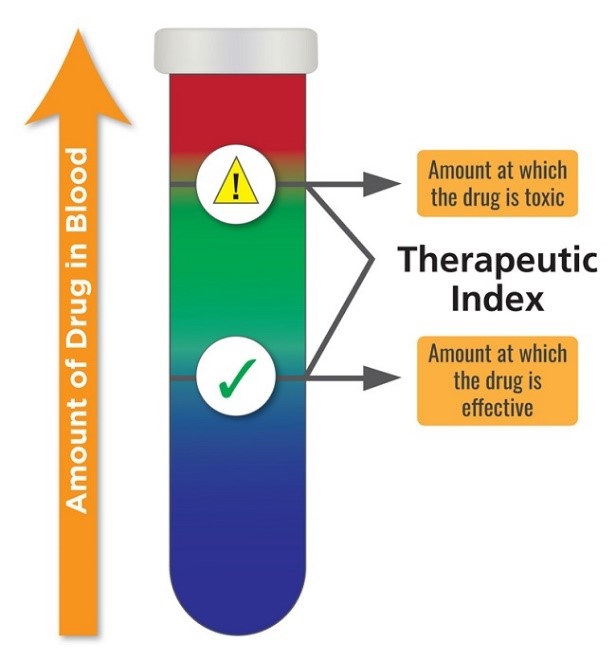
To understand whether TTFD or any compound may be considered toxic, it is important to recognize how toxicity is determined in pharmacology. Here toxicity is represented by something called a therapeutic index (TI). In animals, where much of the research is conducted initially, the TI is determined between by ratio of the lethal dose 50 (LD50), a dose at which 50% of the animals die, and the effective dose 50 (ED50), the dose at which a therapeutic response is noticed in 50% of the animals. This is represented as TI = LD50/ED50. In humans, instead of lethal dose, toxic dose is used (TD50). Here, the TD50 represents negative or adverse reactions in 50% of the population tested. The equation is basically the same, TI = TD50/ED50.

In both cases, higher therapeutic dosing windows relative to efficacy confers greater drug safety. Compounds where there is little wiggle room between the TD50 and LD50 – a small TI – are considered the most toxic. See Figure 1.

Therapeutic Index
Figure 1. Therapeutic index.

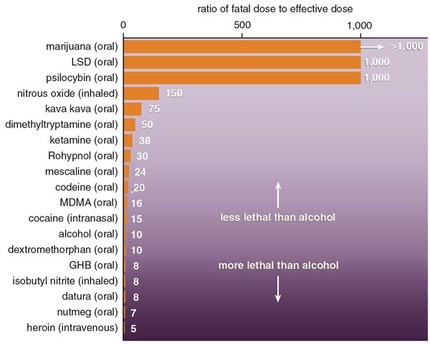
By way of example, alcohol/ethanol has a TI of 10, whereas LSD and cannabis have TI’s of greater than 1000. This means that one has to consume far less alcohol to achieve toxicity and lethality than either LSD or cannabis. Indeed, it is virtually impossible to overdose (OD) with LSD or marijuana compared to the ease at which one can OD on alcohol. Figure 2.

Lethal doses for common drugs
Figure 2. Lethal dose of common drugs.

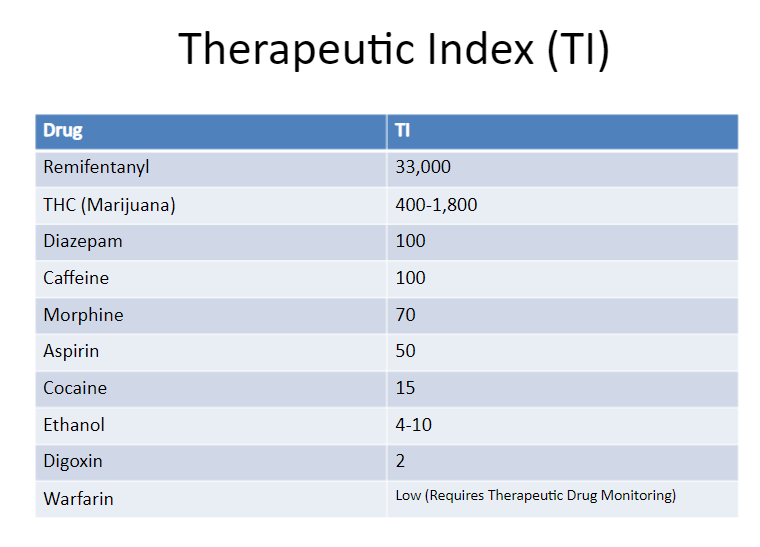
Similarly, the TI for many common drugs is quite low. Figure 3. from a pharmacology lecture on SlideShare, shows the TI of common medications.

Therapeutic index of medications
Figure 3. Therapeutic index of medications.

What Does Any of This Mean for TTFD?

In mice studies, the LD50 for TTFD has been calculated at 450mg/kg when given intravenously (IV) while the LD50 for an oral dose is 2200mg/kg. Since the conversion from mice to human dosage is not calculated directly based upon on weight, but accounts for interspecies differences in metabolism, an equivalent LD50 for a 70 kg (154 lb) human would be 2.5 grams of TTFD when administered via IV and 12.5 grams if taken orally. Whilst 2.5 (IV)-12.5 (oral) grams may seem low, no one realistically takes that amount of TTFD per day for therapeutic reasons. The highest oral doses I have observed are around ~1-2 grams per day. These are individuals with chronic thiamine deficiency, usually accompanied by underlying genetic issues. More commonly, observation and clinical research suggest between 100-300 mg/day is used for most treatment/research protocols (see the ‘What about Research in Humans’ section below).

Back to the math, the RDA for thiamine, not TTFD, but thiamine consumed from food naturally, from food fortification and/or via supplementation using the most common formulations of thiamine mononitrate or hydrochloride (HCL) is 1.1 and 1.2 mg per day for adult females and males respectively. Assuming that the RDA values represent an effective dose (there are no actual data on the ED50 for thiamine), and for simplicity, that TTFD is as effective as the other two formulations, when we calculate the TI for humans (TI= ED50/TD50) for humans, we get a huge range between effective dose and toxic or lethal dose. For IV administered TTFD the ratio would be ~2,500:1, while oral dosing, it would be ~12,500: 1. If we assume, based upon its bioactivity that TTFD is more potent than the other two formulations, the TI would increase even more.

Based just upon standard toxicology parameters, it is clear that TTFD is not toxic. An individual would have to take ~12,000 times the effective dose to approximate lethality. I say approximate, because there are no documented cases of TTFD overdose. Lethality, however, is just one component of toxicology. Adverse reactions are an important consideration. That is why, in human research, instead of LD50, TD50 is used. Here though, the work becomes a little murky, partly because animals are used and partly because the chemistry of TTFD metabolism is complicated.

Toxicity Studies Using High Dose TTFD

Consistently, the animal data show that excessive doses for extended periods of time, even during pregnancy and across multiple generations, TTFD is not toxic.

  • Research performed on the reproductive effects of TTFD in monkeys showed that massive doses of 500mg/kg, close to supposed LD50 for that species, found no deaths. To put this in context, it would be the human equivalent of taking 10-11 grams per day for MONTHS.
  • That same study also looked at massive doses in rabbits and found no significant increase in incidence of fetal malformations in either group was observed, even in groups treated with high doses and no significant teratogenic effects or developmental abnormalities in pregnancy occurred.
  • As referenced in this document, Takeda’s research by Mizutani demonstrated that administration of 100, 300 and 500mg/kg in rats for two generations from the time of maturation to the time of reproduction showed no abnormalities. The average human equivalent (70Kg) of these doses would be 570mg, 1.7 grams and 2.8 grams per day for life.
  • The results of another study showed that long-term oral administration of 30-300mg/kg to pregnant animals failed to produce any significant developmental abnormality. Intraperitoneal administration of 1000mg/kg also showed no sign of chromosome aberration, damage to sex organs or spermatogenesis.

TTFD Metabolism

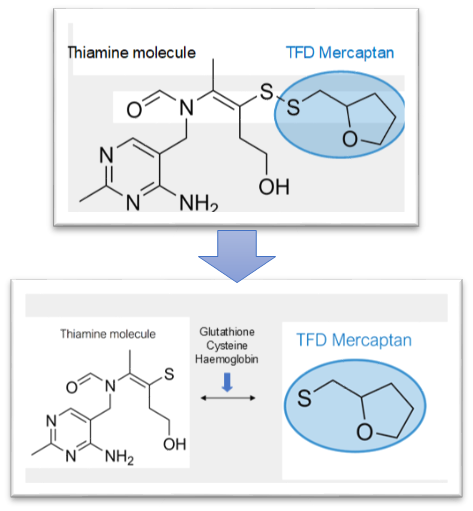
If TTFD is not toxic via the traditional measures, is there something about the molecule itself that may be problematic and cause unwanted effects? Cutler speculated that the mercaptan part of TTFD was responsible for toxicity, and that this primarily affected the liver. The word “mercaptan” refers to the thiol group that breaks away from thiamine after its absorption into the cell. This mercaptan group essentially accounts for the “TFD” of the abbreviation TTFD. After TTFD is absorbed, it gets “broken apart” (the disulfide bond is chemically reduced) by glutathione, cysteine, or hemoglobin to release the free thiamine molecule, which will become trapped inside the cell and ultimately used by the body.

mercaptan metabolism
Figure 4. Mercaptan metabolism phase 1.

In more technical terms, the prosthetic mercaptan is released and then rapidly metabolized by the liver through methylation and later sulfoxidation by liver mono-oxygenase enzymes into breakdown products which are then excreted in urine. Is mercaptan toxic as Cutler suggested? The original series of studies on the enzymatic breakdown of TTFD and mercaptan show that it is not toxic and is rapidly excreted from urine.

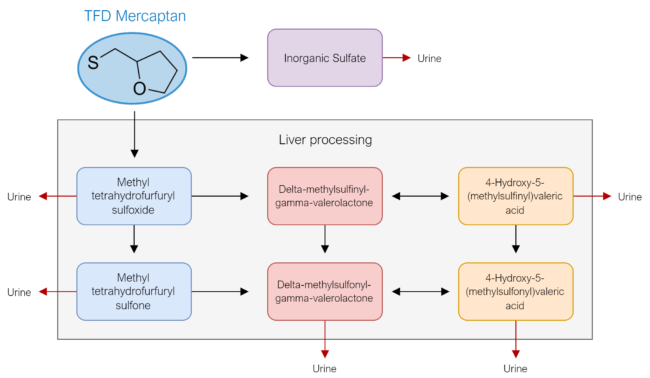
If mercaptan itself is not toxic, perhaps it metabolizes into something else and one of its by-products are problematic. From Figure 5., we see that mercaptan is metabolized into a sulfate that is then eliminated via urinary excretion and a few other compounds that are processed by the liver first before being eliminated via urinary excretion as well. The breakdown products are shown below in Figure 5.

TTFD - mercaptan metabolism
Figure 5. TTFD – Mercaptan metabolism.

A study titled “Pharmacological study of S-alkyl side chain metabolites of thiamine alkyl disulfides” sought to determine the acute and sub-acute toxicity levels of each metabolite. They concluded that toxicity of these breakdown products was low. Remember the LD50, the dose that causes death in 50% of the study animals, research shows that the LD50 each of these breakdown products is enormous, far more than would be clinical relevant in humans. The results of this study showed:

  • Inorganic sulfate: non-toxic
  • Delta-methylsulfonyl-gamma-valerolactone: also non-toxic.
    • Intravenously, the LD50 in mice was in excess of 5 grams/kg body weight. For comparison, the LD50 estimate for a 70KG human: 5 grams intravenously.
    • Orally the LD50 in mice was 6 grams/kg body weight, which, for a 70 kg human would translate to approximately.
  • 4-Hydroxy-5-(methylsulfonyl) valeric acid
    • Intravenous LD50 in mice: 1.5 grams/kg body weight
    • LD50 estimate for a 70KG human: 3 grams intravenously

Once again, it appears that none of these compounds is toxic. In humans, approximately 82-90% of these metabolites are excreted within 24hrs and 100% are excreted within 48hrs. What this tells us is that by themselves, these metabolites are not toxic except in supra-physiologic doses, which are not relevant from a clinical perspective.

What About Liver Damage?

Cutler speculated that metabolism of TTFD resulted in liver damage. To quote Cutler:

My guess is the tetrahydrofurfuryl mercaptan part kills your liver.

Here too, however, the data suggest otherwise. In animals with artificially induced liver damage by carbon tetrachloride and/or hepatic dysfunction due to choline deficiency, the breakdown products of TTFD were assessed. They showed that the quantity of excreted metabolites in the hepatotoxic group were equal to the control, and in choline deficiency the quantity of excreted metabolites was only slightly reduced. In the hepatotoxic group, a qualitative difference was found with a lower proportion of methyl metabolites (MTHFSO, MTHFS02). This suggests, even in with pre-existing or induced hepatotoxicity, TTFD can be excreted albeit slightly differently.

A peer-reviewed study published in 2018 entitled The Effects of Thiamine Tetrahydrofurfuryl Disulfide on Physiological Adaption and Exercise Performance Improvement” studied the effects of different doses of TTFD in 30 animals for a period of 6 weeks. The highest oral dose used was 500mg/kg in 10 test subjects, which is the human equivalent to 40mg/kg which, in a 70KG human, is 2.8 GRAMS per day for 6 weeks. Remarkably, they showed that this highest dose produced significant improvement in endurance capacity and lactate homeostasis.

More importantly, this study also performed comprehensive measures of sub-acute toxicity with the aim of evaluating the safety of high doses in humans. Even at the highest dose taken for 6 whole weeks, no changes in behavior, diet, growth curve, or organ weight (liver, kidney, muscle, heart, lung etc.) was observed. Furthermore, to assess liver function, they performed comprehensive metabolic analysis including liver enzymes (ALT, AST), creatine, uric acid, total cholesterol, triglycerides, albumin, total protein, ammonia, creatine kinase, and total protein. The only significant changes were a slight reduction in total cholesterol and significant reduction in lactate, creatine kinase and blood urea nitrogen (all of which are considered positive changes). Every other liver marker was perfectly in range. To gain further insight into the liver function and the health of other tissues, they performed histopathological analysis of the tissue under microscope and showed that massive doses caused no pathological changes in any tissue whatsoever. The authors conclude:

In the current study, we proposed that the higher thiamine derivative, TTFD, could significantly improve physical activities and physiological adaption with evidence-based safety validation. For practical application, we recommend that athletes should consume a daily intake of 40 mg/kg TTFD (equivalently converted from mouse 500 mg/kg dose based on body surface area between mice and humans by formula from the US Food and Drug Administration [36]) to improve energy regulation for higher performance in a combined nutritional strategy, including carbohydrate loading for efficient energy demand during extended exercise.

They were so convinced of the supplement’s safety that they recommended athletes take the equivalent of 2.8 GRAMS per day LONG-TERM to improve athletic performance.

What About Research in Humans?

To those who complain that these are “animal studies”, the comparative metabolic studies have found that the metabolism of TTFD is essentially the same in animals and humans. This means that humans are likely to respond similarly. As one of the first medical doctors to use TTFD as a clinical intervention in the Western world, Dr. Derrick Lonsdale obtained a special license from the FDA to import this molecule and studied its effects in his pediatric patients. In his own words:

I was able to study the value of this incredible substance in literally hundreds, if not thousands of patients. Far from being toxic, as this person claims, I never saw a single item that suggested toxicity.

Some reports published by Lonsdale and other authors include:

  • 22 children with Down’s Syndrome, 12 of which were administered TTFD for 12 months and 12 of which were administered TTFD for 6 months. No serious adverse events noted.
  • Brainstem dysfunction – three infants saw symptomatic improvement with thiamine disulfide treatment.
  • Abnormal brainstem auditory evoked potentials, one infant was administered intravenous TTFD and displayed normalization of brainstem function
  • 21 patients subacute necrotizing encephalomyelopathy treated with thiamine derivatives TPD/TTFD 10 Children – no serious adverse events – 1 experienced worsening of behavior/symptoms, 2 with rash
  • 44 polyneuropathy patients treated with 50mg TTFD injection, no adverse effects reported.
  • Prosultiamine (TPD) at 300mg per day for 12 weeks (TPD, a very similar molecule to TTFD) used to treat spinal cord injury in human T lymphotropic virus type I-associated myelopathy/tropical spastic paraparesis (2013). Significant improvement in motor functions and bladder control, as well as reducing viral numbers in blood. Only adverse symptom was mild epigastric discomfort. No safety concerns.

For a comprehensive look at thiamine research, refer to Drs. Lonsdale and Marrs’ book: Thiamine Deficiency Disease, Dysautonomia and High Calorie Malnutrition

TTFD Used in Other Countries

It is worth noting that TTFD is not well known in Western medicine. The regions of the world in which it is used extensively include Japan, China, and other countries in the Far East.

Japanese Cases

Unfortunately, much of the Japanese literature is not published in English, so it can be difficult to find. I use a translator application called DeepL to read these articles. Furthermore, TTFD is so regularly prescribed for treating thiamine deficiency that much of the literature refers to TTFD simply as “thiamine” or “vitamin B1”, using the terms interchangeably. This means that finding research papers without TTFD in the actual title is very difficult. Below are 33 case reports from the Japanese literature, including some in children, which document the benefits of TTFD clinically. In all of the papers I have read, I have not once seen mention of safety concerns using this. In several reports, hundreds of milligrams are maintained indefinitely with no apparent issues.

  1. 267 cases of sudden-onset deafness was treated with 150mg TTFD orally, with most therapeutic effect seen after 2-3 months of treatment
  2. 20 cases of perceptive deafness, 20 cases of laryngeal disease, 7 cases of facial nerve palsy and 3 cases of anosmia injected with TTFD 50mg once per day for 5-20 days. 60% effective and no side effects.
  3. 24 subjects without nutritional deficiency, 20 cases of alcoholism, and 48 cases of alcoholism with signs of deficiency and/or liver disease were given either TTFD, Thiamine propyldisulfide (a similar disulfide derivative), or thiamine HCL. They showed no toxic effects at 3-6 months in any group, and demonstrated that oral TTFD/TPD increased whole blood, erythrocyte, and cerebrospinal fluid thiamine levels at an equivalent level to intravenous thiamine HCL.
  4. Beriberi treated with 150mg IV one week, followed by 100mg oral long-term (2014)
  5. Cardiac failure 100mg IV (1987)
  6. Heart and circulatory failure (2008)
  7. TTFD administered to 15 year old boy to treat beriberi, remained on the therapy long-term
  8. 18 patients with non-diabetic peripheral neuropathy 1-3 months, no serious side effects
  9. Wernicke encephalopathy in hemodialysis – 100mg/iv, later oral continued for 2 months until improvement (2009)
  10. Diabetic lactic acidosis – 100mg/day IV for 7 days resolution in symptoms, followed by 75mg indefinitely (2008)
  11. Beriberi w/ pulmonary hypotension – 50mg long-term (2019)
  12. E/beriberi after intestinal resection – 150mg IV three days, 75mg long-term (2018):
  13. E/Shoshin beriberi – 150mg/IV, 75mg oral long-term (2013)
  14. A case of Wernicke’s encephalopathy with severe cardiac sympathetic dysfunction – 100mg (2012)
  15. Marked anasarca with impaired consciousness, which was thought to be caused by shoshin beriberi due to impaired vitamin B1 utilization. – TTFD 40mg +400mg HCL, followed by 2 months+ TTFD 100mg (2015)
  16. Beriberi neuropathy and shoshin beriberi that developed 6 years after gastrectomy on the cardia side – 100mg TTFD long term (2013)
  17. Chemotherapy induced W.E – IV thiamine HCL followed by TTFD 75mg long-term (2008)
  18. Postoperative W.E treated with 100mg IV TTFD (1998)
  19. Cardiomyopathy associated with mitochondrial disease that developed heart failure, treated with 100mg long-term (2017)
  20. Mitochondria rescue formula recommended for acute encephalopathy: including TTFD 100mg (2019)
  21. Pediatric acute encephalopathy neuroprotection protocol – cocktail including 200mg TTFD in 15 children (2013)
  22. 200mg TTFD x 31 children childhood acute encephalopathy (part of protocol) (2014)
  23. Lactic acidosis caused by low-dose metformin: Thiamine HCL 100mg followed by 75mg TTFD long-term, normalization of all liver values (2014)
  24. Beriberi mimicking Guillain-Barré syndrome – IV TTFD 100mg resolved this
  25. Shoshin beriberi – IV TTFD 150mg for 11 days, indefinite oral dose 150mg TTFD long-term
  26. 6 infants (0-1 yrs old) treated with TTFD for childhood congenital lactic acidosis. Doses included 35mg/KG – 50mg/KG. Some cases were unresponsive to thiamine HCL, where TTFD ONLY could reduce lactate significantly “Fursulthiamine hydrochloride was significantly superior to thiamine hydrochloride in reducing lactate.” Only the cases which used TTFD survived. Children were kept on high doses permanently with no adverse effects.
  27. 75mg TTFD improved cerebral blood flow in deficiency
  28. 75mg TTFD used in mitochondrial myopathy long-term
  29. 50mg TTFD used to treat edema and weight gain and marginal thiamine deficiency – authors recommend TTFD instead of thiamine HCL (2021)
  30. Biguanide-induced lactic acidosis treated with 100mg, then 300mg TTFD (2017)
  31. 100mg used to treat encephalopathy w/ hyperammonemia (2003)
  32. Subacute spinal degeneration caused by B12 deficiency treated with B12 and 75mg TTFD long-term (2020)
  33. Statement by a Japanese physician: recommendation to use TTFD instead of thiamine HCL due to superior qualities.

Chinese Cases

Like the Japanese research, most (if not all) of the Chinese studies using TTFD are not published in English. However, it is clear that the Chinese medical system uses TTFD frequently and has done so for several decades. Most of the studies below were reported within the last 20-30 years. Once again, I could not find any concern regarding the safety of this molecule and it was demonstrated as remarkably effective for a variety of conditions. Interestingly, the Chinese not only use it for deficiency, but also for non-deficient conditions where it is often injected directly into acupoints (acupuncture meridians) either alone, or in combination with other nutrients/medications. They still use these methods to this day. Here are 32 more articles regarding the safety and efficacy of TTFD from the Chinese literature.

  1. 194 cases of infantile beriberi cured with IM/IV thiamine and TTFD (1987)
  2. 50 infants treated with TTFD for cardiac beriberi (1997)
  3. 70 children with infantile beriberi cured with intravenous TTFD (1990)
  4. 48 cases of infantile cerebral beriberi (0-3 years old) treated with TTFD (1997)
  5. 35 cases of infantile beriberi cured TTFD (2010)
  6. 10 cases of infantile cerebral beriberi cured with B1 HCL and TTFD
  7. 10 cases of cerebral beriberi and basal ganglia damage treated with TTFD injections (2003)
  8. 125 children with pneumonia treated using TTFD as primary treatment (10mg IM <3 months old, 20mg IM <6 months, 20mg twice per day >6 months old)
  9. 283 out of 285 children with rectal prolapse cured by TTFD injection into “changqiang” acupoint (1988)
  10. 89 cases of rectal prolapse also treated with TTFD acupoint injection (1998)
  11. 50 cases of cerebral hypoplasia improved with acupoint injection of acetyl glutamine and TTFD (1983)
  12. 35 patients treated for hyperthyroidism with TTFD as adjunctive treatment (1999)
  13. 50 cases of costochondritis cured with Analgin + TTFD injection (1993)
  14. 13 children with ocular nerve palsy cured with TTFD (2010)
  15. 50 cases of urinary incontinence treated with acupoint injection of combination of acetyl glutamine, TTFD and/or r-aminobutyric acid (1990)
  16. 26 cases of delayed peripheral neuropathy due to organophosphate poisoning treated with acupuncture and TTFD injection (2001)
  17. 47 cases of lumbar disc protrusion treated with acupoint injection, B12 and TTFD (1994)
  18. 38 cases of facial neuritis treated with acupuncture and vitamins including TTFD injection (1999)
  19. 60 cases of migraine treated with Chinese medicine, flunarizine, and TTFD (2004)
  20. 24 cases of migraine treated with TTFD acupoint injection (1990)
  21. 40 patients with cerebrovascular disease addressed using acetyl glutamine and TTFD scalp acupoint injections (2001)
  22. 30 cases diabetic neuropathy, 75mg TTFD used as a control in– 60% effective (2002)
  23. 69 cases of Bell’s Palsy, TTFD used with acyclovir (1999)
  24. 120 cases of Bell’s Palsy treated with oral TTFD, methylb12, and/or electroacupuncture and facial muscle exercise (2019)
  25. 65 cases of Meniere’s Diseases treated with TCM, vitamins including TTFD injections
  26. 118 cases of herpes zoster treated with TTFD in conjunction with acyclovir and traditional Chinese medicine (2013).
  27. 100 cases of senile deafness treated with cocktail including TTFD (2000)
  28. 36 cases of cervical spondylotic radiculopathy treated with control of TTFD and naproxen – 75% effective (2009)
  29. 60 cases of postherpetic neuralgia treated with cocktail including TTFD
  30. 1 case of polerarteritis nodosa w/peripheral neuritis treated with cocktail including TTFD
  31. 1 case of central paralytic dysphagia (tuberculosis meningitis) unresponsive to conventional treatment cured by injection of TTFD at meridian acupoint (1974)
  32. 1 case of drug-induced diplopia treated with methyl B12 and TTFD

TTFD Is Not Toxic

At this point, it should be clear that TTFD is not toxic at either therapeutic or even supraphyisiological doses. This is supported by in vitro, animal, and human studies. One would have to use ~12,000 times the therapeutic dose to approximate toxicity and even then it is not clear that there would be the problems that Cutler suggested. That is not to say that everyone who takes this supplement responds favorably. Clinically, there are individuals for whom other formulations of thiamine work better. This is generally related to a lack of the necessary nutrient cofactors involved with the detox enzyme glutathione. I have written about that previously here. That perceived intolerance, however, is not the same as toxicity. The toxicity data are clear. TTFD is safe. The clinical data are also clear. TTFD is effective. The molecule has been in use for over half a century and is used extensively in medical practice in Eastern countries. No safety concerns or claims of toxicity have been raised, apart from those made by Cutler.

We Need Your Help

More people than ever are reading Hormones Matter, a testament to the need for independent voices in health and medicine. We are not funded and accept limited advertising. Unlike many health sites, we don’t force you to purchase a subscription. We believe health information should be open to all. If you read Hormones Matter, like it, please help support it. Contribute now.

Yes, I would like to support Hormones Matter.

Photo by Matt Walsh on Unsplash.

This articles was published originally in February 2022. 

ASD, Seizures, and Eosinophilic Esophagitis: Could They Be Thiamine Related?

7.6K views

My 18 year old son has ASD and has had a seizure disorder since he was 6 years old. He has tried virtually all anti-epileptic drugs. Either the side effects were unbearable, they made his seizures worse, or had no effect on his seizures. He was diagnosed with Eosinophilic Esophagitis. He is underweight and of short stature, and always has been. Mitochondrial tests show that complex II is working at 26% capacity. He is also autistic. He has tested positive for folate receptor antibody.

Over the years he has done several rounds of antibiotics, including Flagyl, which I have since learned that it significantly depletes the body of thiamine. He has also taken several rounds of Diflucan, Azithromycin, Vancomycin, Augmentin, Amox for various issues including candida, clostridia, gram negative gut bacteria, etc.

He is currently on Lamictal and just started Briviact for seizures. The Briviact causes anger and aggression issues. He currently deals with OCD tendencies. He was recently found to have bone density of 2.8 standard deviations below normal. This falls in the range of osteoporosis, but he has not been diagnosed with it because of his age.

He eats fresh and a lot of dried fruit, meats, raw and cooked greens, white rice, lots of cooked veggies, eggs. He also takes Lipothiamine 100 mg/day, Magnesium 550 mg, a multi-vitamin, calcium, vitamin D, and K, all at the direction of his doctors.

Childbirth and Infancy

M was born on July 9th 2005 7lbs 9oz. He was full-term. I had high blood pressure at 41 weeks and labor was induced. He would not drop into position and he became distressed and so was delivered via cesarean while I was under general anesthesia.

He spent 4 days in the NICU because he aspirated meconium and would not latch to feed. While in the NICU, he was administered antibiotics. He was formula-fed, not breast-fed.

As an infant, the large size of his head was somewhat of a concern for the pediatrician. He was administered vaccinations according to the CDC guidelines for the first 12 months. He had infantile spasms off and on. He spiked a fever for every vaccination. Tylenol was administered. He received 3 doses of flu vaccine, accidentally, within 3 months.

He did not sleep well, and still doesn’t.

Initially, he was very precocious. As an infant, he would put puzzles together that were for much older children. He would complete sorting activities that were well beyond his age range. He did not babble and eye-contact was fleeting.

After his 18 month vaccination, he lost just about everything within 2 weeks. After these vaccinations, he couldn’t do his puzzles, bring food to his mouth, smile, couldn’t stand to be read to when he previously loved to be read to. He also developed a sensitivity to light and sound and cried a lot.

At 24 months, he was diagnosed with profound autism.

PANDAS/PANS and Eosinophilic Esophagitis

At age 10 years, he abruptly lost skills again and it was thought he had PANDAS/PANS as he had several strep infections treated with antibiotics. He did a several month long courses of Augmentin or Azithromycin to treat PANDAS/PANS. He had a severe trauma at age 11. He was horrifically abused by a school employee.

He has always been of short-stature nearing 5th percentile for height, and slightly overweight for his age, until age 14 when he started having symptoms of Eosinophilic Esophagitis. He was diagnosed with EoE at 15 and has struggled to keep his weight high enough as he dealt with the intense pain, fatigue, and esophagus issues with this condition. He is currently taking Dupixent for his Eosinophilic Esophagitis as the PPI and Budesonide slurry were not addressing the issues. So far Dupixent is allowing him to eat. His diet remains very restricted due to having so many trigger foods and he has almost no appetite.

He eats a lot of dried and fresh fruit. He loves greens, raw and cooked. He also eats meat, white rice noodles.  He eats mostly an organic diet. He does occasionally enjoy candy.

Seizures

He developed seizures at age 6. These were controlled for a while on Depakote, but the side effects of Depakote were too much for him and so we had to stop. His seizures are now not controlled. He has 1-2 tonic-clonic seizures per week, plus several staring spells all throughout the day. Recent EEG showed abnormal spikes and discharges in the frontal and temporal lobes. It indicated his seizures involved many places on his brain. Brain surgery was being considered for seizures at this time, but ruled out as an option due to the nature of his seizures.

He has failed several other seizure meds including Vimpat, Zonegran, Aptiom, Topamax, Onfi, and others. He is currently on Lamotrigine and Epidiolex for his seizures. He also takes trazadone and gabapentin for sleep, although these do not consistently help him sleep. He is so consumed by fatigue and can hardly get out of bed even to walk across the room. With tons of encouragement he can do brief periods of school work. The meds cause him to lose focus and become frustrated. He seems to almost always be lost in a fog and unable to participate in basic conversations without losing focus or becoming too exhausted to continue. Each seizure will cause him to be in bed for 2-3 days. He has fallen many times going into a seizure and is now afraid to leave the safety of his bedroom. He will come out, but rarely.

He has intermittent issues with nystagmus. He had a bad case of COVID 2 years ago, which caused clusters of seizures and constant nystagmus.

He has an exaggerated startle response.

Despite It All

M is a sweet young man. He is brilliant. He loves animals. He tells everyone he sees that he is so happy to see them. He is working with a local legislator on how to improve rights for non-speaking people, especially in the court room. He is completing all of his high school courses at home with straight A’s and he is a published poet.

He does not speak, but he communicates by pointing to letters on an alphabet board. This is a skill that took him years to learn. He communicates at an age-appropriate level or higher. He is working, slowly, toward a standard high school diploma.

Postscript

Based upon what I have learned from this website, I discussed thiamine with our physician. It turns out, she heard Dr. Lonsdale speak years ago. She recommended 50mg of Lipothiamine. The entire time he was taking it, he had no seizures. I was not sure that it was thiamine or the meds until we ran out for about a week. The seizures returned, but as soon as we resumed the Lipothiamine, they disappeared again. He has been taking it again and now it has been 2 weeks without seizures. I don’t want to get my hopes up, but it could definitely be a piece of the puzzle. Are there others out there with similar experiences?

We Need Your Help

More people than ever are reading Hormones Matter, a testament to the need for independent voices in health and medicine. We are not funded and accept limited advertising. Unlike many health sites, we don’t force you to purchase a subscription. We believe health information should be open to all. If you read Hormones Matter, like it, please help support it. Contribute now.

Yes, I would like to support Hormones Matter. 

Image by Gerd Altmann from Pixabay.

This story was published originally on January 2024. 

Western Medicine: A House Built on Sand

13.5K views

Let Food Be Medicine

At the risk of repeating myself too much as in former pages of this website, I want to return to discussing in some depth the fallacies incorporated in our present approach to health and disease. You may or may not remember that I have stated a number of times that Hippocrates (400 BCE) uttered the formula “Let food be thy medicine and medicine thy food”. Having been construed as the “father of modern medicine”, it has seemed to me for a long time that he has been ignored as a “parent”.

For centuries, there was no idea about disease. The early Egyptians bored holes in people’s heads “to let out the evil spirits”. Throughout medieval history the only treatment seems to have been “bloodletting”. In our modern world, horns from the rhinoceros are regarded so highly for their medical properties, that this wonderful animal is reaching the point of annihilation. Pharmaceutical drugs, with the exception of antibiotics, only treat symptoms. I ask you, does this make any sense at all in the light of what Hippocrates suggested?

Because humanity tends to follow a collective pattern and only rarely listens to an idea derived from rational deduction, I view medicine as like a traveler on a road without a known destination. In my imagination, he comes to a fork in the road, but the signpost records information on only one fork. It reads “kill the enemy”, reminding me of the story of Semmelweiss, a lone thinker in his time and who “gave thought to the message on the signpost”. Most physicians are familiar with this story but it is worth repeating.

Semmelweiss was a physician who lived at a time before microorganisms had been discovered. He presided over an obstetric ward where there were 10 beds on one side and 10 beds on the other. The physicians would deliver their patients without changing their clothes or washing their hands. As we would expect today, the death rate from infection was extremely high. Semmelweiss said to himself, “they must be bringing [the enemy] in on their hands” and he devised the first known clinical experiment. He made it a rule for the physicians on one side of the ward to wash their hands in chlorinated lime before they delivered their patient. The physicians on the other side of the ward continued to deliver their patients in the same old way. As we would easily recognize today, it did not require a statistician to see the difference between the incidences of infections on the two sides of the ward. Irrespective of the fact that this was a dramatic discovery that later had obvious meaning, Semmelweiss was accused by the medical authorities of the day of being non-scientific because he could not explain what it was that was supposed to be on the hands of the physicians. Of course the medical establishment had no idea that their model for disease was catastrophically wrong, although collectively certain that their philosophy bore all the hallmarks of scientific truth. Semmelweiss had offended the medical establishment and they threw him out of the hospital. He died a pauper in a mental hospital.

The First Medical Paradigm: Kill the Enemy

When microorganisms were discovered to be responsible for infections, it fulfilled the message on the signpost and it became the first paradigm in medicine. Kill the bacteria: kill the virus: kill the cancer cell, but try not to kill the patient. If we look at the history of this time, we find that a lot of patients were killed in the concerted attempts to find ways and means of killing the enemy. We all remember the discovery of penicillin and how it led to the antibiotic era, still the major therapeutic methodology, even though we know that it is running into bacterial resistance and has never been a good idea for viruses or cancer cells.

Although the germ theory had been around for a long time, Louis Pasteur, Ferdinand Cohn and Robert Koch were able to prove it and are regarded as the founders of microbiology. However, Pasteur was said to have uttered the words on his deathbed “I was wrong: the microbe (germ) is nothing. The terrain (the interior of the human body) is everything”. Perhaps he had unknowingly voiced the principles of the next paradigm in medicine.

The Second Medical Paradigm: Genetic Determinism

The monk, Mendel, by his work on the segregation of peas, formulated what came to be known as the genetic mechanisms of Mendelian inheritance and the discovery of DNA modeled the next stage in our collective development. The fact that each of us is built from a complex code that dictates who we are was a remarkable advance. The fact that the construction of the code sometimes contained mistakes (mutations) led us to explaining many diseases and for a long time we believed that the genes were fixed entities, dictating their inexorable commands throughout life. However, the newest science of epigenetics has shown us that the DNA that makes up our genes can sometimes be manipulated by nutrition and lifestyle, as well as by artificial means in the laboratory.

Health: The Ability to Respond Effectively to a Hostile Environment

We are surrounded by germs that exist everywhere, many of which cause disease as we are all too well aware. Nevertheless, whatever evolutionary mystery guides our development, we are all equipped with an extraordinarily complex, genetically determined, defense system. We now know that this is organized and directed by the brain. Assuming that the genetic determinations of the terrain are completely intact, we can be reasonably assured that we can defend ourselves from any germ that Mother Nature can throw at us. Built in mechanisms in the brain require a huge amount of energy when it goes into action directing the traffic of the immune system. It is a crisis and can be likened to a war between the body and the attacking organisms. Thus, if Pasteur may have stated the next paradigm in medicine, what does it mean?

As an example, a typical microbial attack causes a common disease that goes by the name of febrile lymphadenopathy (strep throat). The throat becomes inflamed, perhaps because the increased blood supply brings in white blood cells, acting in defense. An increase in circulating white cells also occurs, bringing a brigade of defensive soldiers. The glands in the neck become swollen because they catch the germs that get into the lymph system.  Lastly, the increased temperature of the body is also part of the defense. Germs are programmed to have their most intense virulence at 37°C, the normal body temperature. If this temperature is increased, the attacking germ does not have its maximum efficiency. In other words, what we are looking at as the illness is really the act of brain/body defensive interaction. Besides attempting to kill the attacking germ as safely as possible, should we not be assisting the defense? The answer calls into question the relationship between genetic intactness and the required energy to drive the complex defensive action. Perhaps a genetic mistake (mutation) can sometimes be manipulated by an epigenetic approach through nutrients, just as advised by Hippocrates.

Disease: The Inability to Adapt to the Environment

If we look at health as the ability to respond effectively and adapt to environmental, mental and physical stressors, it is possible to re-conceptualize illness by the manner in which that response is carried out. A healthy individual will respond to stressors without problem, because of an efficiently effective mobilization of energy dependent mechanisms. In contrast, individuals who are not healthy will respond in one of two ways. Either the defense mechanisms will be incomplete or absent or over-reactive and inconsistent. Listed below are examples of both. Note that this is in line with the ancient philosophy of Yin and Yang or, in modern terms “everything in moderation”. Too much of anything is as bad as too little.

Exhausted Defense Systems

When I was a resident in my English teaching hospital, before the antibiotic era, I admitted a patient with pneumonia who was known to have chronic tuberculosis. He was seen to be “unconsciously picking at thin air with his fingers” and the physician for whom I was resident pointed out that it was a classic example of “a sick brain” and that he would die. He never had any fever, elevation of white blood cells or any other marker of an infection but at autopsy, his body was riddled with small staphylococcal abscesses. He had lived in the east end of London, notorious for poverty and malnutrition at that time. In fact, as an organism, he never showed the slightest sign of a defense. His “sick brain” was completely disabled in any attempt to organize his defense.

Excessive or Aberrant Defense Mechanisms

Many years ago I was confronted with two six-year-old unrelated boys who for several years had each experienced repeated episodes of febrile lymphadenopathy. Both boys had been treated elsewhere as episodes of infection. In each case the swollen glands in the neck were enormous. One of the boys had been admitted to a hospital for a gland to be removed surgically for study. It had been found that the gland was just enlarged but had a perfectly normal anatomy, only contributing to the mystery. One of the curious parts of the history was that each of these boys had been indulged with sweets. Because I was well aware that sweet indulgence could induce vitamin B1 (thiamine) deficiency, I tested them and found that both were indeed deficient in this vitamin. Treatment with large doses of thiamine completely prevented any further attacks. The mothers of the boys were advised to prohibit their sweet indulgence. I needed some evidence and asked one of the mothers to stop giving thiamine to her son. Three weeks later he experienced a nightmare, sleep walking and another episode of lymphadenopathy that quickly resolved with thiamine.  A nightmare and sleep walking supported the contention that the brain was involved in the action. In addition, his recurrent illnesses had been associated with increased concentrations of two B vitamins, folate and B12, both of which decreased into the acceptably normal range with thiamine treatment. Of course, this added complexity to an explanation.

What I had already learned about thiamine deficiency is that it makes the part of the brain that controls automatic mechanisms much more sensitive. One or more reflexes are activated unnecessarily. No reflex activation is as bad as too much. Thus, the “trigger-happy” defense mechanisms were being activated falsely. Thiamine is perhaps the most important chemical compound derived from diet that presides over the intricacies of energy metabolism. All that was required was an improved energy input to the brain. Folate and B12 are vitamins that work in energy consuming mechanisms and I hypothesized that their respective functions were stalled for lack of energy, causing their accumulation in the blood. Whatever the explanation, the facts were as described. It is interesting that the high levels of folate and B12 had been found at the hospital where a lymph node had been removed. The mother had been accused of giving too many vitamins to her child. She had told me that she did not understand this explanation because she had not given any vitamins to him. I had measured them solely to verify this finding.

The Treatment of Disease Should Begin with Host Defenses

We exist in a hostile environment. Each day throughout life we live in anticipation of potential attack. A physical attack may be an injury, an infection or an ingested toxin. A mental attack, divorce, grieving, loneliness, generally referred to as “stress” may be virtually anything that causes the brain to go into increased action. In facing both physical and mental forces, it is the brain that organizes the defense and it demands an increase in energy output that depends solely on the ability to burn fuel. The fuel burning process is governed by a combination of genetically determined ability and the nature of the fuel. Thus, the treatment of all disease is dependent on this combination being effective. It can be seen as obvious that killing the enemy is insufficient. As our culture exists at the present time, trying to get people to understand the necessity of perfect nutrition is a pipe dream. This particularly applies to youth and the artificiality of the food industry. However, our culture is also virtually brainwashed to accept tablets as a means of treating anything.

In our recently published book “Thiamine Deficiency, Dysautonomia and High Calorie Malnutrition“, Dr. Marrs and I have shown that thiamine deficiency is extraordinarily common and that supplementary thiamine and magnesium together balance the ratio of empty calories to the required concentration of cofactors necessary for their oxidation. The question remains, would vitamin supplementation, just as artificial, be a more successful sell as a preventive measure? We have shown that the symptoms derived from prolonged high calorie malnutrition can last for years as an unrecognized polysymptomatic illness that haunts many physicians’ offices. Early recognition represents an easy cure. There is a good deal of evidence that ignoring the symptoms and the persistence of high calorie malnutrition creates a gradual deterioration that then turns up as chronic disease. Some drugs, metronidazole being an example, will precipitate thiamine deficiency, so we have to recognize the precarious nature of the present medical approach in the use of drugs whose action in treating disease is often unknown. Although recognition of the artificiality of thiamine supplementation is implicit in this proposal, it is better than allowing a common example of continued morbidity to exist.

We Need Your Help

More people than ever are reading Hormones Matter, a testament to the need for independent voices in health and medicine. We are not funded and accept limited advertising. Unlike many health sites, we don’t force you to purchase a subscription. We believe health information should be open to all. If you read Hormones Matter, like it, please help support it. Contribute now.

Yes, I would like to support Hormones Matter.

Photo by Phil Hearing on Unsplash.

This article was published originally on July 19, 2018. 

Rest in peace Derrick Lonsdale, May 2024.

Lessons Learned About Recovering From Thiamine Deficiency

45K views

It has been a year since I started taking high dose vitamin B1 (thiamine) for a variety of chronic symptoms including: Lyme disease, CFS/ME, endometriosis, histamine intolerance and other food intolerances, SIBO, chronic complicated migraine with aura, chronic insomnia, chronic severe light and exercise intolerance, to name a few. By traditional medicine, each of these conditions was considered unique and thus treated individually. I have learned that they are not separate conditions, but simply different manifestations of disturbed mitochondrial metabolism. In my case, all of this was related to deficiencies in thiamine and other vitamins and minerals. My recovery has been difficult and I have made many mistakes along the way, but hopefully, I learned from them. I am publishing my story here so that you may also learn from my experience. You can read my original story here.

Lesson 1: Magnesium Formulation Is Important

Magnesium is required to change thiamine from its free form to the active form called thiamine pyrophosphate (TPP). Without sufficient magnesium, supplemental or consumed thiamine remains inactive and basically useless. This means that magnesium deficiency can cause a functional thiamine deficiency. I understood this, but what I did not understand, was that there are many different formulations of magnesium supplement, each with pros and cons relative to the individual’s specific needs. I thought they were all interchangeable.

For me, and for individuals with heart related symptoms, magnesium taurate is preferred. One of my first mistakes I made was to ignore Dr. Lonsdale’s comments in which he talked about the importance of taking magnesium taurate. I understood it as meaning that magnesium was important and did not understand that it was a special form of magnesium with cardio protective effects due to the taurine content.

When I initially took magnesium taurate, I noticed an increase in my wellbeing, especially in the fatigue and headache that I would develop after walking around the house or being intellectually active, but I didn’t know that it was the taurine component that was responsible for that change. For a while, I stopped taking magnesium taurate and returned to using other forms of magnesium (magnesium citrate or malate). They did not help as much as the taurate. During this time, I also realized that I do not tolerate magnesium glycinate or bisglycinate. If I take that form, I have a terrible headache on the right side of my head. The glycine activates glutamate via NMDA receptors in the brain causing some excitatory activity. This may be why I could not tolerate it. Others do not have a problem with magnesium glycinate.

Over the last two weeks, I was that taking magnesium malate and taurine separately.  I wanted to avoid spending a lot of money on magnesium taurate, so I tried to buy a cheap form of magnesium – magnesium malate – and combine it with taurine which is inexpensive when purchased in bulk. This did not provide the same benefits as magnesium taurate. I experienced chest pressure and pain and my resting pulse went back to being higher than 65-70 BPM. Once I began taking magnesium taurate again, my heart rate and chest pain/pressure disappeared.

So the lesson here, is that different formulations of magnesium work for different people. It is important to research which form may work better for you and your set of symptoms and not to assume they are interchangeable.

Lessons 2-3: TTFD Degrades with Heat and Light and Interruptions to Thiamine Repletion Cause Setbacks

One other important thing I realized was that thiamine is destroyed by UV light. This meant that in August, when I put my TTFD powder (a form of synthetic thiamine that crosses cell barriers more easily) in a transparent container on the kitchen table, and left it there all day long while sunlight shone directly on it through the big windows in my kitchen, it was being destroyed every day. I experienced a big crash during that month, especially since I was taking all the other vitamins and minerals that were serving as co-factors. I could not explain it and was thinking that even this therapy was losing its effect, that my recovery was over, and that I could no longer hope for a better quality of life.

However, in September, I received my new order of TTFD powder. The very day I received it, I took my regular dosage from this new batch. The difference was incredible in terms of my symptoms. It was night and day. The effects were truly remarkable and unmistakable. I’m very careful now with my TTFD powder and make sure it stays in an opaque container.

Lesson 4: Treating My Carnitine Deficiency. Once Again Formulation Matters.

Another thing that I had not been able to fix was my carnitine deficiency. This was discovered by the neurologist who suspected that I was dealing with a FAOD (fatty acid oxidation disorder) or a mitochondrial disease back in February. Free carnitine levels in blood are supposed to be between 17 and 49, while mine was 6. I tried taking various forms of carnitine (L-carnitine, acetyl-L-carnitine, l-carnitine tartrate, Optimized Carnitine, propionyl-L-carnitine) but they all had a laxative effect which was aggravating my symptoms. I asked my neurologist if there were injections with carnitine that could replace the pills, but was left to figure it out for myself. And I did.

Through much research, I found a form that worked for me. It is called Propionyl-L-Carnitine. This form of carnitine is a known agent that protects against ischemia  – quote from the linked study:

Free CoA and propionyl-CoA cannot enter or leave mitochondria, but propionyl groups are transferred between separate CoA pools by prior conversion to propionyl-L-carnitine. This reaction requires carnitine and carnitine acetyl transferase, an enzyme abundant in heart tissue. Propionyl-L-carnitine traverses both mitochondrial and cell membranes. Within the cell, this mobility helps to maintain the mitochondrial acyl-CoA/CoA ratio. When this ratio is increased, as in carnitine deficiency states, deleterious consequences ensue, which include deficient metabolism of fatty acids and urea synthesis.

This form of carnitine has made a huge difference in my health, especially with one particular symptom – the wet cough that had accompanied my walking around the house since April 2021.

More Energy and Exercise Tolerance with the Correct Supplements

In October, I began taking magnesium taurate and I also added higher doses of potassium to my regimen, just to see if I tolerated them. I had taken rather lower doses of potassium on and off since starting high dose TTFD. One of the things higher potassium solved, was the aftertaste (or after smell) that I used to get with 300 mg TTFD. I know most people dislike it, since it’s a sulphur smell, although I never disliked it.

After about two weeks on magnesium taurate and higher potassium intake with every dose of TTFD, I began propionyl-L-Carnitine HCL and Optimized Carnitine again. I noticed that they no longer had a laxative effect and I doubled my dose of propionyl-L-carnitine HCL so that I was taking about 600 mg three times a day, combined with one capsule of Optimized Carnitine.

After about a week, I noticed that I had more energy. I no longer needed to eat every three or four hours, I no longer had dyspnea or wet cough during the day when I was walking around the house. All those symptoms speak of cardiomyopathy and were resolving with the supplements. I still need to avoid sleeping on my left side and instead sleep on an incline on my back to be able to sleep through the night, but it my sleep is so much better now. My headache, something that has tortured me since I attempted intermittent fasting in 2018, is now gone. This makes me think that the right-sided headache is one of the symptoms of my heart not being able to do its job properly.

One of the things that helps the most with mitochondrial biogenesis is exercise and it is highly recommended for people with mitochondrial disease. However, in many studies it is noted that if cardiomyopathy is present, then this therapeutic cannot really be used. This is important because many people recovered and improved their exercise intolerance, but still develop symptoms after too much physical effort and wonder what they could further do to improve their symptoms.

After finding the right supplements to correct my deficiencies, I’m able to walk around the house without it aggravating or triggering my symptoms. Prior to this, I was largely bedridden and would have flares every time I attempted to do anything. I have a device that measures how many steps I take and it shows that I walk at least 1000 steps per day when I do nothing and spend 95% of the day in bed.
Now I’m able to go out and walk around my apartment building, which is about 150 meters and do not suffer any consequence. I tried walking more than that and if I do, my main symptoms come back (insomnia, heart symptoms and headache). It is progress, but I still have a long way to go.

I am also capable of learning a little bit of German every day. While my memory is still very poor, at least what I learn “stays” in my brain and the knowledge/understanding of the language accumulates slowly day by day. Intellectual activity no longer triggers the terrible, hours-long headache it once did.

Improved Sleep: Correcting the “Histamine Bucket”, Insomnia, and Heart Symptoms

Since becoming ill, I have had insomnia, likely due to my heart struggling to maintain a constant rate and rhythm. One of the very first things I heard that could explain my constant awakenings especially around 2-3am in the morning is the theory of the “histamine bucket”. This theory argues that around 2-3 am, there is some shift in our body’s physiology and histamine is released. Thus, if you already have a lot of histamines in your body, due to mast cell activation or low DAO, your histamine bucket is full and it will make you wake up. While this is plausible, I do not believe it is sufficient to cause these early morning awakenings. It is not a cause in and of itself, but one of the many things that get dysregulated downstream after nutritional deficiencies are ignored for a period of time.

My chronic early morning insomnia began in 2015, when my thiamine levels dropped and the aggravated mitochondrial disease began to unfold. I remember waking up and I would feel my heart beating more strongly (though not pounding), sometimes I would hear a pulsatile “whoosh” sound in my ear. I would also feel weird sensations in my chest, though not pressure. During those months, I would experience on and off dyspnea while walking to my office. I didn’t think anything of it because I approach my health in the exact opposite manner people with real hypochondria do. I just thought it was a subjective “feeling”, thus not worthy of an inquiry into a possible objective cause for it.

The experience I had in the last few weeks with the supplements mentioned above makes me doubt that mast cell activation or histamine “bucket” overflow are the main causes of waking up constantly at 2 or 3 a.m. I believe it’s most likely connected with the impact histamines have on the heart – they are a known factor in developing heart failure and using antihistamines does help in preventing/postponing the onset of heart failure. This also explains why of all medications, antihistamines were the only ones that helped with a lot of my symptoms in 2016/2017.

When I started taking magnesium taurate, potassium in high enough doses and propionyl-L-carnitine, my heart symptoms improved and my sleep improved. Recently, I woke up at 3 a.m. and I immediately took a low dose of magnesium taurate and a little bit of potassium citrate. I fell asleep again in 15 minutes and in the morning I felt ok. In the past, when I would take something like L-theanine. It would force my body to go back to sleep immediately after 2 a.m., but I would feel much worse in the morning, more than if I just had insomnia.

Restoring Normal Heart Rate

One of the most important things has been reducing my resting pulse from 75-80 BPM to my normal, prior to 2016 resting pulse which used to be 60-65 BPM. I remember I used to complain about it and doctors or nurses just brushed me off. They would say that if it is under 90 BPM, then it is not a medical symptom of anything. I knew they were wrong, but how could I argue? Somehow these people in white coats think that heart failure or other cardiac diseases start out of the blue, when in fact these diseases represent years and years of ignored symptoms before the onset of the full-blown disease with typical manifestations is recognized.

Lessons Learned

Everything that helps my heart function better and recover faster improves all of my symptoms, no matter how much they may seem unrelated. This is what I observed about my own body and I encourage everyone to listen to their body and understand that all symptoms are related.

If one version of one supplement does not work, try another form and combine it with different forms and dosages of other supplements. By supplement, I understand all substances that are naturally found in food or produced by the body.

When I saw that simple forms of L-carnitine don’t have an observable effect, I simply started searching for better forms of carnitine and found propionyl-L-carnitine, which is the physiologically active form of carnitine. Why I looked for other forms of carnitine? Because I learned from experience that high dose vitamin B1, as thiamine HCL didn’t help, but that high dose Allithiamine (a formulation with TTFD) helped and still helps my body working again as it should.

I found taurine (again) by searching for supplements that improve heart failure symptoms. When I first heard about it while reading one of Dr. Lonsdale’s comments, I didn’t understand why it was important.

No one should ever quit trying to figure out their own matrix of symptoms. Begin with the vitamins and minerals, while at the same time addressing infections, limiting damaging diets, limiting exposure to toxic substances and so on. I firmly believe that all diseases with chronic fatigue involve some degree of mitochondrial dysfunction – inherited or acquired. The prototype documented, unquestionable illness that causes hundreds of symptoms, i.e. a multi-systemic illness, is inherited mitochondrial disease.

I know personally of two other people who were completely bedridden, suffering from constant light intolerance, having to live in my bed for two years with a sleeping mask all day and all night, unresponsive to any treatment or approach promoted by the online integrative medicine doctors and communities. I did not think I would ever be able to become house bound, not able to tolerate light, to think or cook for myself. The ability to no longer be bedridden and forced to live in total isolation in darkness and to be house bound is nothing short of a miracle. I owe that to thiamine.

Usually people who end up in that state for so long never recover because all known alternative treatments are exhausted and high dose thiamine for chronic illness is virtually unheard of. I will make sure to do everything in my power to change this, no matter the costs, because there’s just too much unnecessary suffering out there.

We Need Your Help

More people than ever are reading Hormones Matter, a testament to the need for independent voices in health and medicine. We are not funded and accept limited advertising. Unlike many health sites, we don’t force you to purchase a subscription. We believe health information should be open to all. If you read Hormones Matter, like it, please help support it. Contribute now.

Yes, I would like to support Hormones Matter.

Image created using Canva AI.

This article was published originally on December 9, 2021. 

1 2 3 13