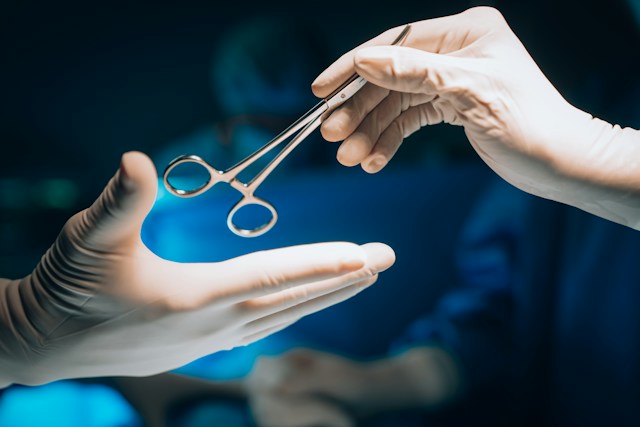


The morning of my surgery I asked the question one last time.
“Can you leave my ovaries?”
The doctor didn’t hesitate. “I’m not doing the surgery unless I remove them.”
I remember lying there in the hospital gown, trying to calculate how much pain I was in versus how much I trusted the man standing over me. For months my body had been falling apart: prolapse, bleeding, pain during sex. I wanted my life back. I wanted to run, exercise, and feel normal again. He was the expert. I was the patient. So I signed the consent form. At the time it felt like the only reasonable choice. I didn’t yet understand what I was agreeing to lose.
Ablation to Hysterectomy
Years earlier, none of this had seemed possible. During a routine exam, doctors found uterine fibroids. I had no symptoms. Still, the recommendation was clear: deal with them. In 2007, I had my uterine lining removed in hopes of slowing their growth. In 2009, surgeons removed fibroids and eventually my uterus. Each procedure came with the same reassuring tone: routine, common, nothing to worry about. But after the hysterectomy something changed. Within months I developed severe abdominal pain. Another surgery followed to remove sutures my body had rejected and to clear out adhesions—scar tissue that had filled the area.
Recovery never really happened. As a former dancer, gymnast, and competitive runner, I knew my body, and this wasn’t normal. Doctor after doctor searched for answers: gynecologists, gastroenterologists, a urologist, and a university specialist. Tests piled up.
“It’s normal aging.”
“It’s scar tissue.”
More than one doctor offered a prescription for oxycodone.
“Pain medicine will make things easier while we figure out what’s wrong.”
I refused.
Ovary Removal and Surgical Menopause
Several years later, things escalated dramatically. I developed severe diarrhea mixed with blood and painful sex. A surgeon diagnosed vaginal and rectal prolapse. The organs that once held everything in place had shifted. His solution was surgery. But there was a condition. If he repaired the prolapse, he would also remove my ovaries, fallopian tubes, and cervix. In his view they were part of the problem. I had little time to research and was desperate to feel better.
In April 2015, I underwent robotic surgery that removed the remaining reproductive organs and repaired the prolapse. A few hours later I was sent home. What no one explained before the operation was that removing my ovaries would trigger immediate menopause. Not the gradual hormonal shift many women experience in their fifties, but something far more abrupt—a physiological free fall.
Within months my body and mind began to unravel.
Depression arrived first, heavy and relentless. Then anxiety so intense it felt electrical, as if my nervous system were permanently switched to high alert. I couldn’t sleep. My muscles weakened. My body aged at a pace that shocked me.
At first I told myself it was recovery. Surgery is traumatic. Bodies need time. But somewhere in the back of my mind was a fear I didn’t yet have words for—that something essential had been removed along with my ovaries, and that I might never feel like myself again. What I didn’t know yet was that the real crisis was still ahead.
When Hormone Replacement Therapy Becomes a Disaster
Six months after surgery, a physician’s assistant prescribed hormone therapy to stabilize my symptoms. The plan sounded simple: replace the hormones my body could no longer produce. Estrogen, progesterone, testosterone—the chemical messengers regulating mood, sleep, metabolism, libido, and bone health. I trusted the man who prescribed them. I didn’t realize the doses were extraordinarily high. I followed every instruction. I wanted my life back.
Within three weeks my body revolted.
One evening I suddenly couldn’t speak clearly. My vision blurred and my arm went numb. My husband rushed me to the emergency room, where doctors diagnosed a transient ischemic attack, a mini-stroke. I would later learn that the massive hormone doses I’d been prescribed, especially the oral progesterone, had pushed my body far beyond normal levels. I spent three days in the hospital while doctors ran tests.
When I finally reached the physician’s assistant who had prescribed the hormones, I expected concern. Maybe even an apology. Instead, he told me I needed more hormones. He doubled the testosterone, increased the estrogen, and raised the progesterone to levels that would later shock other doctors.
I followed his instructions again.
Over the next several weeks I passed out six times. Each time my husband carried me to bed while I drifted in and out of consciousness. Meanwhile my body and mind continued to deteriorate. Simple tasks became impossible. One afternoon I stood in the grocery store staring at a pile of tomatoes, unable to decide which ones to buy. After several minutes I abandoned my cart and went home.
I stopped seeing friends. I stopped answering the phone. On the outside I looked okay—nothing broken, no visible wounds—but inside I felt as if my nervous system had short-circuited. Anxiety appeared in sudden electric waves that woke me several times a night. I’d pray that when I fell back asleep I wouldn’t wake up again. For years I had been disciplined, active, driven. I ran races and taught dance. Now I could barely manage daily life. What terrified me most was how unfamiliar I felt to myself.
At my final appointment with the physician’s assistant, he reviewed my lab results and announced that my hormone levels were “optimal.” He told me I didn’t need to come back for a year. When I described the symptoms that were destroying my life, he shrugged.
“Stress,” he said. “You’ll have to learn to deal with it.”
I walked out of his office knowing only one thing: if I didn’t find someone else to help me, I might not survive. I received a referral to another OB-GYN. When she reviewed my lab results, her expression changed instantly. My hormone levels were wildly outside normal ranges. My testosterone was nearly four times higher than it should have been. My progesterone level was astronomical. She looked at me and said something I will never forget.
“Who did this to your little body?”
She immediately began lowering the hormone doses and trying to stabilize the damage. But the situation was complex. My doctors told me my liver and adrenal system had been overwhelmed by the hormone doses and that my hormone receptors had essentially shut down. My body was flooded with hormones, they explained, yet none of them were working correctly. The doctor believed I could recover, but she admitted she wasn’t the one who could treat me.
I waited months to see another doctor who promised he could help.
The Lifelong Consequences of Ovary Removal
For the next three years I became a full-time student of my own health. I kept daily journals tracking every hormone dose, every supplement, everything I ate, and every symptom. Some days the smallest change made me feel human again. Other days the progress vanished overnight. It was slow, frustrating detective work. Gradually, though, pieces of my life began returning.
An acupuncturist helped calm the anxiety that had taken over my nervous system. Exercise, something that had once been effortless, slowly reentered my routine. At first it was swimming. Eventually I began running again, though never with the same ease as before.
The depression lifted in small increments. Not all at once, but enough that I could feel moments of genuine interest in life again.
One day I realized something surprising.
For the first time in years, I wanted to live more than I wanted to die.
Recovery, however, came with a difficult truth. I improved. I stabilized. I rebuilt parts of my life, but I never again felt like the woman who was wheeled into that operating room.
Removing my ovaries changed something fundamental in me, physically, emotionally, neurologically. The person I was before that surgery—the energy, the resilience, the sense of equilibrium, my passion for life—never fully returned.
Looking back, I’m angry that the long-term effects were never explained clearly. I trusted the authority of doctors in white coats with framed diplomas. I didn’t want to be a difficult patient asking too many questions.
Now I know better.
Doctors are trained to perform surgeries. Few are trained to guide patients through the lifelong consequences that sometimes follow those procedures.
I can’t undo what happened to me. But I can warn others.
Too many women are told that once childbearing years are over, reproductive organs are expendable. Yet ovaries remain biologically active after menopause, continuing to produce hormones that play roles in bone, muscle, sexual and overall health. Removing them may sometimes be necessary. In cases of cancer, for example, it can save lives, but it should never be treated as routine.
When I signed that consent form, I thought I was agreeing to a repair.
I didn’t realize I was agreeing to become someone else.
We Need Your Help
More people than ever are reading Hormones Matter, a testament to the need for independent voices in health and medicine. We are not funded and accept limited advertising. Unlike many health sites, we don’t force you to purchase a subscription. We believe health information should be open to all. If you read Hormones Matter, like it, please help support it. Contribute now.
Yes, I would like to support Hormones Matter.