dysautonomia - Page 2

Thiamine Deficiency and Dependency Syndromes: Case Reports

49.7K views

I have been studying thiamine metabolism since 1969 when I published the first case of thiamine dependency: Intermittent cerebellar ataxia associated with hyperpyruvic acidemia, hyperalaninemia, and hyperalaninuria. The case involved a 6-year old boy experiencing recurrent  episodes of cerebellar ataxia (a brain disease resulting in complete loss of a sense of balance). These episodes, occurring  intermittently, were naturally self-limiting without any treatment and were triggered by inoculation, mild head trauma, or a simple infection such as  a cold. In other words, his episodes of ataxia were repeatedly initiated by an environmental factor. I have called each of these variable factors  a “stressor”. Our studies showed that one of these stressors would unmask the true underlying latent thiamine dependency, falsely giving the impression that the stressor was the primary cause. This may be the principle of post vaccination disease in some cases. It may also be too easy to explain symptoms arising from trauma or infection as primary cause. These recurrent ataxic episodes were prevented from occurring by giving him mega-doses of a thiamine supplement.

Cerebellar Ataxia of Metabolic Origins?

When ataxia, as in this child, or other symptoms, occur intermittently, as they did in many other patients whom I would treat across my career, it is difficult to identify the true cause. The studies performed by neurologists, neurosurgeons and others inevitably would be  normal, causing diagnostic confusion. In other patients with less serious symptoms, they are considered to be somehow feigned or of psychological origin. Symptoms that appear and disappear in a seemingly random manner and are not supported by conventional laboratory data are often explained this way. Please be aware that ataxia should never be regarded as psychosomatic. The point is that less serious symptoms that cause deviant behavior may not be recognized as biochemical changes in the brain.

With the present medical model, it is difficult to understand and accept that a stress factor can initiate the symptoms of a metabolically caused disease that has been relatively innocuous or silent until the stress is imposed. Let me give you another example.

Loss of Consciousness, Edema, Joint Pain: Rheumatic Disease or Metabolic Disorder

Since I was working at a multi-specialty clinic I was sitting having lunch with an ear, nose, throat (ENT) surgeon who knew of my interest in sudden death in infants (Treatment of threatened SIDS with megadose thiamine hydrochloride). He had been called to put in a tracheostomy to a middle-aged woman who had suddenly stopped breathing. Unlikely as it sounds, he suggested that I should go and look at the situation unofficially.

In the hierarchy of specialization, a pediatrician is not supposed to know anything about adult conditions, so I was not welcome. Because the internists who were taking care of her were rheumatologists, it was considered to be some kind of rheumatic disease, because of aches and pains in joints and limbs. She had had periods of unconsciousness over many years and her body was profoundly swollen, the hallmark of beriberi. Without going into details I was able to prove that this was indeed beriberi.

When I approached the rheumatologist who was her primary physician, I could not convince her of what appeared to her as too bizarre to contemplate. Notwithstanding, I had the cooperation with the nurses who followed my directions.  When the patient was given injections of thiamine, she recovered consciousness and the gross body edema disappeared.

So fixed in the mind of many physicians is the concept that a vitamin related emergency simply does not occur, it was called “spontaneous remission” by my colleagues and “had nothing to do with vitamin therapy”. When I asked the rheumatologist whether we could conference the patient, she ignored the request. Well, this was not the end of the story.

Resolving One Deficiency Often Unmasks Another

After she started the injections of thiamine, with recovery of the nervous system, she began to develop a progressive anemia. It was considered by the internists to be internal bleeding and a thorough search produced only negative results.  So ingrained is the negative attitude to vitamin therapy, I was even in fear that I might be blamed for causing the anemia. In the meantime, I took a specimen of urine and found a substance in the urine that suggested a deficiency of folic acid. Readers will remember that folic acid is a member of the B group of vitamins, as is thiamine. A blood test proved that she was indeed deficient in folic acid. When this vitamin was given to her, the anemia rapidly disappeared. This, believe it or  not, still did not interest my colleagues.

She was discharged from the hospital, receiving supplements of thiamine and folic acid and her nervous system gradually improved. Some months later she developed a rash of a type that had been reported a few months previously as due to vitamin B12 deficiency. She was given an injection of vitamin B12 and over the next few days suffered slight fever and variable joint pains. These were symptoms with which she was familiar and had been responsible for the diagnosis of rheumatic disease.  This sometimes happens temporarily with vitamin therapy, but often enough that I refer to it as “paradox”, meaning that things seem to be worse before they get better. Note that this paradox is not the same as side effects from a drug. The symptoms that cause a patient to see a doctor are temporarily exacerbated. With our present model the patient concludes that this is side effects from the vitamin(s) being used. I had to learn that paradox was the best sign that improvement would follow with persistence. She then continued on the thiamine, folic acid and vitamin B12.

The Role of Lifestyle and Diet Disease Expression – Oft Ignored Stressors

The fact that this woman was a chronic beer drinker and smoker had been ignored.  They were, if you will, the “stressors” that were the dominant cause, perhaps impacting on genetic risk factors. The relationship between alcohol and thiamine deficiency is well known and so she had induced her own disease. Since there was a profound ignorance concerning vitamin deficiency diseases, the beriberi had been referred to by her internists as “rheumatic” in nature. This is because joint and limb pain, usually not recognized for what the pains represent, are often associated with compromised oxidative metabolism, either in the limb itself or in the brain where the pain is interpreted.

Defective oxidative metabolism caused in this patient’s case by thiamine deficiency, causes exaggerated brain perception. The brain induced a pain that gave the false impression that the disease originated in the joints and other parts of the body. Even if the origin of the pain is truly from a joint or muscle, defective oxidative metabolism in the brain will exaggerate the sense of pain perceived by the patient. Although this “phantom” pain is known as “hyperalgesia”, the mechanism is not well known as being due to compromised oxidation in the pain perception brain centers. Thiamine deficiency was responsible for the hyperalgesia experienced by the case of a patient with eosinophilic esophagitis that was posted recently on this website.

Beyond Thiamine: Multi-Nutrient Deficiencies

What interested me in the woman with beriberi was that folic acid deficiency was not revealed until her metabolism had been accelerated by the pharmacological use of thiamine. The folic acid deficiency then became clinically expressed as her metabolism “woke up”. It had been well known for some time that folic acid produced anemia would have to be treated with both folic acid and vitamin B12.

In the case of folic acid deficient Pernicious Anemia, if vitamin B12 was not given at the same time, the patient would develop a disease known as subacute combined degeneration of the spinal cord. Because I had forgotten this fact, I had neglected to give her vitamin B12 until it was finally expressed clinically in the form of a rash. Associating a skin rash with a vitamin deficiency is certainly not commonly accepted as a possible indicator of an underlying cause by physicians.

Vitamin Deficiency Versus Dependency

Returning to the case of the 6-year old boy discussed above, we learned over time that his health was dependent on high doses of thiamine to function. Believe it or not, this child required 600 mg of thiamine a day in order to prevent his episodes of illness. If he began to notice the beginning of an infection he would double the dose. The recommended daily allowance for thiamine is between one and 1.5 mg a day. Here, and in many other cases, huge doses of the vitamin are required in order to accomplish the physiologic effect. This represents what I call vitamin dependency.

Thiamine and magnesium, like many other vitamins, are known as cofactors to enzymes. An enzyme without its cofactor works inefficiently if it works at all. The “magic” of evolution has “invented” this cooperative action which is in itself under genetic control. In technical terms, the vitamin has to “bond” with the enzyme. If this bonding mechanism is genetically compromised, the concentration of the corresponding cofactor has to be increased enormously by supplementation in order to prevent the inevitable symptoms. You can see that this requires a clinical perspective tied to unusual biochemical knowledge. This is in complete contrast to what is usually regarded as vitamin deficiency, arising from insufficient concentrations in the diet.

What is perhaps not known sufficiently is that prolonged vitamin deficiency appears to affect this bonding mechanism. For example, it has long been known that to cure chronic beriberi, megadoses of thiamine are required for months. I have concluded that the megadoses of thiamine given by supplementation to a patient with long term symptoms arising from unrecognized deficiency appears to re-activate the inefficient enzyme. It is as though the enzyme has to be repeatedly exposed to megadoses of its cofactor to stimulate it and restore its lost function.

This may mean that even if the bonding mechanism is normal in chronic deficiency, enzyme function has simply decayed from lack of stimulation. This may explain why genetically determined dependency and long term dietary deficiency will produce the same clinical effect. The dosing of vitamins, if the clinical effects of deficiency are recognized, is not well understood in traditional western medicine. When insufficient doses are given and the symptoms fail to abate, the practitioner views it as evidence that supplements do not work.

Biochemical Diagnoses are Complex

I want the general public to begin to understand the principles that underlie the complexity of biochemical diagnosis. Perhaps a reader might find that a case like this is a reminder of a loved one whose illness was never understood after seeing many different specialists, all of whom were like the blind men and the elephant. Each was confined to his specialist status but none of them could see the overall big picture.

Reading these cases, you might easily come to the conclusion that they represent a rarity. Chronically unrecognized thiamine deficiency is common. Dependency is  not uncommon. It is not as rare as is presently thought. Believe me, cases like these are surprisingly common and are responsible for a great deal of diagnostic confusion.

Vitamins are essential to consumption of oxygen in all life processes. To go against the principles of diet dictated by Mother Nature is a risk to life and limb that is not worth the derived pleasure. When limb pain is experienced without an obvious trauma, it is difficult to accept that it is because of inefficient use of oxidation in the brain, but that is exactly what we found.

We Need Your Help

More people than ever are reading Hormones Matter, a testament to the need for independent voices in health and medicine. We are not funded and accept limited advertising. Unlike many health sites, we don’t force you to purchase a subscription. We believe health information should be open to all. If you read Hormones Matter, like it, please help support it. Contribute now.

Yes, I would like to support Hormones Matter.

Beriberi: The Great Imitator

68.4K views

Because of some unusual clinical experiences as a pediatrician, I have published a number of articles in the medical press on thiamine, also known as vitamin B1. Deficiency of this vitamin is the primary cause of the disease called beriberi. It took many years before the simple explanation for this incredibly complex disease became known. A group of scientists from Japan called the “Vitamin B research committee of Japan” wrote and published the Review of Japanese Literature on Beriberi and Thiamine, in 1965. It was translated into English subsequently to pass the information about beriberi to people in the West who were considered to be ignorant of this disease. A book published in 1965 on a medical subject that few recall may be regarded in the modern world as being out of date and of historical interest only, however, it has been said that “Those who do not learn history are doomed to repeat it”. And repeat it, we are.

Beriberi is one of the nutritional diseases that is regarded as being conquered. It is rarely considered as a cause of disease in any well-developed country, including America. In what follows, are extractions from this book that are pertinent to many of today’s chronic health issues. It appears that thiamine deficiency is making a comeback but it is rarely considered as a possibility.

The History of Beriberi and Thiamine Deficiency

Beriberi has existed in Japan from antiquity and records can be found in documents as early as 808. Between 1603 and 1867, city inhabitants began to eat white rice (polished by a mill). The act of taking the rice to a mill reflected an improved affluence since white rice looked better on the table and people were demonstrating that they could afford the mill. Now we know that thiamine and the other B vitamins are found in the cusp around the rice grain. The grain consists of starch that is metabolized as glucose and the vitamins essential to the process are in the cusp. The number of cases of beriberi in Japan reached its peak in the 1920s, after which the declining incidence was remarkable. This is when the true cause of the disease was found. Epidemics of the disease broke out in the summer months, an important point to be noted later in this article.

Early Thiamine Research

Before I go on, I want to mention an extremely important experiment that was carried out in 1936. Sir Rudolf Peters showed that there was no difference in the metabolic responses of thiamine deficient pigeon brain cells, compared with cells that were thiamine sufficient, until glucose (sugar) was added. Peters called the failure of the thiamine deficient cells to respond to the input of glucose the catatorulin effect. The reason I mention this historical experiment is because we now know that the clinical effects of thiamine deficiency can be precipitated by ingesting sugar, although these effects are insidious, usually relatively minor in character and can remain on and off for months. The symptoms, as recorded in experimental thiamine deficiency in human subjects, are often diagnosed as psychosomatic. Treated purely symptomatically and the underlying dietary cause neglected, the clinical course gives rise to much more serious symptoms that are then diagnosed as various types of chronic brain disease.

  • Thiamine Deficiency Related Mortality. The mortality in beriberi is extremely low. In Japan the total number of deaths decreased from 26,797 in 1923 to only 447 in 1959 after the discovery of its true cause.
  • Thiamine Deficiency Related Morbidity. This is another story. It describes the number of people living and suffering with the disease. In spite of the newly acquired knowledge concerning its cause, during August and September 1951, of 375 patients attending a clinic in Tokyo, 29% had at least two of the major beriberi signs. The importance of the summer months will be mentioned later.

Are the Clinical Effects Relevant Today?

The book records a thiamine deficiency experiment in four healthy male adults. Note that this was an experiment, not a natural occurrence of beriberi. The two are different in detail. Deficiency of the other B vitamins is involved in beriberi but thiamine deficiency dominates the picture. In the second week of the experiment, the subjects described general malaise, and a “heavy feeling” in the legs. In the third week of the experiment they complained of palpitations of the heart. Examination revealed either a slow or fast heart rate, a high systolic and low diastolic blood pressure, and an increase in some of the white blood cells. In the fourth week there was a decrease in appetite, nausea, vomiting and weight loss. Symptoms were rapidly abolished with restoration of thiamine. These are common symptoms that confront the modern physician. It is most probable that they would be diagnosed as a simple infection such as a virus and of course, they could be.

Subjective Symptoms of Naturally Occurring Beriberi

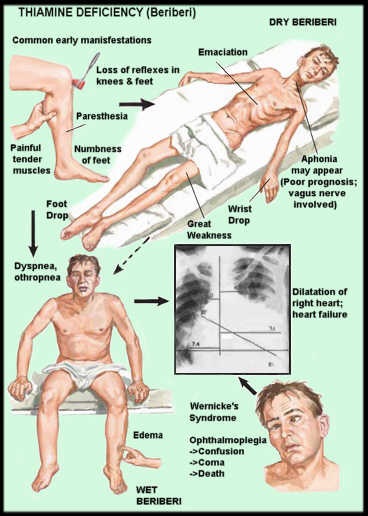
The early symptoms include general malaise, loss of strength in knee joints, “pins and needles” in arms and legs, palpitation of the heart, a sense of tightness in the chest and a “full” feeling in the upper abdomen. These are complaints heard by doctors today and are often referred to as psychosomatic, particularly when the laboratory tests are normal. Nausea and vomiting are invariably ascribed to other causes.

General Objective Symptoms of Beriberi

The mental state is not affected in the early stages of beriberi. The patient may look relatively well. The disease in Japan was more likely in a robust manual laborer. Some edema or swelling of the tissues is present also in the early stages but may be only slight and found only on the shin. Tenderness in the calf muscles may be elicited by gripping the calf muscle, but such a test is probably unlikely in a modern clinic.

In later stages, fluid is found in the pleural cavity, surrounding the heart in the pericardium and in the abdomen. Fluid in body cavities is usually ascribed to other “more modern” causes and beriberi is not likely to be considered. There may be low grade fever, usually giving rise to a search for an infection. We are all aware that such symptoms come from other causes, but a diet history might suggest that beriberi is a possibility in the differential diagnosis.

Beriberi and the Cardiovascular System

In the early stages of beriberi the patient will have palpitations of the heart on physical or mental exertion. In later stages, palpitations and breathlessness will occur even at rest. X-ray examination shows the heart to be enlarged and changes in the electrocardiogram are those seen with other heart diseases. Findings like this in the modern world would almost certainly be diagnosed as “viral myocardiopathy”.

Beriberi and the Nervous System

Polyneuritis and paralysis of nerves to the arms and legs occur in the early stages of beriberi and there are major changes in sensation including touch, pain and temperature perception. Loss of sensation in the index finger and thumb dominates the sensory loss and may easily be mistaken for carpal tunnel syndrome. “Pins and needles”, numbness or a burning sensation in the legs and toes may be experienced.

In the modern world, this would be studied by a test known as electromyography and probably attributed to other causes. A 39 year old woman is described in the book. She had lassitude (severe fatigue) and had difficulty in walking because of dizziness and shaking, common symptoms seen today by neurologists.

Beriberi and the Autonomic Nervous System

We have two nervous systems. One is called voluntary and is directed by the thinking brain that enables willpower. The autonomic system is controlled by the non-thinking lower part of the brain and is automatic. This part of the brain is peculiarly sensitive to thiamine deficiency, so dysautonomia (dys meaning abnormal and autonomia referring to the autonomic system) is the major presentation of beriberi in its early stages, interfering with our ability for continuous adaptation to the environment. Since it is automatic, body functions are normally carried out without our having to think about them.

There are two branches to the system: one is called sympathetic and the other one is called parasympathetic. The sympathetic branch is triggered by any form of physical or mental stress and prepares us for action to manage response to the stress. Sensing danger, this system activates the fight-or-flight reflex. The parasympathetic branch organizes the functions of the body at rest. As one branch is activated, the other is withdrawn, representing the Yin and Yang (extreme opposites) of adaptation.

Beriberi is characterized in its early stages by dysautonomia, appearing as postural orthostatic tachycardia syndrome (POTS). This well documented modern disease cannot be distinguished from beriberi except by appropriate laboratory testing for thiamine deficiency. Blood thiamine levels are usually normal in the mild to moderate deficiency state.

Examples of Dysfunction in Beriberi

The calf muscle often cramps with physical exercise. There is loss of the deep tendon reflexes in the legs. There is diminished visual acuity. Part of the eye is known as the papilla and pallor occurs in its lateral half. If this is detected by an eye doctor and the patient has neurological symptoms, a diagnosis of multiple sclerosis would certainly be entertained.

Optic neuritis is common in beriberi. Loss of sensation is greater on the front of the body, follows no specific nerve distribution and is indistinct, suggestive of “neurosis” in the modern world.

Foot and wrist drop, loss of sensation to vibration (commonly tested with a tuning fork) and stumbling on walking are all examples of symptoms that would be most likely ascribed to other causes.

Breathlessness with or without exertion would probably be ascribed to congestive heart failure of unknown cause or perhaps associated with high blood pressure, even though they might have a common cause that goes unrecognized.

The symptoms of this disease can be precipitated for the first time when some form of stress is applied to the body. This can be a simple infection such as a cold, a mild head injury, exposure to sunlight or even an inoculation, important points to consider when unexpected complications arise after a mild incident of this nature. Note the reference to sunlight and the outbreaks of beriberi in the summer months. We now know that ultraviolet light is stressful to the human body. Exposure to sunlight, even though it provides us with vitamin D as part of its beneficence, is for the fit individual. Tanning of the skin is a natural defense mechanism that exhibits the state of health.

Is Thiamine Deficiency Common in America?

My direct answer to this question is that it is indeed extremely common. There is good reason for it because sugar ingestion is so extreme and ubiquitous within the population as a whole. It is the reason that I mentioned the experiment of Rudolph Peters. Ingestion of sugar is causing widespread beriberi, masking as psychosomatic disease and dysautonomia. The symptoms and physical findings vary according to the stage of the disease. For example, a low or a high acid in the stomach can occur at different times as the effects of the disease advance. Both are associated with gastroesophageal reflux and heartburn, suggesting that the acid content is only part of the picture.
A low blood sugar can cause the symptoms of hypoglycemia, a relatively common condition. A high blood sugar can be mistaken for diabetes, both seen in varying stages of the disease.

It is extremely easy to detect thiamine deficiency by doing a test on red blood cells. Unfortunately this test is either incomplete or not performed at all by any laboratory known to me.

The lower part of the human brain that controls the autonomic nervous system is exquisitely sensitive to thiamine deficiency. It produces the same effect as a mild deprivation of oxygen. Because this is dangerous and life-threatening, the control mechanisms become much more reactive, often firing the fight-or-flight reflex that in the modern world is diagnosed as panic attacks. Oxidative stress (a deficiency or an excess of oxygen affecting cells, particularly those of the lower brain) is occurring in children and adults. It is responsible for many common conditions, including jaundice in the newborn, sudden infancy death, recurrent ear infections, tonsillitis, sinusitis, asthma, attention deficit disorder (ADD), hyperactivity, and even autism. Each of these conditions has been reported in the medical literature as related to oxidative stress. So many different diseases occurring from the same common cause is offensive to the present medical model. This model regards each of these phenomena as a separate disease entity with a specific cause for each.

Without the correct balance of glucose, oxygen and thiamine, the mitochondria (the engines of the cell) that are responsible for producing the energy of cellular function, cannot realize their potential. Because the lower brain computes our adaptation, it can be said that people with this kind of dysautonomia are maladapted to the environment. For example they cannot adjust to outside temperature, shivering and going blue when it is hot and sweating when it is cold.

So, yes, beriberi and thiamine deficiency have re-emerged. And yes, we have forgotten history and appear doomed to repeat it. When supplemental thiamine and magnesium can be so therapeutic, it is high time that the situation should be addressed more clearly by the medical profession.

We Need Your Help

More people than ever are reading Hormones Matter, a testament to the need for independent voices in health and medicine. We are not funded and accept limited advertising. Unlike many health sites, we don’t force you to purchase a subscription. We believe health information should be open to all. If you read Hormones Matter, like it, please help support it. Contribute now.

Yes, I would like to support Hormones Matter.

Image: Print ad from 1930; Public Domain.

This article was published originally on November 4, 2015.

Dr. Derrick Lonsdale passed away on May 2, 2024. He will be missed. 

A Case of Classic Beriberi in America

26.2K views

A desperate mother sent me an email about her 23-year-old son and it was easy to recognize that this young man had full-blown beriberi. You may or may not know that beriberi is well known as a vitamin B1 deficiency disease. Because the medical profession is convinced that this disease never occurs in America, it is usually not recognized for what it is. He had seen many physicians without success. I want to record the majority of his symptoms to show that they are surprisingly common and are usually ascribed to a “more modern” diagnosis. I have christened beriberi as the “great imitator” and I am sure that the reader will readily recognize the common nature of these symptoms, presented below in the form of a Table. It is important also to understand that these symptoms can occur for other reasons, but thiamine deficiency is widespread.


collapsing fatigue confusion
panic attacks loss of balance
blurred vision cluster headaches
hair loss jaundice at birth
infantile colic migraines
poor intestinal motility bloating
severe calf pain joint pains
weakness salt craving
cold extremities chemical sensitivity
POTS severe pain sensitivity


I want now to describe some of the features reported by this mother that were extremely important major clues. She described her son, when in good health, as 6’2”,  175 pounds, extremely athletic with “amazing hand-eye coordination and finishing college with high honors”.

As a result of his undiagnosed illness, his weight had dropped to 133 pounds. Because thiamine governs energy metabolism, an intelligent brain consumes a great deal. Of course, compromised energy production can occur for reasons other than thiamine deficiency. But there were very strong clues for beriberi. The mother described how her son

“…went out drinking with friends. The next day he could barely sit up in the car or stand. We were all commenting on why he was having such an extreme hangover”.

Alcohol would certainly exaggerate an existing thiamine deficiency. It is a well-known association. The symptoms were intermittent, rising and falling “for no apparent reason”. For example, she said that he was

“able to play sports, then lose his balance, become weak and complain of blurred vision”.

The reason for this is because the physical activity was demanding energy that could not be supplied because of the thiamine deficiency. He had jaundice at birth, now known to be because of inefficient oxygen utilization. This would indicate poor maternal diet in pregnancy or a genetic mechanism involving thiamine absorption. So-called panic attacks are common in the modern world and are absolute indicators of poor oxygen utilization in the brain. Under these conditions the reflex known as fight-or-flight would be initiated and this is what is being called panic attacks. The blurred vision would go along with this too.

Beriberi Is a Form of Dysautonomia

We have two nervous systems. One maintains what we call willpower and is known as the voluntary system. The other one is known as autonomic and is entirely automatic and outside willpower. This system controls all the organs within the body. It explains why there are so many symptoms involving many parts of the body. This is because of the loss of signaling power between the organs and the brain. A lot of energy is required to run this system and explains why the autonomic nervous system is affected in beriberi. POTS is one variety of dysautonomia. This young man craved salt and that too is a form of dysautonomia is known as cerebral salt wasting syndrome, explaining the natural craving.

Thiamine deficiency beriberi in America

Is There a Help From the Laboratory?

The answer to this is no, as long as physicians refuse to recognize that beriberi is common in America. This unfortunate young man was diagnosed almost certainly as psychosomatic. The disease has a very long morbidity with symptoms shifting up and down according to the state of energy metabolism on a day-to-day, week-to-week and month-to-month basis. The laboratory has to look for it because the standard tests done only provide distant clues. It is the absence of the abnormal results that make it easy to conclude that this is “a psychologic disease”. For example, it was reported that this young man had an elevated vitamin B12 and a mildly elevated CRP. I cannot give the complex details here, but both are peculiarly related to energy metabolism and require understanding in order to fit them into the pattern of diagnostic clues. I have reported these facts elsewhere.

What Is the Hope of Normal Health in This Person?

It stands to reason that the first thing is proper diagnosis and a knowledge of the widespread symptomatology, including their fluctuation. As long as he continues to take alcohol and sugar, he will never get his health back even if he supplements with thiamine. He is in danger of developing the classical brain disease known as Wernicke’s Encephalopathy. This state of the disease almost certainly involves cellular damage that cannot be repaired. It is therefore very urgent to understand the self-responsibility that is required. He has to learn that alcohol is potentially lethal for him. There is undoubtedly a genetic relationship between alcoholism and sugar craving and it is probably true that a search for the genetic relationship would at least be helpful in understanding the nature of this disease.

We Need Your Help

More people than ever are reading Hormones Matter, a testament to the need for independent voices in health and medicine. We are not funded and accept limited advertising. Unlike many health sites, we don’t force you to purchase a subscription. We believe health information should be open to all. If you read Hormones Matter, like it, please help support it. Contribute now.

Yes, I would like to support Hormones Matter.

Image by NoName_13 from Pixabay.

This article was published originally on August 9, 2017. 

Migraine Energy Metabolism: Connecting Some Dots

17.2K views

I have been reading some of the fascinating posts by Angela Stanton PhD concerning her research in migraine headaches. I regard the substance of her discussions as somewhat like dots on a chart that need to be connected. I learned a great deal about the chemistry involved in migraine. One of her comments that involves ion homeostasis in brain metabolism is fascinating. She noted that “serotonin is created by a normally functioning brain. Why it decreases or increases in the brains of migraineurs has always puzzled me. Should we not try to find out why?” That simple three letter word is the heart and soul of research and I believe that I may be able to add some information that might provide an answer.

Ehlers Danlos and Migraine

In one of Angela’s posts she discusses a subject which has been of interest to me for many years, the overlap of symptoms in disease. She noted that 60% of migraineurs have one type of Ehlers Danlos syndrome (EDS) and 43% of EDS have minor changes in DNA (SNPs) found in migraineurs. She concludes that they must be related. Over 70% of migraineurs have Raynaud’s disease and there is an overlap with EDS and Raynaud’s. Therefore, she concludes that these three diseases are variants. In  fact, there is an association between EDS, Postural Othostatic Tachycardia Syndrome (POTS) and a group of conditions known as mast cell disorders. EDS-HT, (one of the manifestations of this disease), is considered to be a multisystemic disorder, involving cardiovascular, autonomic nervous system, gastrointestinal, hematologic, ocular, gynecologic, neurologic and psychiatric manifestations, including joint hypermobility. Many non-musculoskeletal complaints in EDS-HT appear to be related to dysautonomia, consisting of cardiovascular and sudomotor dysfunction. Many of the clinical features of patients with mitral valve prolapse can logically be attributed to abnormal autonomic function. Myxomatous degeneration of valve leaflets with varying degree of severity is reported in the common condition of mitral valve prolapse.

A woman, with what was described as a “new” type of EDS, died after rupture of a thoracic aortic aneurysm. Autopsy revealed myxomatous degeneration and elongation of the mitral and tricuspid valves. Patients with POTS, a relatively common  autonomic disorder, may have EDS, mitral valve prolapse, or chronic fatigue syndrome and are sensitive to various forms of stress, as depicted in the clinical treatment of a dental patient affected by the syndrome. Dysautonomia has been described in the pathogenesis of migraine, featured by nausea, vomiting, diarrhea, polyuria, eyelid edema, conjunctival injection, lacrimation, nasal congestion and ptosis. In general, there is an imbalance between sympathetic and parasympathetic tone.

Energy Metabolism and Migraine

Technological studies have confirmed the presence of deficient energy production together with an increment of energy consumption in migraine patients. An energy demand over a certain threshold creates metabolic and biochemical preconditions for the onset of the migraine attack. Common migraine triggers are capable of generating oxidative stress  and its association with thiamine homeostasis suggests that thiamine may act as a site-directed antioxidant. It strongly suggests that migraine is a reflection of an inefficient use of brain oxygen.  An intermediate consumption of oxygen between deficiency and excess appears to be a necessity at all times. In fact,” moderation in all things” is an important proverb

Backing up energy deficiency, two cases of chronic migraine responded clinically to intravenous administration of thiamine. However, the authors are in error when they state in the abstract that “nausea, vomiting and anorexia of migraine may lead to mild to moderate thiamine deficiency”. An otherwise healthy 30-year-old male acquired gastrointestinal beriberi after one session of heavy drinking. Nausea, vomiting and anorexia relentlessly progressed. He had undergone 11 emergency room visits, 3 hospital admissions and laparoscopy within 2 months but the gastrointestinal symptoms  continued to progress, unrecognized for what these symptoms represented. When he eventually developed external ophthalmoplegia (eye divergence), he received an intravenous injection of thiamine which reversed both the neurologic and gastrointestinal symptoms within hours.

In other words it is important to be aware that nausea, vomiting and anorexia are primary symptoms of beriberi due to pseudohypoxia in the brainstem where the vomiting center is located. Chronic migraine has a well documented association with insulin resistance and metabolic syndrome. The hypothalamus may play a role. One of Angela’s comments concerns ion homeostasis in migraines. Thiamine triphosphate (TTP) can be found in most tissues at very low levels. However, organs and muscles that generate electrical impulses are particularly rich in this compound. Furthermore, TTP increases chloride (ion) uptake in membrane vesicles prepared from rat brain, suggesting that it could play an important role in the regulation of chloride permeability. Although this research was published in 1991, the exact role of TTP is still unknown. It has been hypothesized that thiamine and magnesium deficiency are keys to disease.

Angela wondered why serotonin might be increased or decreased in migraineurs. I strongly suspect that it is due to brain thiamine deficiency as the ultimate underlying cause of the migraine. In a review of thiamine metabolism, it was pointed out that metabolites could be high or low according to the degree of the deficiency. Victims of beriberi were found to have either a low or a high potassium according to the stage of the disease. If they were found to have a low acid content in the stomach, treatment with thiamine resulted in a high acid content before it became normal. If the stomach acid was high it would become low before it became normal. Since low and/or high potassium levels may be found in the blood of critically ill patients, thiamine deficiency should be a serious consideration in the emergency room or ICU Thiamine deficiency may be the answer for the fluctuations of serotonin observed in migraine.

Redefining Disease Models

According to the present medical model, each disease is described as a constellation of symptoms, physical signs and laboratory studies, each with a separate etiology. The overlap discussed by Angela suggests that the various conditions nominated have a common cause and that they are indeed nothing more than variations. If energy metabolism is the culprit, it would make sense of the infinite variations according to the degree and distribution of cellular energy deficiency. EDS-HT, described above is reported as a multi-system disease, exhibiting cardiovascular, autonomic gastrointestinal, hematologic, ocular, gynecological and psychiatric symptoms as well as the joint mobility. It seems to be impossible to explain this multiplicity without invoking energy deficiency as the cause. People with prolapsed mitral valve and a patient with a “new” form of EDS, reportedly have myxomatous degeneration as part of their pathology and it is tempting to suggest that such an important loss of structure might well be because of energy deficit.

The controls of the autonomic nervous system are located in the lower part of the brain that is particularly sensitive to thiamine deficiency and beriberi is a prototype for thiamine deficiency in its early stages. Dysautonomia is frequently reported as part of many different diseases, offering energy deficiency as the etiology in common. Yes, it is true that thiamine is not the only substance that enables the production of ATP. Nevertheless, it seems to dominate the overall picture of energy metabolism. It has long been considered the essential focus in the cause of beriberi, even though all the B complex vitamins are found in the rice polishings. Milling and the consumption of white rice was the prime etiology of the disease when it was common in rice consuming cultures.

We Need Your Help

More people than ever are reading Hormones Matter, a testament to the need for independent voices in health and medicine. We are not funded and accept limited advertising. Unlike many health sites, we don’t force you to purchase a subscription. We believe health information should be open to all. If you read Hormones Matter, like it, please help support it. Contribute now.

Yes, I would like to support Hormones Matter. 

Image by Chen from Pixabay.

This article was published originally on June 22, 2020.

An Artist’s Decades Long Dysautonomia Treated With Thiamine

63.1K views

Here is the story of my longstanding thiamine deficiency, which was not recognized by doctors. I am 54 years old and have had health issues most of my life.

Early and Prominent Orthostatic Hypotension Missed for Decades

Around the age of 10 or so, I began blacking out upon standing. It never led to syncope — just a brief dizziness and loss of vision. A particular church practice at school caused me to black out often. Lots of kneeling and rising — a great challenge for what would be later diagnosed as orthostatic hypotension. I sometimes had to be led out of church by a fellow student and taken to the school nurse. A friend reported to me that on those occasions, as I was being led out, even my lips were white.

In my teenage years, another challenge was orthostatic intolerance. I would get dizzy and feel light-headed if made to stand a long time. Hot, crowded buses were a particular nemesis: I would black out and feel on the brink of fainting. It was mortifying to be an 18 year old who had to request someone older give up their seat to me because I felt faint. I used to pray before I got on a bus.

During these years, heart palpitations were also a constant issue. It was a way of life for me — my “normal.” I didn’t find out until years later that not everyone experienced violent heart pounding upon climbing a set of stairs. Abnormal sweating was a problem, too — I sweated profusely from the underarms, but nowhere else. Exercise would make my face red and hot — I would get terribly overheated and feel unwell, because my body wasn’t able to sweat and cool itself.

All of these things point to a malfunction of the autonomic nervous system, but I didn’t know that then, and no doctor seemed to put it together, either.

The lower part of the brain, the brainstem, controls the autonomic nervous system.

The autonomic nervous system regulates the most basic aspects of living: heart rate, breathing, blood pressure, sweating, hunger and thirst, fight or flight response, etc. It requires thiamine to function properly.

I was also a good deal underweight and never had as much energy as others. I was terrible at sports and was weakly but did well academically and with art.

Mitral Valve Prolapse, Tachycardia and Heart Palpitations: Signs of Dysautonomia

During art school and afterwards, I waited tables to support myself, as well as worked at school to help pay my tuition. The output of energy this required would prove too much for someone deficient in thiamine. Thiamine plays a fundamental role in energy metabolism, so a deficiency is consequential. My schedule overwhelmed me — I dropped out after my second year. (I eventually went back three years later to complete my degree — this is just one example of how chronic fatigue affected the trajectory of my life.) 

Somewhere in those years, I was diagnosed with mitral valve prolapse. I remember being astonished that the diagnosis had been missed all these years. I was told it was something I had been born with, so it was surprising that no one had noticed it until I was 22. I now know that mitral valve prolapse is associated with defective functioning of the autonomic nervous system, that I likely had *not* been born with it, and that this instead was yet another sign of my malfunctioning autonomic nervous system. Mitral valve prolapse is also associated with magnesium deficiency. The pieces of the puzzle were all there — they just needed someone who understood how they fit together.

It was a relief to be out of school and to be able to rest, but my undiagnosed thiamine deficiency continued to affect me. Palpitations and tachycardia were an exhausting way of life. I became good at avoiding things that would exacerbate that, but things I couldn’t avoid — like oral presentations in a literature class I was taking — would so exhaust me as to render me incapacitated the next day. The intellectual rigor of it thrilled me, however. Life continued like that — avoiding many things that a healthy person would be capable of, in order to preserve energy, while making exceptions for certain things I loved — but paying for that with crushing fatigue.

A busy night of waiting tables was now capable of doing me in so much that I couldn’t get out of bed for hours the next day. My description of how I felt at the time was like a broken stick. I later learned that severe thiamine deficiency is called beriberi, which translates to “I can’t, I can’t.” My heart symptoms also became more complex: palpitations and tachycardia, as always, but now chest pain and an occasional flutter, too. I saw a doctor, who recommended I get an echocardiogram. I didn’t have health insurance, so that wasn’t possible.

Decades Later: Debilitating Fatigue and Arrhythmia

I went many years without medical care. At age 44 my symptoms worsened — the fatigue was debilitating and I was now experiencing an arrhythmia. I was able to teach one day a week in an art school, but the energy it required made me incapacitated the next day.

I was also told by a doctor that I should be evaluated for Marfan syndrome, a connective tissue disorder. I twice landed in the ER due to chest pain and a new arrhythmia while waiting for my appointments with genetics and cardiology. When I finally saw the geneticist, I got great news: I did not have Marfan syndrome. I was clinically diagnosed with a related but less serious connective tissue disorder: MASS phenotype, an acronym for Mitral valve prolapse, Aortic enlargement, Skeletal and Skin findings. Though I was relieved by the news, I was also perplexed: why did I feel so awful and fatigued all the time?

My cardiologist had me wear a 30-day Holter monitor, which resulted in him diagnosing me with dysautonomia. Orthostatic hypotension, and also sinus tachycardia, premature ventricular contractions (PVCs), and paroxysmal atrial tachycardia. His first intervention helped me more than any other — he recommended at least 32 ounces of an electrolyte drink daily, along with 500 mg of magnesium. I felt elated — the particular elation of someone long sick who finally feels better. After a while, however, it wasn’t enough, and he prescribed fludrocortisone (florinef). That made my feet swell so awfully that I developed blisters and couldn’t walk.

The cardiologist referred me to an electrophysiologist for my arrhythmia. That cardiologist put me on a beta-blocker. That also caused some milder foot and ankle swelling, but the relief it provided from decades-long tachycardia, palpitations, and an awful constant awareness of my heart was so welcome. It also reduced my PVCs. Again I felt hopeful and thought this might be the solution. It wasn’t. It temporarily and mercifully relieved some symptoms, but it did nothing to determine and address the true cause of my dysautonomia — which was thiamine deficiency. The beta-blocker eventually caused diarrhea. Because it didn’t happen at first, I didn’t associate it with the beta-blocker and neither did my doctors. The bout of diarrhea lasted 5 months. When I finally decided to quit the beta-blocker, the diarrhea ceased.

In the meantime, I was also dealing with a whole array of other issues: GI distress; food intolerances; peripheral vascular insufficiency (which led me to an unsuccessful and unnecessary surgery); chilblains; costochondritis; debilitating menstrual pain; and ever-looming, crushing fatigue.

Hypovolemia and Undiagnosed Thiamine Deficiency Almost Killed Me

At my lowest health point, my undiagnosed thiamine deficiency nearly killed me (via low BP and hypovolemia). I was at a lab getting a slew of blood tests ordered by my immunologist. I had requested that I be permitted to lie down for the blood draw, because I sometimes passed out otherwise. There was no room available for me, so the technician asked if I thought I could manage sitting up. I should have said no: big mistake on my part. I was sitting up in a chair with a kind of shelf clamped across me. I closed my eyes for the blood draw, and after just a short time felt the unmistakable onset of blacking out. I started to lose my vision and asked the technician to unclamp me from that chair so I could put my head between my knees. She seemed to have no grasp of basic medical knowledge, because she refused, saying she didn’t want my head down and to instead try to “stay with her”. I was unable to free myself because I could no longer see. Then I lost my hearing, and that’s all I remember. I fainted. Thank goodness my husband was there in the waiting room. They called an ambulance and then called my husband back to see me. He said I looked terrifying. Completely white, with white lips, and two techs trying to call me to. He told them they needed to put me flat on the floor. Inexplicably, they wouldn’t let him. He acted quickly and dragged a big box across the room and put my feet up on it. That made me come to. For a long time, I had cuts missing from my vision. I later asked my cardiologist if I would have had a stroke if my husband hadn’t intervened. The cardiologist was angry at what had happened and told me not only would I have had a stroke, I would have died.

Putting the Pieces Together: It Was Thiamine All Along

Like all chronically-ill patients, I had to rely on my own research to try to figure out how to improve my health. I first managed to help myself with some orthomolecular interventions. High-dose vitamin c was life-changing. After starting that and taking steps to support methylation, I was finally able to put on weight and muscle. By the age of 51, I was no longer underweight for the first time since early childhood. And I managed to raise my chronically low BP a bit. Fatigue was still overwhelming but then, gratefully, I came upon the research of Dr. Derrick Lonsdale and Dr. Chandler Marrs. I learned about beriberi, thiamine deficiency, and its relation to dysautonomia. I recognized myself immediately.

I read everything I could on the subject before starting to supplement thiamine. Because I had been so long deficient, I knew to expect a paradoxical response. I also knew, per Dr. Lonsdale, that a paradoxical response was a good indication that thiamine might help me. And it has. It has helped me immensely.

I started with thiamine HCL, 10 mg. Even that tiny dose gave me a paradoxical response. My fatigue became even worse, as did my heart issues — terrible palpitations and much more frequent arrhythmia. My ankles were more swollen than they had ever been. I felt shaky, tired, horribly fatigued. It was difficult and lasted about 2 months. Initiating thiamine supplementation in a patient long deficient causes a kind of refeeding syndrome. I continued titrating up my dose, very slowly, while taking supporting co-factors like magnesium and potassium and a b-complex.

Gains Made With Thiamine

  • Increased energy in general
  • Increased exercise tolerance
  • Raised BP by over 20 systolic points: huge gain for me. I am now regularly around 110/70. If I get exhausted by physical activity and/or stress, it drops again. (For years, my BP was around 79/56)
  • Heart rate normalized
  • Arrhythmia almost non-existent
  • No more heart palpitations after eating
  • Got rid of the constant awareness of my heart
  • Now able to walk rapidly
  • My ankles are rarely swollen now. They used to be swollen every day, particularly if I was active that day.
  • After 8 years, I no longer need to keep my feet elevated when sitting (cardiologist’s recommendation to counteract swollen ankles).
  • I am able to maintain mental clarity even after active or stressful events. Until very recently, I could not think clearly after a day of teaching — used to have to ask my husband to speak slowly and break down complex ideas into simple ones after I taught, because my fatigue affected my cognition. That’s gone now.
  • I very rarely get headaches at base of head (used to be almost daily)
  • No more costochondritis. This used to be a regular, painful complaint of mine. I was astonished to learn that costochondritis is caused by thiamine deficiency, especially since costochondritis is a common complaint in those who suffer connective tissue disorders.
  • I sleep through the night now, even if I was active that day. Until recently, if I was active — and in my limited-energy world, active might mean as little as attending a party — I would have great trouble falling asleep, and then I would awaken in the night after 4 hours of sleep and be awake at least 1 to 2 hours. That’s gone, and good riddance.
  • No more debilitating menstrual periods. I suffered enormous pain with my period for over 35 years. Thiamine treats primary dysmenorrhea.
  • Joint pain relief
  • No more stuffy nose at night when I’m exhausted
  • I wake up singing. I report this not as an indication of mood so much as an indication of energy — I simply never possessed the energy required to sing, at least not in the morning.
  • I wake up early now. Completely new.
  • I’m remembering my dreams again! (Couldn’t recall them for at least the past 5 years).
  • I rarely experience the dreaded “jelly legs”.
  • I am no longer cold all the time.
  • I now am able to sweat more normally.
  • Increased my left ventricular ejection fraction (EF) from 55 to 65 percent. Thiamine has been shown to improve EF in heart failure patients, and though I was never in heart failure, this is the first ever increase of my EF in 10 years, and it appeared after I began thiamine, so I suspect it’s related.

One thing that hasn’t gotten better yet is abdominal bloating. Hoping that improves eventually. I have low stomach acid and am working on that. And I still tire much easier than a normal person, but I’m so much better than I was, and I hope to continue improving.

Final Thoughts

My symptoms started at about the age of 10, which is the age I was when a dentist placed 10 large amalgam (mercury) fillings. A few years later, I got 5 more. Mercury causes vitamin and mineral derangement. (I have since gotten most of my amalgam fillings removed by a SMART dentist using a procedure to minimize mercury exposure.) There are indications that a thiamine deficiency heightens susceptibility to mercury toxicity. Many of the symptoms of mercury poisoning are observed in persons with thiamine deficiency. Additionally, there is a metabolic component to connective tissue disorders that most doctors do not recognize. Along with being diagnosed by a geneticist with MASS phenotype, another doctor (rheumatologist) diagnosed me with Ehlers-Danlos syndrome. Being diagnosed with both, even if not correct, has given me access to both cohorts of connective tissue patients, through online support groups. Most suffer from dysautonomia and have accepted this as genetic fate rather than something that can be improved through vitamin therapy. There is a great need to get the word out on thiamine and vitamin therapy to the chronic illness community.

I am deeply indebted to Drs. Lonsdale and Marrs for their research. It is giving me my life back.

We Need Your Help

More people than ever are reading Hormones Matter, a testament to the need for independent voices in health and medicine. We are not funded and accept limited advertising. Unlike many health sites, we don’t force you to purchase a subscription. We believe health information should be open to all. If you read Hormones Matter, like it, please help support it. Contribute now.

Yes, I would like to support Hormones Matter. 

Image: Original painting by the author.

This article was published originally on April 19, 2021.

Dysautonomia and Chronic Illness Post Brain Surgery

12.8K views

I wanted to share my experience going through thiamine paradox and my journey to heal. I am 27 year old girl from Italy and have been suffering from various health problems since I was 14 including a brain tumor that necessitated surgery, followed by Epstein Barr Virus, Hashimoto’s thyroiditis, multiple parasitic infections, antibiotic reactions, extreme and chronic fatigue, fibromyalgia, dysautonomia, SIBO, and gastroparesis. I have begun thiamine therapy six months ago and while some of my symptoms have improved, others have remained or worsened. I am not sure what to do next and am writing this in the hope that someone will have some answers.

Dysautonomia and Illnesses Post Brain Surgery

In 2008, I underwent neurosurgery to remove a benign tumor in my temporal lobe. It was very large, near the hypothalamus and on the optic tract. After that surgery, I was in sympathetic mode for about a year and a half. It was intense. I was always alarmed and anxious with school performance anxiety. I was exhausted, but at the same time, I had the energy to do more than I could afford. Furthermore, I gained 20kg in 6 months despite eating well. This was traumatic for me. Even though I did everything I could to not gain weight, the weight still went up. I felt powerless and I was pissed off. I did a thousand diets and I still fight to lose weight. I have been on a diet ever since.

In 2010, I got an Epstein-Barr viral (EBV) infection. Next, I developed Hashimoto thyroiditis and lost a lot of hair. My beautiful hair that was soft and silky, became sparse, few and very thin. I also had pain in my neck for two years. After that EBV infection, I started to feel tired all the time, but still managed to go out and go to school

In 2011, after a month and a half of pain in the lower back and abdomen, I had a fecal analysis done and  found that I had parasitic infection called blastocystis hominis. The doctor gave me metronidazole (Flagyl) in a very high dosage. When the pain in my right leg appeared, the suspicion that it was appendicitis became certain and they operated on me. The surgeon told me my appendix was was 12 centimeters, inflamed and had two abscesses.

In 2012, I had some months of extreme fatigue and abdominal pain. The seizures I had before my brain surgery returned, as did my inability to study due to lack of concentration. I then discovered that I had another parasitic infection, this time giardia. I was treated with Flagyl again. After Flagyl, I was infection-free for 6-7 months.

In March of 2013, I developed an acute onset case of what the doctor’s called a severe case of chronic fatigue, fibromyalgia, and dysautonomia. I had brain fog and was unable to focus. I had tingling in my neck arms. I started gaining again. I have episodes of dysautonomia with vagal crises that include palpitations and tachycardia so strong that even moving around in bed accelerates my heartbeat. Add to all of this a  plethora of other minor symptoms. In particular, I have become unbearably cold. Previously, I was the the person who was always in half sleeves. I have also mood swings that sometimes make me feel crazy (such as unexplained nervousness attacks). I felt I had no energy in my muscles and that I could not do anything. Even though and above all I was a girl full of energy and always very cheerful.

Failed Attempts at Healing

Since then, I have done many different types of therapies (homeopathy, mineral and vitamin integrations, neural therapy, micotherapy, osteopathy) with small and short improvements. In 2017, I did probably one of the stupidest things I’ve ever done before, I fasted for 16 days. I was convinced of the idea that it could cure my thyroiditis. After that, I started not digesting well, so much so that if I ate a little more than I should, I was throwing up, and the cold in my body became even more unbearable.
A few years later in 2019, after years of GI problems, that included gastroparesis/delayed stomach emptying, bloating and pain, I was diagnosed with SIBO (sulfur). I was given Rifaximin. I also tried a herbal therapy for SIBO, and for candida, which I also had, and NAC. Nothing worked.

Where I Am Now

I still have most of these conditions. Some symptoms have passed but new ones have emerged.  Overall, I am better than in 2013 when CFS started and I just couldn’t get out of bed.

A few months ago, I discovered Dr. Lonsdale’s work on thiamine deficiency and I bought his and Dr. Marrs’ book: Thiamine Deficiency Disease, Dysautonomia, and High Calorie Malnutrition. I believe many of health issues involve thiamine deficiency.

I began with 15mg thiamine HCL injections daily for about two weeks and then increased it to 30mg per day. I also take B complex, magnesium, seleniomethionine, molybdenum, vitamin C, vitamin D, omega 3, zinc and copper because they were low in my blood exam. The first month I also took SAMe with many benefits, but now it seems to make things worse.

I eat only organic food. I don’t eat sugar, processed food, junk food, gluten, milk or dairy products, or alcohol. I have only one or two espressos per day and I eat a lot of apples because they are low in oxalates.

Thiamine Reaction or Something Else?

When I woke up on day 2 of thiamine, I saw that my eyes were swollen like balloons, there were some itchy blisters on my eyelids and around the eyes. In the morning other blisters appeared on my elbow and behind my neck under my hair. The morning of day 4, I woke up with a skin rash near the hip.

At the beginning, I had thought these reactions were relative to the thiamine, but I later realized that the hives and swelling were linked to the inositol hexanicotinate, a niacin substitute in the B complex. I have no problems with niacin though, just the inositol hexanicotinate form. From that episode forward, I began taking all the B vitamins separately.

After 2 months of thiamine HCL, I added allithiamine. I began with 1 pill, 50mgs, and I added another 50 mg pill every week, until I reached 300mg. Initially, all the symptoms I had at the beginning of the disease reappeared: severe myalgic attacks in the leg or abdomen, abdominal pain, other pains and unbearable cold in the whole body, especially in the hands. The chills are so severe that I am often shaking. It is so severe that it paralyzes me. This shaking disappeared in a few weeks, but sensation of being cold still persists. And I am still very tired.

After Six Months of Thiamine Therapy

There are some improvements from since I started with allithiamine. For example, my fatigue has improved. Although I always have chronic fatigue, there are times when I feel better for a few hours. Before starting the thiamine, I had frequent attacks of voracious hunger during which I never felt full. I’ve always tried to ignore them, because if I’m not on a strict diet, I am gaining weight. Since taking thiamine, this happens much more rarely and my sense of fullness has improved. Finally, I have fewer nervous attacks. My digestive system seems to be little better. What I am currently taking:

  • Allithiamine – 300mg
  • Riboflavin – 320mg
  • Niacin – 100mg
  • Pantothenic acid – 200mg
  • Pyridoxine – 20mg
  • Myo inositol – 2gr
  • Biotin – 5000mcg,
  • B12 – until a few months ago. It was low and now it is high.
  • Zinc – 30mg
  • Copper – 2mg
  • Omega 3
  • Inulin – 2gr
  • Keppra – 250mg x2 a day
  • Molybdenum – 200mcg
  • Seleniomethionine – 200mcg
  • NAC – 1200mg
  • Magnesium malate – 1800mg
  • Magnesium citrate – 1500mg
  • Vit C – 2gr x5 a day
  • Lysin 1gr
  • Vit D – 10000 UI
  • M2MK7 – 100mcg
  • DHEA – 50mg
  • Maca powder – 5gr
  • CoQ10 – 100mg
  • LDN therapy – since March 2020

I still have the symptoms of the paradox effect. It has been almost 6 months since I started thiamine, how is it possible? The worst symptoms now are fatigue, frozen hands, shivering. Is the thiamine not working or is something else going on? Could it be that the thiamine revealed some other deficiency that is causing me this reaction? I’d like to know whether I should continue to take it.

A warm hug from Italy.

We Need Your Help

More people than ever are reading Hormones Matter, a testament to the need for independent voices in health and medicine. We are not funded and accept limited advertising. Unlike many health sites, we don’t force you to purchase a subscription. We believe health information should be open to all. If you read Hormones Matter, like it, please help support it. Contribute now.

Yes, I would like to support Hormones Matter. 

This article was published originally on May 17, 2021.

Progressive Deterioration of Health With Severe Nutrient Deficiency

14.2K views

This is the story of my wife’s decline in health following the surgical reconstruction of a torn left hip labrum. I am writing this for my wife because her health has declined so significantly over the past 5 years that she has become medically homebound and bedridden. She is too weak and unbalanced to walk, has become intolerant to light, to foods (she can only eat 10 different foods without having a reaction), to smells, and is in constant and extreme pain. She has also developed severe skin reactions that are destroying her lower extremities. After seeing more than 50 doctors with little to offer, we are posting her story here in the hope that someone will be able to help.

Post-surgical Development of Complex Regional Pain Syndrome

Megan is a 44 year old female who was athletic, very active, and physically fit her whole life. Prior to left hip labral reconstruction on 6/20/2017, Megan did not take a single prescription. She led a very healthy lifestyle, in which she enjoyed playing tennis, doing yoga, swimming, biking, snowboarding, running, hiking, camping, and backpacking regularly. Postoperatively, she developed left foot edema, redness, allodynia, hyperalgesia, diminished proprioception, and balance, and burning pain in her left foot. Despite diligently participating in physical therapy 3 times weekly, she was not able to fade off of her crutches. She continued to have severe lower extremity pain and was diagnosed with Complex Reginal Pain Syndrome (CRPS) on 11/1/2017. In December 2017, Megan participated in an FDA-approved clinical trial of neridronic acid (bisphosphonate) infusions for CRPS without relief. She developed flu-like symptoms, which got progressively worse after each infusion, but eventually resolved.

Skin Manifestations

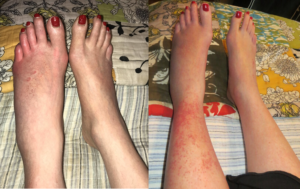
By January 2018, Megan started to develop lesions on her left foot. Initially, they were pinpoint to large flat lesions. Some of them were extremely itchy. Overtime, the lesions and rash spread up her ankle and shin on her left leg.

Skin and vascular manifestations of nutrient deficiency
Left foot edema and skin lesions May 2018 (left), June 2018 (right)

Over the next several months, while still attending physical therapy, Megan noted a lack of hair growth on her lower left leg, temperature discrepancies, in which the left foot was subjectively hot but objectively cooler than the right foot, blood pooling, and skin discoloration in her feet (dark red/purple) when standing, nail changes, and bilateral lower leg flushing following a warm shower. During this time, food sensitivities were also first observed – initially with beef and shrimp.

More Diagnoses But Little Help

In October 2018, Megan was evaluated by a physician at Brown Medical School, who is an expert with CRPS. He confirmed the diagnosis of CRPS (bilateral lower extremities) and in his provisional assessment of Megan, also diagnosed her with bilateral common peroneal neuralgia and bilateral foot drop. He also suspected Megan has mast cell activation syndrome (MCAS), orthostatic intolerance/dysautonomia (POTS), and hypermobile type Ehlers-Danlos Syndrome (hEDS) and was able to delineate which symptoms were consistent with CRPS and which were not. He did not attribute the blood pooling, the footdrop, flushing, lesions, rash, food intolerances and allergic-like reactions, dermographia, and other skin manifestations to CRPS. He recommended she be evaluated by another physician at the Steadman Clinic to assess for common peroneal nerve entrapment.

In October 2018, the Steadman doctor concluded that Megan did not have a common peroneal nerve entrapment. Instead, he noted irritations in the saphenous and obturator nerve distributions and diagnosed her with “bad luck”. He recommended Megan have an MRI of her lower back to ensure there is no central based pathology contributing to her bilateral symptoms. A lumbar MRI was conducted, which yielded no significant results.

Catastrophic Progression of Symptoms

All symptoms started after an orthopedic surgery on the left hip. Prior to the surgery on June 20th, 2017, there is no significant medical history. She had a clean bill of health prior to surgery – no prescriptions were taken, no known allergies. In April 2018, we learned the hospital that performed the surgery was not properly sterilizing the surgical instruments and operating rooms between surgeries, which resulted in numerous infections, injuries, and illnesses, per an investigation.

New symptoms, which have appeared in the last 24-36 months include: heavy sweating, bladder incontinence (especially after eating and some while sleeping), sudden urge to urinate, sudden urge to drink water, decreased vision, extremely dizzy, and feeling lightheaded when standing. Brain fog has been getting progressively worse. Food reactions and extreme sensitivity to stimuli have been getting progressively worse and more frequent. Menstrual cycles have been getting progressively worse – worst symptoms and highest pain are observed during the cycle. Food reactivity is more likely and worse while menstruating.

Current treatment approaches have not resulted in any lasting or significant improvement. Despite intervention, symptoms have gotten progressively worse. Megan has been medically homebound since 2019.

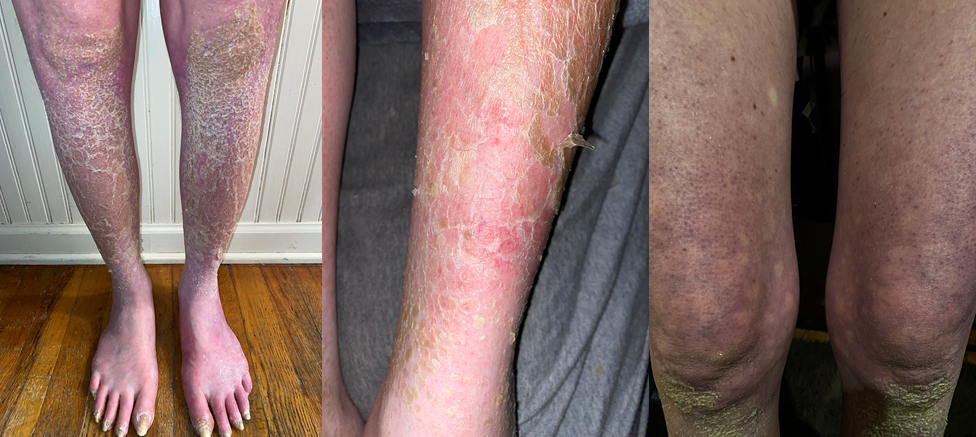
Large patches of skin peel, turn white, and flake off ankles, shins, and legs below the knees. Clusters of tiny “pin prick” lesions appear on tops of both feet and on legs, including thighs. There is a lace-like pattern of purple/brownish skin discoloration above the knees (Livedo Reticularis), which continues up the thighs. The lesions, rash, and discoloration have been progressing up both legs. Skin/tissue on feet appear purple, blue, red, pink, orange, discolored, and shiny in places. There is no hair growth on both legs below the knees. Toenails on both feet are thick, crumbly, extremely brittle, and yellowish/brown. There is little to no growth of toenails.

Progression of skin symptoms over time. Left- April 2022; middle and right – December 2022

Feet and legs appear less reddish and flushed when elevated, however, they quickly turn purple upon standing. The purple discoloration fades when feet are elevated. Flushing is also present after showering and with temperature changes. Edema is present in both feet, ankles, shins, calves, and knees. An extremely painful, deep “itch” is felt in both feet and lower legs. Tremors are present throughout both legs. Standing upright elicits dizziness, tachycardia, presyncope/syncope, heart palpitations, and blurry vision (especially after eating).

Bilateral footdrop is present without a known cause. As a result, walking is exceedingly difficult, and assistance is required to move throughout the house. Balance, motor planning, proprioception, coordination, and gait have all been dramatically impacted. A wheelchair/transport chair is currently being utilized for community access.

Excruciating 9/10 pain in feet and lower legs. Hyperalgesia and allodynia observed. Socks, shoes, and any other clothing/materials are no longer tolerated below the knees due to pain. Severe 8/10 “deep bone pain” in lower legs and shins. Severe 8/10 joint pain in shoulders, hips, knees, hands, fingers, ankles, and wrists. Muscle spasms and tremors (lower back/body), stiffness, and weakness in legs and arms. It is now difficult to type and to write due to pain in wrists, hands, and fingers. Lights, sounds, touch, and weather/pressure changes cause significant 7/10 pain.

Diet is currently limited to about 10 foods (has decreased over time) due to allergic-like reactions that occur immediately after and while eating foods. The severe reactions have resulted in 3 trips to the emergency room. Foods frequently cause swelling to the face, eyes, and lips, dizziness, nausea, excessive eye dripping and tearing, excessive post-nasal drip, and an extremely painful deep itch with a rash and “pinpoint” lesions to appear on legs and feet. Eating also evokes sweating, extreme fatigue, and tachycardia. Only fresh food is consumed. Leftovers are frozen immediately. The family has not been able to cook inside for over 3 years due to serious respiratory distress, reactions, and irritations to eyes, ears, and throat caused by smoke, scents, and odors. In addition to scents, there is an extremely heightened sensitivity to light and sound. Socks, shoes, and any other clothing/materials are no longer tolerated below the knees.

Nutrient Deficiencies

Over the last year, we have learned that Megan suffers from several nutrient deficiencies, including thiamine, which was measured at only <6 nmols/L in December. After stumbling upon a case story about thiamine deficiency here, it is difficult not to wonder if low thiamine was responsible for her rapid decline in health following the surgery. Many of the symptoms she developed immediately following the surgery, the muscle weakness, edema, foot drop, proprioceptive difficulties are indicative of low thiamine. Over time, she developed an intolerance to most foods, which, from what I understand, is also common with thiamine deficiency. This then spiraled into other sensitivities (light, sound, and scent, etc.) and other sets of bizarre symptoms. In fact, as I do the research, I am learning that many of her ‘diagnoses’ are not independent diseases but could actually be manifestations of the low thiamine.

Of course, as her health declined and her ability to safely tolerate foods also declined, other deficiencies likely came into play. The skin issues may be related to deficiencies in vitamin A, which we have tested, and vitamins D and K, which we have not yet tested. She is also severely deficient in vitamins B12, C, and has low iron, copper, and zinc. Each of these can contribute to a wide variety of symptoms and compound her already poor health.

  • Copper Deficiency 2/16/22
  • Ferritin Deficiency 3/8/22, 8/12/22
  • Zinc Deficiency 8/12/22
  • Vitamin C Deficiency 8/12/22
  • Vitamin A (Retinal) Deficiency 12/9/2022
  • Vitamin B1 (Thiamine) Deficiency 12/9/2022
  • Vitamin B12 (Cobalamin) Deficiency 12/9/2022

Current Symptoms

  • General: heavy fatigue, migraines, low-grade fever, flushing, swollen lymph nodes, night waking, early waking, difficulty falling asleep, and daytime sleepiness
  • Eyes: droopy eye lids, blurry vision, eye dripping, and excessive tearing
  • Ears/Nose/Throat: hoarseness, stuffiness, sore throat, postnasal drip, heightened sense of smell, sinus pressure, ear ringing and buzzing, headache, migraines, sensitivity to loud noises, sores/ulcers on the roof of mouth and tongue, swelling of face/lips/throat, and lips/throat feeling “tingly”
  • Heart: tachycardia, palpitations, swollen ankles/feet, edema, and blood “pooling” in legs
  • Respiratory: shortness of breath/breathlessness, coughing, and wheezing
  • Gastrointestinal Tract: bloating, cramping, acid reflux, alternating diarrhea and constipation, excess flatulence/gas, indigestion, nausea, and poor appetite
  • Urinary Tract: the sudden urge to urinate, and mild bladder leakage/incontinence
  • Musculoskeletal: muscle spasms, tremors, cramps, joint pain, joint stiffness, and muscle weakness
  • Skin: rashes, hives/welts, hair loss, itching, swelling, skin peeling and flaking, livedo reticularis, excessive sweating, “pinpoint” lesions, flat-reddish lesions, and dermatographia
  • Endocrine: cold intolerance, heat intolerance, urge to drink water, abnormally heavy/difficult menstrual periods, chills, and shaking
  • Neurology: difficulty concentrating, difficulty thinking, difficulty balancing, brain fog, dizziness, light-headedness, tingling, and tremors

Previous Medical History

  • Infected with Epstein-Barr/mononucleosis: 1993
  • Pityriasis Rosea in 2011
  • Infected with antibiotic resistant strep throat in 2012
  • Left hip labral tear in 2016
  • Right hip labral tear in 2016
  • Erythema ab igne (due to heating pad) in 2017
  • Left hip arthroscopy on 6/20/2017
    • Femoral osteoplasty
    • Mild acetabular rim trimming
    • Minor shaving chondroplasty
    • Acetabular labral reconstruction – transplanted labrum made from 11cm graft (cadaver tissue)
    • Capsular closure
    • Arthroscopic greater trochanteric bursectomy
    • Windowing of IT band
    • PRP injection
  • FDA Clinical Trial of Neridronic Acid for CRPS 12/2017

Current Diagnoses

  • Right hip labral tear, FAI/CAM Impingement, Bursitis, 2016
  • Complex Regional Pain Syndrome (CRPS) 11/1/2017
  • Suspected Ehlers-Danlos Hypermobile Type (hEDS) 10/1/2018
  • Suspected Histamine Intolerance/Mast Cell Activation Syndrome (MCAS) 10/1/2018
  • Bilateral Footdrop 10/1/2018
  • Bilateral Common Perineal Neuralgia 10/1/2018
  • Orthostatic Intolerance/Dysautonomia (POTS) 10/1/2018
  • Alternaria Alternata allergy 11/13/19
  • Secondary Polycythemia 1/5/2020
  • Hashimoto’s Thyroiditis 9/14/2021
  • Tinea Pedis Onychomycosis 12/2/2021 (misdiagnosed and overlooked for at least 2 years)
  • Elevated Leukotriene 2/16/22
  • Dysautonomia/Postural Orthostatic Tachycardia Syndrome (POTS) 9/6/2022

Current Medications

(updated 1/15/23)

Morning

(Before breakfast)

Evening

(Before dinner)

Late Evening

(Before bed)

Naltrexone (LDN) 4.5 mg Vitamin C 1000 mg Metoprolol 12.5 mg
Singulair (Montelukast) 10 mg Zinc (sulfate) 25 mg Neurontin (Gabapentin) 300 mg
Aspirin (NSAID) 81 mg Copper 2 mg Vitamin B1 (Thiamine) 100 mg*
Tagamet (Cimetidine) 200 mg Iron 50 mg Topical Terbinafine Cream (PRN)
Zrytec (Cetirizine) 10 mg Tagamet (Cimetidine) 200 mg  
Synthroid (Levothyroxine) 50 mcg Zrytec (Cetirizine) 10 mg  
Quercetin 500 mg Quercetin 500 mg
Neurontin (Gabapentin) 300 mg Vitamin B1 (Thiamine) 100 mg*  
Vitamin B1 (Thiamine) 100 mg*  

*Vitamin B1 (Thiamine) started 12/23/22

Previous Medications

Short-term Prednisone (following ER Trip) provided significant relief of pain, skin rash, lesions, reduced swelling, and allowed more foods to be tolerated. Produced significant improvement of symptoms.

  • Ketotifen – This medication was introduced and then discontinued due to potential side effects and lack of progress. Megan was taking 1 mg
  • Cromolyn – This medication caused mouth ulcers (white spots) to occur, and it was discontinued. A nebulized form was prescribed but given without instructions as to how to introduce.
  • Xifaxan – 10-day antibiotic course completed on 7/18/22 without improvement

We Need Your Help

More people than ever are reading Hormones Matter, a testament to the need for independent voices in health and medicine. We are not funded and accept limited advertising. Unlike many health sites, we don’t force you to purchase a subscription. We believe health information should be open to all. If you read Hormones Matter, like it, please help support it. Contribute now.

Yes, I would like to support Hormones Matter.

Photo by Sydney Rae on Unsplash.

Burning Out From Worsening Dysautonomia

8.2K views

Longstanding Symptoms of Dysautonomia

I am a 34-year-old male with symptoms of dysautonomia including small fiber neuropathy (SFN), postural orthostatic tachycardia syndrome (POTS), fatigue, insomnia, and problems with attention. I have had some of these symptoms for as long as I can remember but they have become worse after contracting COVID in December of 2021. I suspect I have issues with thiamine and possibly other nutrients.

History of Heavy Medication Use and Poor Diet

At around age 19, I felt what could be described as intracranial hypertension. I had multiple MRIs and CAT scans, but everything came back normal. At age 22, I began exhibiting signs of fatigue and insomnia coupled with anxiety. I most likely have some form of hypermobility too.

I was diagnosed with ADD and anxiety in my teens and prescribed Adderall and Prozac at the time. I was on those medications from the age of 16-25 years old. Then again from the age of 27-32 years old, I was given Adderall. I smoked and chewed tobacco until age 30 and was on and off hydrocortisone for poor adrenal function too. Evidently, adrenals can “fatigue” or become dysfunctional under high amounts of stress, even though blood cortisol was normal, saliva cortisol levels would always be low. Only functional doctors buy into this diagnosis.

I had strep and sinus infections a lot in my teens and early twenties and have probably had 40-50 doses of various antibiotics over the years. During this time, I worked out regularly with weight training and ice hockey. I was pretty competitive growing up. I would train 4-5 times a week and wake up early every Saturday to play hockey. I still work out around 5 days a week, mostly weight training now.

As a child and teenager, my diet was filled with carbs and crappy junk food like waffles and cereals and breads, and sweets. At around age 25, I began to eat a more healthy, paleo diet. I also began to avoid gluten. My diet currently consists of mostly carnivore/keto. I consume no alcohol at all. I did have a 10-year marijuana habit, from age 15-25, but I quit cold turkey years ago. I am currently taking Klonopin and have begun supplementing bone broth and a multivitamin. I have been taking 1mg per/day of Klonopin for a decade now. This may be affecting my symptoms.

Along Came COVID

In December of 2021, I got COVID and since then I have felt even worse. The COVID was mild. I took Ivermectin for 10 days and seemed to recover from the virus but all of my symptoms of dysautonomia have worsened.

Given my history, I am looking for advice on how to repair the damage I have done to myself with the poor diet, medications, and drugs. I have read about thiamine deficiency and it fits many of my symptoms but I am unsure how and where to begin. What else may be required?

We Need Your Help

More people than ever are reading Hormones Matter, a testament to the need for independent voices in health and medicine. We are not funded and accept limited advertising. Unlike many health sites, we don’t force you to purchase a subscription. We believe health information should be open to all. If you read Hormones Matter, and like it, please help support it. Contribute now.

Yes, I would like to support Hormones Matter. 

Photo by Gift Habeshaw on Unsplash.