dysautonomia

Endometriosis, Lupron, and Fluoroquinolones: A Recipe for Autonomic Disintegration

15.9K views

I am sharing my health story in the hopes that someone can offer assistance. I had stage 4 endometriosis for years before it was diagnosed. On top of that, I have had reactions in antibiotics, including fluoroquinolones and was given Lupron. Each drug destroyed more of my health. I am currently bedridden, in pain and unable to function. I have lost hearing in my right ear, have Sjögren’s syndrome, Hashimoto’s, adrenal insufficiency, hypokalemia, electrolyte imbalances, IBS, MCS, Ocular migraines and recently, have been diagnosed with dysautonomia. My body feels like it is disintegrating. We believe that everything is related, that I have mitochondrial issues at the root of these illnesses, but to date, no one has been able to put the pieces together. With the help of my husband, I have put together my health history. We are looking for input.

Early Warning Signs

1985: late summer, I was hit by car while riding bicycle. I was banged up really bad and definitely had head injury.

1998: started feeling off, not sure yet at this point still very young

2001: birth of my first daughter. I developed severe preeclampsia and had an emergency C-section three days later. My daughter was 6 weeks early and spent two weeks in the intensive care unit.

2002-2003: I felt off at times and did go to GP on several occasions. I had pain shot to my back. I am not sure what it was but it took the pain away. I also kept saying just didn’t feel well. I felt off but nothing was found.

2005: the birth of our son and second C-section. I was on bed rest last three months of the pregnancy. I was given an antibiotic for some reason. I do not remember. I had a reaction to it and turned orange. The doctor gave me something else to counter the effects of the antibiotic and my color returned to normal. It was a normal birth.

2006-2007: I was still in pain. The pain moved to the abdominal area. I developed bowel issues, had and ovarian cyst. I saw gastrointestinal physician who did scans and found a thickening of the lining of uterus. He referred us back to the gynecologist who did D&C in 2007 and said I had very minuscule amount of endometriosis.

2008- 2009: still seeing OB for pelvic pain, also seeing multiple other doctors including a neurologist, internist, and surgeon. Everyone kept saying same thing: ‘Your fine. It’s in your head.” They wanted to put me on mood enhancers. I tried lorazepam and felt terrible on it, so I stopped after two weeks.

The Lupron Disaster

September 2009: I started doing Lupron injections from gynecologist. She was very forceful with me and stated “if you don’t do these injections I can’t help you.” She said it was the only way they could know if the pain was below the belly or above. I agreed reluctantly, but at that time still thought my doctors had their best interests in me. After the first injection, my doctor called at home on a Saturday to see how I was feeling. I responded I was already in pain, but it has now quadrupled and I feel like an old person. Every bone in my body hurt.  I couldn’t believe the amount of pain I was in. She said I had to get all 6 injections if it were to be able to help me.

At that time, my husband because of work only went to a few of my appointments. I soon began to have him go with me because I felt I was getting the run around.

Hearing Loss Post-Lupron: Let’s Add Fluoroquinolones and Steroids to the Mix

2010: the last injection was in February. I began to lose my hair. I had memory loss, stabbing and taser sensations in head. I was still getting pains in abdomen area. In September, I went in for ear pain. The ENT said it looked like a scratch, so he gave me fluoroquinolone drops. I had also taken other fluoroquinolone antibiotics for yeast infections earlier in the year. In October, I had sudden sensorineural hearing loss in the right ear. Within an hour, I called my husband told him my hearing was acting weird. I went totally deaf in my right ear, 8 months after my last injection of Lupron. My local ENT immediately gave me a shot of cortisone (I was able to still walk and drive). It all went crazy when my ENT put me on a large dose of oral prednisone for 14 days. Everything in my body went nuts. I was rolling out of bed, holding on to the walls to help me walk. I totally lost my balance. The oral prednisone really did a number on my head.  I had done genetic testing through 23andMe and our doctor upload the report to a reader called Opus23. It said that I should never take prednisone.

I went to Stanford Medical and saw top ENT and received three cortisone injections into the right ear drum. Had a 50/50 chance for recovery and for me it didn’t work. I left Stanford with them telling me they still don’t have all the answers yet when it comes to sudden hearing loss. They thought it was some sort of viral infection that attacked the ear drum and deafened the ear. After the hearing loss. I had three ER visits. This is when I first started having low potassium. I felt like I was about to pass out. I was still driving at this time, I didn’t know what to think.

2011 -2012: I began seeing a naturopathic physician. I also did a trip down to LA to the House Ear clinic to see some specialist regarding her hearing loss. They couldn’t help either. I left my current OB and started seeing the physician who was filling in. I ended up doing a partial hysterectomy with her after finding a growth at one of my numerous ER visits that year. I was still working and a full-time mommy, while dealing with massive pain in my lower abdomen and now starting to deal with multiple autoimmune diseases including: Sjögren’s syndrome, Hashimoto’s, adrenal insufficiency. In addition, a lot of my minerals and vitamins were off at that time. I suspect this was beginning of my dysautonomia. I also began seeing an endometriosis specialist at Stanford.

Was it Endometriosis All Along?

2013: On January 31st, I had laparoscopic surgery to clear the endometriosis. I had stage 4 endometriosis which took my appendix. The physician said my body was littered with endometriosis. He even checked up in my heart cavity to make sure no endometriosis had made its way up to the heart. Before the surgery, I was talking with the anesthesiologist and telling him about my hearing loss and my low potassium. That is when he stopped the surgery and I had to take a stress test. We left and went to Palo Alto heart center and did a stress test I fasted for 24 hours and then they had me go do a stress test on a treadmill on an empty stomach. I did it no problem and went back to the surgery center. That is when they did the laparoscopic surgery and found stage 4 endometriosis.

Also, I want to point out that we didn’t find out until much later that during the course of the endometriosis surgery, they had left surgical clips and suturing material in me. We discovered this at one of our many ER visits. The OR report from our doctor says nothing about these things being left inside of me. I believe this is an additional pain I have on top of the other complications in my abdomen area. Nothing like having a wad of surgical clips throughout my abdomen and suturing material left inside my already struggling body. We are trying to get these removed, but no surgeon will take my case.

Mitochondrial Damage and Autonomic Disintegration

April that year, I had another ER visit. I lost all bodily functions. My potassium was severely low. I would go to the ER in 2013 many more times.

2014: I had to stop working totally this year. I tried to come back and assist a friend of mine just being her loan officer assistant but the neurological pains and crazy foggy brain I was experiencing was just too much. Something that was so easy for me years earlier, I was now having trouble just doing basic loan officer task at this point. Strange neurological pains were becoming a normal. I stopped driving this year also. It was just getting to scary for me to continue. I continued to go to ER for multiple visits

2014- 2017: I went to the ER over 50 times for various reasons: heart pains, chest pains, shooting stabbing pains throughout my entire body. I almost always had low potassium. Over these years, we spent our life savings and pulled out a $100,000 from my husband’s 401k, which we spent on various treatment plans. We have traveled as far away to Philadelphia looking for answers. We even gutted our house when we were told at one time it must be mold that is killing me. We lived in a borrowed 5th wheel while my husband put our house back together. There have been numerous days where I felt I couldn’t go on one more minute. I felt like death was right around the corner.

In 2015 one of our doctors after reading my genetic report thought he found a breakthrough with a patient that had hypokalemia and Sjogren’s syndrome. He provided me a copy of the study they did on a girl with very similar symptoms to mine. He had our local compounding pharmacy mix a solution called Shohl’s. I took the solution after my doctor assured me I would be ok. Well, I tried it almost within in minutes I was convulsing and went into tachycardia. My husband called 911 ambulance took me to the ER. In route to hospital paramedic gave me nitroglycerin. I was monitored for several hours and eventually went home. During this time had been staying at my mother-in-law’s house for about 6 months because we weren’t sure at this point if something in our house was making me so sick. This was a very stressful time for me at this point we have no idea what’s going on and what’s causing this.

We did have some relief in 2017 when our local naturopathic doctor was able to get a new treatment called UBL or ultraviolet blood irradiation. I had about 6 months where I was feeling off, but having somewhat good days where I could semi-function. My viral count has been very high during these years, EBV, CMV, HHV6, etc., and possibly Lyme. If I push myself, I will crash for hours sometimes days until I start to get any strength back just to walk to the restroom.

Next, I went in for a completely different treatment called prolotherapy. I got one injection into my shoulder, and just like that my body reverted back to like I was before the UBL treatments. I was worse again. It was very strange my body reacted like that.

2016: I was diagnosed with dysautonomia by another specialist, an electrophysiologist cardiologist. I have several of the sub symptoms of dysautonomia including: postural orthostatic tachycardia syndrome (POTS), neurocardiogenic syncope (NCS), dizziness, vertigo, fainting, fast, slow or irregular heartbeat, chest pain, low blood pressure, problems with gastrointestinal system, nausea, disturbances in visual field, weakness, breathing difficulties, mood swings, anxiety, fatigue and intolerance to exercise, migraines, disrupted sleep patterns, temperature regulation problems, concentration and memory problem, poor appetite and overactive sense, especially when exposed to noise and light. We also met with a dozen or so other specialists. None were able to help.

I have multiple tears in both hips worse on right side. Multiple torn areas in the pelvic floor also.  Surgery is out of pocket and we have not been able to fly back and have surgery to repair those tears and hips yet as of 2019.

2018- 2019: I went to the ER only three times in 2018 and so far only three times in 2019. We try not to go because we know they never find much. I only go to be reassured that my vitals are still strong when I’m feeling at my worst. I have been denied disability. I had a neurocardiogenic seizure in the courtroom with judge and she still denied me. I have one last appeal that I am waiting on. I am not very hopeful that will go through. At this point, the dysautonomia, fibromyalgia/ chronic neurological pain and the low potassium are what are the hardest things for me to deal with. As of right now, we are concentrating on rebuilding my mitochondrial cells in hoping I can reverse some or most of the damage I think was a direct cause from the Lupron injections.

I was also on bio-identical progesterone creme from around 2012 to 2018. Then, in middle of 2018, my ND wanted me to try the bio-identical that went off the lunar moon cycle. It was a separate estrogen and progesterone creme in a plastic push-up type applicator. She said she was looking into it and thought it might help. Well, I tried it and had terrible side effects, I think most likely from the adding in the estrogen. After second month, I was having terrible stomach pains. I looked four months pregnant and was begging my husband to take me to the ER. The pain was worst at the part of the cycle where I took the estrogen only. I felt like she was going to die. In the past, I was always high in estrogen. I am not sure, but as soon as I introduced in that estrogen, it threw me out of whack terribly. I stopped that in November of 2018.

This is where I am now: in pain, unable to work or care for my children. My husband is my full-time caregiver. He takes care of our kids, shops cooks, does everything I used to do plus works his full-time job. I couldn’t do this without him. The doctors have run out answers. I believe it was the endometriosis all along, made infinitely worse by Lupron and the various rounds of antibiotics, including fluoroquinolones. The only way I can maintain my potassium levels is through huge daily doses. Otherwise, I slide into hypokalemia. We have a standing order at our local hospital to measure my potassium whenever I suspect it is low. We have sought treatment from dozens of specialists and spent our entire life savings and I am no better than I was 10 years ago. In fact, I am worse. Over the last 8 years, we have been supplementing with vitamins and minerals to try and repair the damage done to my mitochondria by the Lupron and the fluoroquinolones. Some things help and others do not. We are at wits end and do not know where to turn for help. Below is a list of supplements that I currently take.

Supplement List

Upon waking:

  • 600mg potassium,
  • 1 1/4 grain Naturethroid

Breakfast:

  • 3 200mg potassium. Daily total 1200mg
  • 1 Chewable Hydroxo B-12
  • 1 COQ10 100MG
  • 1 Biotin 10,000mcg chewable
  • 1 Chromium picolinate 200mcg chewable
  • 1 Desiccated adrenal from Standard process
  • 1 magnesium malate 100mg
  • 1 Thiamin 50mg
  • 1 Mitocore – it is like a multiple vitamin
  • 5 grams vitamin C, mixed with juice, plus I add Lugol’s iodine, colloidal silver, lymph drain and trace mineral mix.

Mid-morning:

  • 3 200mg potassium again – daily total 1800mg
  • B12 shot, a 100iu syringe

Lunch:

  • 3 200mg potassium, daily total 2400mg
  • 1 vitamin A 10.000iu
  • 1 vitamin K 90mcg
  • 1 Lugol’s iodine plus
  • 1 nettle leaf cap 400mg
  • 1 Monolaurin 600mg
  • 2 L-lysine 1000mg
  • 1 thiamin 50mg
  • 1 magnesium malate 100mg
  • 1 more Hydroxo B12

Diner:

  • 3 200mg potassium, daily total 3000mg
  • 1 thiamin 50mg
  • 1 milk thistle 150mg
  • 2 L-lysine 1000mg
  • 1 DHEA 25mg
  • 1 magnolia bark 450mg
  • 1 Digestive enzymes
  • 1 Dr. Berg Hair formula.
  • 1 L-carnitine 250mg

We Need Your Help

More people than ever are reading Hormones Matter, a testament to the need for independent voices in health and medicine. We are not funded and accept limited advertising. Unlike many health sites, we don’t force you to purchase a subscription. We believe health information should be open to all. If you read Hormones Matter, like it, please help support it. Contribute now.

Yes, I would like to support Hormones Matter.

Image: Maximum Speed of Raphael’s Madonna, Salvador Dali, 1954.

Posted originally on Aug 20, 2019.

Thiamine for Fibromyalgia, CFS/ME, Chronic Lyme, and SIBO-C

40.7K views

The Road to Thiamine

In August 2020, I was at my wits end. I had developed gastroparesis in March 2020, after 10 days of metronidazole (Flagyl), for a H. Pylori infection and SIBO-C symptoms. After seven days, I developed the symptoms usually associated with the intake of this drug – nausea, confusion, anxiety, paranoid thinking and mild gastroparesis symptoms. I no longer had bowel movements initiated by my body and had to use enemas twice a week. This state continued and worsened until the end of July 2020, when I also had a surgery for stage 4 endometriosis.

I managed to stay alive those months by eating an elemental diet (90%) and a few bits of solid food such as white rice, goat cheese, or lean meat. After the surgery, however, my gastroparesis got worse. I contacted my family doctor at the end of August and told her that I could no longer eat any solid food without severe nausea and that I need to be in a hospital to be fed intravenously or with a gastric tube. She agreed that my situation demanded immediate attention and she wrote me the referral for an inpatient hospital admission.

I was lucky though that at that exact time, I stumbled upon the low oxalate diet mentioned by a member of a Facebook group. I joined the Trying Low Oxalate (TLO) group on Facebook and read what researcher Susan Owens wrote about oxalates. I started implementing it and realized that small portions of low oxalate food every 2-3 hours were accepted by my body. In a few weeks my gastroparesis symptoms were reduced and my belly pain diminished.

From the Low-Oxalate Diet to Discovering Beriberi Disease

At some point in September 2020, while researching oxalates, I found Elliot Overton’s videos on oxalates and I listened to them. I also read his articles on this website where he talks about allithiamine, a thiamine supplement that contains something called TTFD, as being something radically different in terms of its unparalleled effects on the human body. I was skeptical, because I had spent about 20,000 euro on supplements in the previous four years, each of them being promoted as health-inducing by big names in the field of chronic Lyme disease, MTHFR, CFS/ME, SIBO and so on, while their effects on my health were only partial and temporary at best.

I decided that this would be the last supplement I’d buy. The worse would be losing 40 euros and I had already spent too much on worthless treatments. I took 150 mg allithiamine + magnesium + B2 + B3 for 3 weeks and I was less tired, could move more around the house, and overall was feeling much better, even my extreme light sensitivity was subsiding. Then I stopped taking it, not sure it was doing anything. That’s when I knew that it had worked and that I needed it badly. I took the same dosage for another 2 weeks. The next three weeks I had to wait to receive it from the USA, and I was again completely bed ridden.

However, I used this time to read most of Dr. Derrick Lonsdale’s book on thiamine deficiency. I became convinced that I had dry beriberi and that most of my neurological symptoms were caused by thiamine deficiency. I also noticed that the dosage is highly individual and some individuals needed very high doses of thiamine per day in order to function.

I now understood, why 2015 was the year I became bedridden for most than 90% of the time: I spent 6 months in a very hot Asian country, as part of my master degree studies. The energy requirement to deal with the hot weather and the demanding job depleted my already low thiamine levels. At that time, I was on my way to diabetes as well. I had fasting blood sugar levels of 120 mg/dl. I could no longer assimilate/use carbs in the quantities my body required (70% of the daily caloric intake) and I was always hungry and always thirsty. Looking back on my childhood and my ever-declining health from 2008 onwards, it was clear to me that I had problems with thiamine.

The Astonishing Effects of Thiamine

In December 2020, I increased my thiamine dosage to 300 mg per day and I was astonished at the changes I experienced – an 80% reduction across all my symptoms and some even completely disappear.

Mid-January, I decided to increase my allithiamine dosage to 450-600 mg because I felt like my improvements were stagnating. I also noticed that during the days I was more physically active (meaning: I cooked food for longer that 10-15 minutes, my energy levels were higher when I was taking more allithiamine and I didn’t experience the typical post-exertional malaise I was used to in the past). I also noticed that taking allithiamine alone in high doses doesn’t work so well and that the active B complex capsules and the B3 I was taking did have an important part to play in how I felt.

In the beginning of February, I was craving sugars so badly, that I gave in and bought a cake for my birthday. I ate two slices and discovered that my mental confusion, the brain fog and generally poor cognitive skills improved “overnight”. I was astonished, since I had been led to believe that “carbs are bad”, “sugar is bad” and “gluten is bad” and that the problem was with the food itself rather than with my body missing some vital nutrients. I didn’t experience any side effects from the gluten either, even though my food intolerance test shows a mild reaction to gluten containing cereals.

By February 20th, this high-dose allithiamine ‘protocol’ and the ability to eat carbs again, eliminated all of my symptoms of SIBO-C/IBS-D/slow transit constipation, endometriosis, CFS/ME, fibromyalgia, constant complicated migraine with aura, severe food intolerances, including a reversal of my poor cognitive skills. I was able to discuss highly philosophical concepts again, for one hour, without suffering from headaches and insomnia.

Early Metabolic and Mitochondrial Myopathies

On February 21st, I decided to go for a walk. I walked in total that day 500 meters AND walked up four flights of stairs, because I live on the 4th floor without an elevator. By the end of that day, my disease returned and I became bedridden again. I could not believe it. This was the only thing I did differently. I just walked slowly.

And so I searched the internet for “genetic muscle disease”, because my sister shares the same pattern of symptoms. A new world opened before my eyes. I found out that in the medical literature, exercise intolerance, post-exertional malaise and chronic fatigue are well known facts and are described in conditions known as “myopathies”. That there are several causes for myopathy and that they can be acquired (vitamin D or B1 deficiency, toxic substances impacting the mitochondria, vaccines and so on) or inherited. It was also interesting to find out that while doctors manifestly despise and disbelieve CFS/ME symptoms, they are not utterly unknown and unheard of or the product of “sick” minds.

When I read this paper, although old and maybe not completely accurate in the diagnostics, I understood everything about my health issues.

I remembered my mother telling me that my pediatrician said he suspected muscular dystrophy when I was one years old, because I could not gain weight. I weighed only 7 kg at the age of one year, but he wasn’t convinced and so no tests were done in communist Romania. In addition to being overly thin, throughout my childhood, I always had this “limit” that I couldn’t go past when walking uphill or if I ran up a few flights of stairs, no matter how fit and in shape I was. Otherwise, I would develop muscle weakness such that my muscles felt like jelly. I would become completely out of breath, which I now know is air hunger. I couldn’t climb slightly steeper slopes without stopping 2/3 of the way up. My heart would beat very hard and very fast. I would feel like I was out of air and collapse. I first experienced this at the age of 5-6 and these symptoms have been the main feature of my physical distress since.

Because of these symptoms, I have led a predominantly sedentary lifestyle with occasional physical activity, never daily, apart from sitting in a chair at school. I didn’t play with classmates for more than 5 minutes. I couldn’t participate in physical education classes. Any prolonged daily physical activity led to general weakness, muscle cramps, prolonged muscle “fever”, and so I avoided them.

Now, I know why. Since reading this article, I was able to present my entire medical history to a neurologist and my symptoms were instantly recognized as those of an inherited mitochondrial or metabolic myopathy. I am currently waiting for the results of the genetic tests ordered by the neurologist, which will make it possible to get the right types of treatments when in a medical setting.

Before Thiamine: A Long History of Unexplained Health Issues

In addition to the problems with gaining weight and inability to be active, I had enuresis until 9 years old, along with frequent dental infections, and otitis. I had pain in my throat every winter, all winter and low blood pressure all the time. At 14 years of age, I weighed about 43-45 kg. I remained at that weight until age 27. I had a skeletal appearance. I also had, and continue to have, very flexible joints. For example, my right thumb is stuck at 90 degrees, which I have to press in the middle to release. I can feel the bone repositioning and going into the joint. This happens at least once a week.

My diet was ovo-lacto-vegetarian diet, with 70% of the calories coming from carbohydrates from when I was able to eat until 2015. In 2015, I could no longer process carbohydrate due to severe thiamine deficiency.

Since the age of 18, I have had quasi-constant back pain in the thoracic area. I have stretch marks on thighs, but have had no sudden weight gain/loss. Among the various diagnoses I had received before the age of 18 years old:

  • Idiopathic scoliosis – age 18. No treatment.
  • Iron deficiency anemia – at 18. Treatment with iron-containing supplements. No result.
  • Frequent treatments for infections (antibiotics)
  • Fasting hypoglycemia (until 2015).

The Fibromyalgia Pit

In 2008, my “fibromyalgia” symptoms began, although looking back at my history, many of these symptoms were there all along. I made a big change in my physical activity levels and this began my 12 year decline in health. In 2008, I started my philosophy studies at the university and decided to get more “in shape” by walking daily to and from the university. A total of 6 km per day.

  • Constant fatigue, no energy.
  • Worsened back pain.
  • Weak leg muscles at the end of the day.
  • Frequent nightmares from which I could never wake up. I felt like I couldn’t find my way out of sleep. After waking up, I would sit down and after 10 minutes I found that my head had fallen on my chest and I had fallen asleep involuntarily, suddenly.
  • Sensations of waves of vibrations passing through me from head to toe, followed by the sensation of violent “coming out” of the body and out-of-body experiences.
  • Heightened menstrual symptoms.
  • Fairly frequent headaches.

Over the summer, I recovered completely as I resumed my predominantly sedentary lifestyle. Then, in the fall, I began walking to and from university again, and my symptoms just got worse. This cycle continued for the next few years. My symptom list expanded to include:

  • Migrating joint pains.
  • Frequent knee tendinitis.
  • Pain in the heels.
  • Generalized pain, muscles, joints, bones.
  • Frequent headaches.
  • Sleep disturbance with insomnia beginning at 2-3am every night.
  • Frequent thirst, increased water intake (3-4 l/day).
  • Frequent urination, especially at night (woken 2-3 times).
  • Bumping my hands on doors/door frames.
  • Unstable ankles.
  • Painful “dry” rubbing sensation in hip/femur joint.
  • Prolonged angry spells.
  • Memory problems (gaps).
  • Difficulty learning new languages.

I underwent a number of tests including, blood tests, X-ray + MRI of the spine, and a neurological consultation. All that came back was high cholesterol (180 LDL, 60 HDL), low calcium, iron deficiency anemia, scoliosis, and hypoglycemia. No treatment was offered.

From February 2010-August 2010 I had a scholarship in Portugal. Philology studies interrupted. I was using public transport to go to classes, which were about only 3 hours a day. I required bed rest outside classes with only the occasional walk. I had a complete remission of all symptoms in July 2010 when I returned home and resumed my sedentary lifestyle. This was the last complete remission.

From August 2010 – December 2010, I resumed day courses at both universities and resumed the walking.

All of my symptoms were aggravated enough that by December I was bedridden. I stopped attending classes due to back pain in sitting position. I wrote two dissertations lying in bed. Once again, I sought medical advice and had a number of tests and consultations with specialists. I was diagnosed with peripheral polyneuropathy and “stress intolerance”, fibromyalgia. The treatment offered included:

  • Medical gymnastics: aerobics, yoga and meditation presumably to get me in shape and calm me down.
  • Calcium and iron supplementation, gabapentin, and low-dose mirtazapine.

The physical activity worsened symptoms, as it always does. The mirtazapine improved my sleep. I took it for 2 weeks and then stopped because I was gaining weight extremely fast.

From 2011 – October 2012, I was almost completely bedridden. I had to take a year off because I couldn’t learn anything, my head hurt if I tried.  The physical symptoms improved after about a year, as did the deep and total fatigue. I tried to get my driver’s license in 2012, but failed. I couldn’t remember the maneuvers and the order in which to perform them. I couldn’t concentrate consistently on what was happening on the road. There was too much information to process very quickly.

From 2012-2015, I was getting my master’s in France. This aggravated all of my symptoms of exertion, both physical and intellectual. In 2013, I underwent general anesthesia for a laparoscopic surgery due to endometriosis, after which something changed in my body and I never fully recovered to previous levels of health. I took another year break between the two years of master’s studies. I couldn’t learn anymore. Symptoms relieved a bit by this break. After three months in Thailand for a mandatory internship, in one of the most polluted cities in the world, I got sick and developed persistent headache, with very severe cognitive difficulties. At this point, 90% of my time was spent in bed.

A general anesthetic in the autumn of 2015 for a nose tumor biopsy was the “coup de grâce”. Since then, I only partially recovered a few hours after a fluid infusion in the emergency ward and a magnesium infusion during a hospital stay in Charites Berlin in 2016. Other improvements: daily infusions of 1-2 hours with vitamins or ceftriaxone.

How I Feel Since Discovering Thiamine

In order to recover from the crash I experienced in February, I increased my B1 (TTFD) intake mid-March and made sure I was eating carbs every three hours, including during the night. I need about 70% of my total caloric intake to come from carbs.

I am currently taking 1200 mg B1 as TTFD, divided in 4 doses, 600-1200 mg magnesium, 500 mg B2/riboflavin, 3 capsules of an active, methylated B vitamin complex, 80-200 mg Nicotinamide 3X per day and 1-2 capsules of a multi-mineral and a multi-vitamin. I make sure I eat enough proteins, especially from pork meat, because it contains high amounts of BCAAs and helps me rebuild muscles.

I walked again the last week of April 2021, 500m in one day, because of a doctor’s appointment. I did not experience a crash that day or the following days. I did not have to spend weeks recovering from very light physical activity.

I can now use my eye muscles again, and read or talk with people online. I can cook one hour every day without worsening my condition.

After 5 years of constant insomnia, only slightly and temporarily alleviated by supplements, I can finally sleep 7.5 hours every night again. I no longer wake up 4-5 times a night.

My wounds are healing and my skin is no longer extremely dry and cracked.

My endometriosis, SIBO-C, gastroparesis, food intolerances, “fibromyalgia” pain, muscle pain due to hypermobility, are all gone.

And to think that all of this was possible because of vitamin B1 or thiamine, in the form of TTFD and that I almost didn’t buy it, because I no longer believed in that ONE supplement that would help me!

I will always be grateful for the work Dr. Derrick Lonsdale, MD, researcher Chandler Marrs, PhD and Elliot Overton, Dip CNM CFMP, have done so far in understanding, treating and educating others about chronic illnesses. More than anything, more than any physical improvement I experienced so far thanks to their work, what I gained was truth. Truth about a missing link, multiple diseases being present at one time and about why I have been sick my entire life.

Physical Symptoms and Diagnoses Prior to Taking Thiamine

  • Fibromyalgia and polyneuropathy diagnostic and mild, intermittent IBS-C since 2010;
  • Endometriosis symptoms aggravating every year, two surgeries, stage 4 endometriosis in 2020;
  • Surgeries under general anesthesia severely worsened my illness and set my energy levels even lower than they were before;
  • CFS/ME symptoms, hyperglycemia/pre-diabetes, constant 2-3 hours of insomnia per night and constant 24/7 headache since 2015, following an infection and during my stay in a very hot climate;
  • POTS, Dysautonomia, Post Exertional Malaise Symptoms from minor activities, starting with 2016;
  • Increased food intolerances (gluten, dairy, sugar/sweets, histamine, FODMAPs, oxalates, Sulphur-rich foods), to the point of eating only 6 foods since 2018;
  • Chronic Lyme disease diagnostic based on positive ELISA and WB test for IgM, three months in a row, in 2017;
  • Weight gain and inability to lose weight after heavy antibiotic treatment, skin dryness, cracking, wounds not healing even for 1.5 years, intolerance to B vitamins and hormonal preparations, since 2017;
  • Complicated migraine symptoms and aura, light intolerance, SIBO-C and IBS-D, slow intestinal transit, following a 4 month period of intermittent fasting that made me lose 14 kg, living in bed with a sleep mask on my eyes 24/7, severe muscle weakness, since 2018;
  • Two weeks recovery time after taking a 10 minute shower;
  • Gastroparesis, living on an elemental diet, in 2020;
  • All my symptoms worsened monthly, before and during my period.

Treatments Tried Prior to Thiamine

Gluten, dairy, sugar/sweets, FODMAPs, histamine, oxalate, Sulphur-rich foods/supplements free diets; AIP, SCD, Wahl’s protocol, candida diets; high dose I.V. vitamins and antibiotics, oral vitamins and antibiotics, liver supplements and herbs, natural antibiotics (S. Buhner’s protocol), MTHFR supplements, alkalizing diet, essential oils, MCAS/MCAD treatment, SIBO/dysbiosis diets and protocols, insomnia supplements, and any other combination of supplements touted as helpful for such symptoms.

And this is just what I remember top of my head. Their effect was, at best: preventing further deterioration of my body, but healing was not present.

Additional Literature

We Need Your Help

More people than ever are reading Hormones Matter, a testament to the need for independent voices in health and medicine. We are not funded and accept limited advertising. Unlike many health sites, we don’t force you to purchase a subscription. We believe health information should be open to all. If you read Hormones Matter, like it, please help support it. Contribute now.

Yes, I would like to support Hormones Matter.

Image by Gordon Johnson from Pixabay.

This case story was published originally on May 11, 2021. 

Post Accutane Dysautonomia?

7K views

I am a healthy 19 year old athlete, or at least I thought I was, until I began having these weird episodes where I will begin sweating, but have the chills too. My heart races and I feel spacey and out of it. It feels as though the blood is just rushing from my head to body. The episodes can last from a few minutes to a few hours and seem to come out of nowhere. The doctors that I have seen cannot find anything wrong with me, but I know this is not normal. I have also had some weird lab results, shown below.

Childhood History

I have no major medical history except for a year of amoxicillin for ear infections and Miralax for constipation as a toddler. Around the age of about 11, I developed facial tics that were resolved with diet change (gluten free) and magnesium.

I have played soccer since the age of 5 years old. I would continuously head the ball, to the point where the parents would jokingly take bets on how many times I would head the ball. Around my sophomore year in high school, I had some back pain and a chiropractor said I have mild scoliosis with a Scheuermann’s presentation. This is basically a benign flattening of the vertebra. He said exercise was important. I changed my mattress, exercised regularly, and the back pain went away. The only other thing that I deal with regularly is altered sleep. I can fall asleep OK but I wake up several times during the night and have trouble falling back asleep.

Acne, Antibiotics, and Accutane and First Episodes

During my senior year in high school I developed severe cystic acne. I tried some dietary interventions, but nothing seemed to help. I did six weeks of doxycycline, which did nothing. I then went on my first round of Accutane for about six months in the spring of 2022. The following fall of 2022, the acne returned. I went back on Accutane for another five months. I discontinued the second round of Accutane at the end of May 2023. Then, one month later, at the end of June, I had my first episode of sweating, chills, heart racing, and feeling of spaciness. It seemed to come out of nowhere. We thought it was viral. A few friends developed Epstein Barr in May and so I thought maybe I had it too, as I was in close contact with them. About a month later, I had another episode and then about two more this past summer. They seemed to be lessening in intensity and duration.

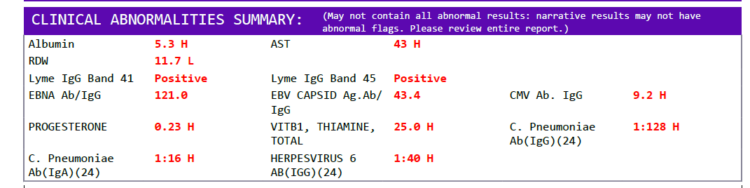
This last fall, we had bloodwork done (Figure 1.). My labs showed that I have exposure to EBV, Lyme and a couple other viruses, which according to the doctor, were not extremely elevated. My albumin, the liver enzyme AST and my progesterone were also high, while my RDW (red cell width) was low at 11.7 (12.2-15.3). My vitamin D was barely above the reference range at 33.3ng/mL (32-100), and strangely my thiamine was super high at 25.0 ng/mL (2.7-10.1) even though I do not supplement. Finally, there was evidence of a lingering respiratory infection Chlamydophila pneumoniae.

Post Accutane Dysautonomia
Figure 1. Recent labs.

While these numbers were not a concern to the physician, these episodes I have are not normal and so something is going on.

College and More Episodes

Despite all of this, I entered college away from home and felt ok for two months. Then the night before Halloween, out of nowhere, I had another episode. This time it lasted almost two hours. I was sweating, had chills, and my heart was racing. When I feel it coming on, I have to lay down. It feels like the blood is just rushing from my head and body. This time my hands also sort of cramped/seized up, which was scary. I was not doing anything out of the ordinary. I was preparing to go on a road trip. The following night I had another smaller episode. This one didn’t last more than 10 minutes.

Why Is This Happening?

No one seems to know why this is happening. Are the abnormal labs really of no concern? How about the elevated thiamine despite not supplementing? Is there something going on there? Could I possibly have an altered thiamine transporter system or some other genetic defect that makes it difficult for me to use thiamine? Could my symptoms be spinal related? Is my autonomic nervous system altered after coming off two rounds of Accutane? This is very scary to me as a 19 year old. I would like to learn everything I can from you and all the people here sharing their stories. I do not want to get worse.

We Need Your Help

More people than ever are reading Hormones Matter, a testament to the need for independent voices in health and medicine. We are not funded and accept limited advertising. Unlike many health sites, we don’t force you to purchase a subscription. We believe health information should be open to all. If you read Hormones Matter, and like it, please help support it. Contribute now.

Yes, I would like to support Hormones Matter.   

This story was published originally on December 7, 2023. 

Recovering From Medically Induced Chronic Illness

17.3K views

Unexplained or Medically Induced Chronic Illness?

Unexplained. That’s what doctors call chronic illness. Conventional medicine says, ‘learn to live with it.’ Rather than offer a true treatment or cure for these debilitating conditions, they suppress the immune system and offer more drugs for depression and anxiety – none of which are effective. I’m here to tell you that common wisdom is wrong. I know, because my own lucky story proves we can heal from chronic illness. Pharmaceutical insults created my disabling illnesses  – Chronic Fatigue, Fibromyalgia, estrogen dominance, adrenal fatigue, POTS, Graves’ Disease, Hashimoto’s, Bell’s Palsy, infertility and more. I share my journey to offer hope. The doctors were wrong. I have recovered and am once again, healthy.

Early Clues and Pharmaceutical Insults

My childhood had some clues – things I now know predict chronic illness. My lymph glands swelled when I was otherwise healthy. Mosquito bites turned into angry 3” welts. Childhood bunions and hyper-mobile joints suggested leaky gut. All these issues correlate with chronic illness and, seen in hindsight, hint at the difficulties that awaited me in adulthood.

My immune system may have been awry from the start, but pharmaceuticals tipped the scale toward chronic illness. As a teen, I took birth control pills for heavy periods and cramps. When vague symptoms appeared in my early twenties, I asked about pill side effects. The gynecologist laughed at the idea, but I trusted my gut and finally stopped the pill. I felt better in some ways but developed new symptoms.  Sleep became difficult. I was hypersensitive to noise and light and struggled with unquenchable thirst.  The doctor suggested my extreme thirst stemmed from hot weather and salty foods. This explanation didn’t add up to me, but I was young and so was the internet. I had no resources to connect the dots. Today, I recognize that 10 years of hormonal birth control created nutrient deficiencies (folic acid, vitamins B2, B6, B12, C, and E, along with magnesium, selenium and zinc) while also raising my risk for future autoimmune disease.

Recurrent UTIs, Fluoroquinolones, and New Onset Graves’ Disease

A few years later, recurrent urinary tract infections led to many doses of the fluoroquinolone antibiotic, Cipro. Cipro now carries a black box warning and is known to induce mitochondrial damage. My mid twenties also brought pre and post-menstrual spotting and bleeding for 10 days each month. Doctors did nothing for my hormonal imbalance but diagnosed Graves’ disease (hyperthyroidism). Everything about me sped up. Food went right through my system. I was moody. My mind was manic at times. I was unable to rest and yet physically exhausted from a constantly racing heart.

The doctor said Graves’ disease was easy – just destroy the thyroid and take hormone replacement pills for the rest of my life. I didn’t have a medical degree, but this treatment (RAI, radiation to kill the thyroid) just didn’t make sense. Graves’ disease is not thyroid disease. It is autoimmune dysfunction, where antibodies overstimulate a helpless thyroid.

As I studied my options, I learned that RAI could exacerbate autoimmune illness and many patients feel worse after treatment. It was surprising to find that the US was the only Western country to recommend RAI for women of childbearing age. Armed with this knowledge, I declined RAI and opted for medication. The endocrinologist mocked my decision. I was in my 20s and standing up to him was hard, but it marked a turning point and spurred me to take responsibility for my own health, rather than blindly trusting doctors. Recent reports suggest RAI treatment increases future cancer risks. My Graves’ disease eventually stabilized on medication, although I never felt really well. I pushed for answers for my continued illness, but doctors refused to test my sex or adrenal hormones.

IVF and More Damage to My Health

Things turned south again when I was unable to conceive. The supposed best fertility clinic in Washington, DC could not find a cause for my infertility. I’ll save that story for another day, but the short version involved a few years of torment and four failed IVF attempts. The fertility drugs and the stress worsened my overall health considerably.

Our last try at pregnancy was with a specialist who practiced functional medicine. Labs and charting uncovered a clear progesterone imbalance, and also explained my spotting. This simple diagnosis was completely missed by the conventional fertility clinic. A brief trial of progesterone cream resulted in two naturally conceived, healthy pregnancies. Isn’t it remarkable that several years and over $100,000 failed to produce a baby with IVF and $20 of progesterone cream on my wrist did the trick? This could be a cautionary tale about profit motive in modern medicine, but that, too, is a topic for another day.

Years of Conventional Medicine: Thyroid Damage, Autonomic Dysfunction, and Profound Fatigue

I weaned off thyroid medications and felt fairly well after my babies, but my system took a big hit when life brought an international relocation. The move was intensely stressful and my health sunk after we landed half a world away. I had no energy, gained weight, and lived in a fog. The tropical heat and humidity of Southeast Asia felt like a personalized form of torture.

Perhaps the stress of our move left me vulnerable to the reappearance of autoimmune and adrenal dysfunction, as my next diagnosis was Hashimoto’s Disease and adrenal fatigue. Doctors ordered functional medicine tests (hair, organic acids, stool, saliva cortisol and hormones) that identified nutrient imbalances, but their treatment ideas fell short. Despite replacement hormones and supplements by the handful, I remained very sick, with profound exhaustion, brain fog, sleep disruption, pain, and terribly imbalanced sex hormones.

Taking Matters Into My Own Hands

If setbacks have a bright side, it is in the drive to get better. I started studying when my doctors ran out of ideas to treat my illness. Fibromyalgia was the best description of my pain, but I knew conventional medicine offered no help for this condition. I dug into the topic and found the work of Dr. John C. Lowe, who used T3 thyroid hormone for fibromyalgia, and Paul Robinson, creator of CT3M, the circadian method for using T3. CT3M and high daily dose of progesterone cream improved my quality of life in the short term. Near daily bleeding eventually regulated back into a normal cycle and my adrenal function improved greatly.

Postural Orthostatic Tachycardia Syndrome (POTS) was the next bump, bringing a very high heart rate, very low blood pressure, heat intolerance, and extreme sweating on the lightest activity. By this time, I didn’t even ask the doctor for help. My research pointed to salt and potassium, and so I drank the adrenal cocktail and salt water daily. POTS symptoms vanished quickly with this easy strategy, as did the nocturnal polyuria that plagued me for many years.

I steadied after this time. I was not well but functional, despite some major life stressors, including another international move and a child’s health crisis. Even though I managed the daily basics, things like house guests, travel, or anything physically taxing required several days to a week of recuperation.

The Next Step: Addressing Nutrient Deficiencies

The next step in my recovery came thanks to a B12 protocol that includes co-factor nutrients, developed by Dr. Gregory Russell-Jones. Addressing the deficiencies connected to B12 helped and things progressed well until I had a disastrous reaction after eating mussels, which I hoped would raise iron levels. I vomited for hours and stayed in bed for days. I kept up the B12 protocol, but just couldn’t recover. Largely bedridden, and napping 4 hours at a stretch, I got up in the evening only to drive to a restaurant dinner, too exhausted to prepare food or deal with dishes.

Debilitating exhaustion lasted for a month, and then two, with no relief. It was an awful time, but hitting rock bottom proved a blessing in disguise, as desperation turned me back to research. Slowly, I pushed through brain fog and started to review studies on chronic fatigue and fibromyalgia. This led me to a promising Italian study using thiamine for these conditions.

Studying thiamine, it seemed plausible that the allergic reaction to mussels drained my B1 reserves, making it impossible to recover. Inspired by the research, I started on plain B1 at very high doses. To my surprise, I felt better right away. The first dose boosted my energy and mental clarity.

I continued to learn about B1’s benefits, thanks to this website and the text by Drs. Marrs and Lonsdale.  Two weeks went by and thiamine HCL seemed less effective, so I switched to lipothiamine and allithiamine, the forms recommended in Thiamine Deficiency Disease, Dysautonomia, and High Calorie Malnutrition. WOW. What a difference! Virtually overnight, my gears began to turn, and I felt better with each new day. In a single month, I went from bedridden to functioning well 2 out of every 3 days. I had ideas, I had energy, and I could DO things. The setback days were mild and disappeared entirely after 2 months on thiamine.

At the 2 month mark, I had to travel for a family emergency. My pre-thiamine self would have needed at least a week of rest following this kind of trip, and I expected pain and fatigue as I stepped off the plane. But to my great surprise, I felt well! I remember walking through the airport late that evening and thinking it felt amazing to stretch my legs. Maybe that sounds like an ordinary feeling, but years of chronic fatigue and fibromyalgia conditioned my body to stop, to sit, whenever possible. It was entirely novel to FEEL GOOD while moving! The next day came and I did not collapse, I did not require days to recover and was able to carry on like a normal person. It was a remarkable change in an unbelievably short time.

Recovery From Conventional Medicine’s Ills Came Down to Thiamine

Getting better feels miraculous, but it’s not. The real credit for my recovery goes to experts like Dr. Marrs and Dr. Lonsdale who spread the word about thiamine. Despite years of illness and dead ends, I believed I could heal and I kept trying. Tenacity eventually paid off when posts on this site helped connect the dots between my symptoms and thiamine deficiency. More than anything, my recovery is a story of tremendous luck, as I finally landed upon the single nutrient my body needed most.

The difference between my “before thiamine” and “after thiamine” self is beyond what I can describe.  Birth control, Cipro, and Lupron created nutrient imbalances and damaged my mitochondria, leading to multiple forms of chronic illness in the years between my 20s and 40s. Replacing thiamine made recovery possible by providing the fuel my damaged cells so badly needed. At this writing, I am 7 months into high dose thiamine and continue to improve. I have not experienced any form of setback, regardless the stressors. My energy feels close to normal, the pain is resolving, and brain fog is a thing of the past. My sense of humor, creativity and mental functioning are all on the upswing. I owe thanks to the real scientists who dare to challenge wrong-headed ideas of conventional medicine, and who provide hope for these so-called hopeless conditions. My wish is that this story will do the same for someone else.

Share Your Story

If you have a health experience you would like to share, send us a note here.

We Need Your Help

More people than ever are reading Hormones Matter, a testament to the need for independent voices in health and medicine. We are not funded and accept limited advertising. Unlike many health sites, we don’t force you to purchase a subscription. We believe health information should be open to all. If you read Hormones Matter, like it, please help support it. Contribute now.

Yes, I would like to support Hormones Matter. 

Image by StockSnap from Pixabay.

This article was published originally on February 6, 2020. 

Health Shattered By Poor Diet and Conventional Medicine

15.3K views

My health has declined over the last few decades, to the point that I am totally disabled and haven’t driven in 10 years. I have severe POTS with high blood pressure while sitting and laying down. Previously, it was low. I am not able to stand up as my heart rate goes too high and I feel as though I’ll pass out. I have coat hanger pain, jaw tension, and headaches daily. I am very irritable and impatient. Emotional outbursts crying spells, depression. I feel like I am a completely different person. I am in survival mode. My body cannot shift out of sympathetic dominance. All of this has developed over the last 20 years; a progressive decline until everything hit the fan.

I thought I had a relatively healthy childhood and into my early 20s. I did have mono in 7th grade. Looking back though, I ate poorly growing up and did a lot of crazy starvation diets. I also consumed a lot of alcohol in my later teens through my early 20s. I stopped drinking in 1994. However in 2006, I started drinking on and off again and the night I had the severe vertigo attack, I had been drinking. Since then I haven’t touched alcohol.

My mom passed away when I was 22 and I had my first child at 23, which was a C-section. At 26, I developed rosacea. This was really my first health problem. At 27, I was divorced (1993). I remarried a year later and had another child at 30 years old. Three months later, I had my gallbladder removed. With all of this, I was still active and healthy with only rosacea that would come and go, but it would get really bad on occasions and was very distressing. This was until 2007, when life stressors, poor diet and illness caught up with me.

Unending Vertigo and the Protracted Decline of Health

I started working again in 2000 after we relocated to Arizona. I was a preschool teacher, a wife, and was raising my two sons. I had a very full schedule. I was always a high achiever. In 2004, I opened my own school with another teacher. Things got even more stressful. In January 2007, I had a very emotional falling out with my father and a couple weeks after that I was diagnosed with viral pharyngitis. Within a couple weeks of this diagnosis, I was thrown out of bed with the worst vertigo you can ever imagine. This went on for three days and I was unable to walk for over two weeks. As things were improving, the dizziness never did go away. I sought out multiple practitioners, including neurologists and audiologists, but none were able to help.

I went back to work but I was never the same, having to deal with constant dizziness and feeling of being off-balance. In October of 2007, I wound up in the ER with a resting heart rate of 160. This had come on out of nowhere over the day and by the evening I was very frightened. They gave me lorazepam and sent me on my way. I continued with the constant dizziness and then the anxiety and panic attacks started. My GP gave me a script for benzodiazepine and offered an anti-depressant. I tried the antidepressant and I had a bad reaction. I  felt completely numb. I couldn’t laugh smile or have any sort of reaction. That was after just try half a tablet. I never tried that again.

In 2009, I had an ankle injury and was wearing a boot for most of that year. In October, of that year I ended up having a surgery on it. What was interesting is that I was not experiencing much of the dizziness for most of that year. It wasn’t until a couple months later when I had a sudden onset of the dizziness during my physical therapy session. So the dizziness had come back and the anxiety and panic attacks were getting worse. In September 2010, I basically collapsed at work. It was about four or five days later at home, I experienced a severe shift of my energy. I was severely fatigued and now was experiencing POTS.

Is it Lyme? Maybe. Maybe Not.

November 2010, I was diagnosed with Lyme, however, my test was not conclusive. The Lyme literate doctor said my immune system was so weak that it was hard to get a positive result. He diagnosed me clinically. This set me off on a seven year journey of protocols that included benzodiazepines, two IV chest ports, supplements, herbs, homeopathics, bio-hormones, coffee enemas, detoxification therapies, chelation, IV and oral antibiotics, Flagyl, anti-fungal drugs, and every diet imaginable. You name it I did it. We had spent our life savings and I was still disabled and incredibly ill.

I became addicted to the benzodiazepines that he prescribed. He never told me about how addictive they were. I was on them for three years and they made me so much worse! I tried to come off of them several times. They turned me into a 3 year old. I was so fearful I couldn’t leave my bedroom even to cross the hall into bathroom. Finally, in 2014 I was able to kick the addiction. It took me six months of liquid titration.

As If Things Weren’t Bad Enough: Cancer Too.

Also in 2014, I had a huge fibroid and had a procedure called UFE ( uterine fibroid embolization ) to cut off blood supply so it would shrink. I know now I had severe estrogen dominance.

In 2017, I hit menopause and stopped menstruating. I was using sublingual progesterone at the time. The doctor also had me on hydrocortisone for adrenals and a time-release thyroid supplement. These supplements never helped and only made me worse. I was in such bad shape. I wasn’t sleeping for 3 to 4 days at a time and then when I would sleep it was only couple hours. This sleep regime went on all year.

In May of that year, I woke up one morning and left breast had shrunk significantly overnight!! The doctor I was seeing, had me come in. He physically examined me and felt that it was not anything to worry about. He said that I needed to detoxify my breast because it was probably blocked lymph. He told me to do skin brushing on it. I was in such bad shape that I wanted to believe him but I was so frightened. In October, I saw a different doctor and she said I had to get a biopsy. It was cancer. I did not see an oncologist. I did not have any lymph nodes removed or chemo radiation. I just had a surgeon remove it. I left the rest up to God. At this point, I could not endure anything else mentally or physically. The pathology report indicated the cancer was 98% estrogen driven.

A Dysautonomia Specialist Prescribed More Antibiotics

In 2018, I tried one more doctor. He was an autonomic dysfunction doctor and his protocol was quite simple. It was focused on lowering inflammation in the brain and body and balancing gut bacteria. At this point, I had suffered from chronic constipation for at least 10 years, on top of POTS and all of the other health issues. I was put on fish oil, olive oil, Rifaxamin and Flagyl for the possible SIBO and a vagus nerve stimulator. He told me not to use any other supplements of any kind. He claimed that most all supplements were fraudulent and using them would interfere with progress. I could not finish the Flagyl. I was feeling severely agitated and I thought it was due to the drug. I took most of it though. He assured me that the Rifaxamin was very safe and that they actually have renamed this antibiotic as a eubiotic. I did see my rosacea clear up. I had read some research and trials were they used Rifaxamin for rosacea and had a very positive outcome. So over the last 2 1/2 years I’ve been faithful on this protocol. It seemed like I had periods of time where I was able to stand up longer and do more around my house but I always relapsed. I was using the Rifaxamin on and off as per his direction for 10 days at a time. This year he put me on it indefinitely to use daily. I’ve been on it now for 8 months straight, but in July I started to go downhill very fast. I was having a decent spell able and had been able walk around for a a bit, do some limited chores and even able to be out in the pool, but one night my heart just went crazy and began to race. The vertigo came back too. I have been bedridden again since.

Discovering Thiamine Deficiency

After going back to doing some research, I came upon Dr. Lonsdale and Dr.  Marrs’ book Thiamine Deficiency Disease, Dysautonomia, and High Calorie Malnutrition. I am thinking thiamine deficiency could be a piece of my puzzle. After reading one of Dr. Lonsdale’s articles on high B12 correlating with thiamine deficiency, I remembered two of my B12 tests. One in 2014, where it was 2000 and one in 2017 was 1600. The max upper range is 946.

Although my ill health was progressive at first, over time, everything has just become unbearable. I have been bedridden now for 10 years. The POTS symptoms are severe and I think I have the hyperadrenergic POTS. My blood pressure is very high when both sitting and laying and when I stand up, both my blood pressure and heart rate climb. I feel as though I’ll pass out. As I mentioned previously, I also have coat hanger pain, jaw tension, and headaches daily. I am very irritable and impatient. Emotional outbursts crying spells, depression. I feel like I am a completely different person. I am in survival mode. My body cannot shift out of sympathetic dominance. I am hoping to get some direction and advice on using thiamine to possibly help my condition.

Supplements, Medications, and Diet

Upon learning about thiamine and mitochondria, I stopped taking the Rifaxamin about two weeks ago. Below is a list of supplements I currently take and some information about my diet.

  • Magnesium hydroxide, Magnesium glycinate, 100mg, magnesium citrate, 100mg and some magnesium oxide in an electrolyte drink, in some variation for the past 3 years
  • 3000mg daily (6caps) DHA 500 by Now Foods for past 3 years
  • Liver capsules 4 daily past 3 months
  • Camu Camu powder, a natural Vitamin C, 100-300 mg just started about two weeks ago
  • Rice bran 1 tsp before bed started two weeks ago
  • Bee pollen 1/2 tsp daily, started 3 months ago
  • I follow gluten free diet. I eat beef, chicken, raw liver, raw dairy, raw kefir, cheese, bone broth, some fruit, oatmeal and some vegetables like tomatoes, green beans, onions.

Since learning about thiamine, I have begun using Thiamax but am having a rough time of it. I took my first half dose (50mg) of Thiamax on December 26, 2020 and continued that dose through December 31st. It seemed to increase my fatigue more than my normal, which is already pretty debilitating so I switched to 50mg thiamine HCL on January 1st. By January 3rd, I had a big crash. Hoping to minimize these reactions, on January 4th I took 25 mg thiamine HCL with 12 mg Thiamax in two divided doses. The next evening, however, I rolled over at 2 AM and my heart rate went crazy. I was shaking and went into a panic attack. It took hours to settle down. I haven’t had anything like this in quite a few years and I can’t imagine this would be from the tiny doses of thiamine I’ve been taking. I also took 600mcg of biotin that night at around 6pm. This was for a longstanding fungal infection. The biotin may have contributed to my reaction, but I do not know. I skipped the thiamine and biotin the next day and was able to sleep. I have resumed the thiamine once again and so far, I am tolerating it. I understand that people with chronic health conditions have difficulty adjusting to thiamine and I am trying my best make it through to the other side, but these reactions are difficult to manage. Any input from others who have been through this would be appreciated. I desperately want to recover my health.

We Need Your Help

More people than ever are reading Hormones Matter, a testament to the need for independent voices in health and medicine. We are not funded and accept limited advertising. Unlike many health sites, we don’t force you to purchase a subscription. We believe health information should be open to all. If you read Hormones Matter, like it, please help support it. Contribute now.

Yes, I would like to support Hormones Matter. 

Image by (El Caminante) from Pixabay.

Rest in peace Tawnya, 2023.

This story was published originally on January 11, 2021.  

How Can Something As Simple as Thiamine Cause So Many Problems?

173K views

I have read a criticism that thiamine deficiency is “too simple” to explain the devastating nature of the post Gardasil illnesses or the systemic adverse reactions to some medications. Sometimes, it is the simple and overlooked elements that are the most problematic.

Understanding Thiamine’s Role in Complex Adverse Reactions – The Limbic System

The lower part of the brain, called the brainstem, is a like computer, controlling the most basic aspects of survival, from breathing and heart rate, hunger and satiety, to fight or flight and reproduction. This computer-like function within the brainstem is called the autonomic system (ANS). The ANS together with the limbic system act in concert to regulate our most basic survival functions and behaviors. Both require thiamine to function.

Postural Orthostatic Tachycardia Syndrome or POTS , a type of dysautonomia (dysregulation of the autonomic system) seems to be the among the commonest manifestations of the Gardasil effect. Many cases have been diagnosed already, while others present all of the symptoms but have yet to receive a diagnosis. Dysautonomia and POTS have also been observed with adverse reactions to other medications, as well. Dysautonomia and POTS, at the most basic level, represent a chaotic state of the limbic-autonomic system. Let me explain.

Fragmented Fight or Flight

The brainstem autonomic system together with the limbic system enable us to adapt to our environment, presiding over a number of reflexes that allow us to survive. For example, fight-or-flight is a survival reflex, triggered by perception of a dangerous incident that helps us to kill the enemy or escape. This kind of “stress event” in our ancestors was different from that we experience today. Wild animal predators have been replaced by taxes/business deadlines/rush hour traffic etc. These are the sources of modern stress. The beneficial effect is that the entire brain/body is geared to physical and mental response. However, it is designed for short term action and consumes energy rapidly. Prolonged action is literally exhausting and results in the sensation of fatigue. In the world of today where dietary mayhem is widespread, this is commonly represented as Panic Attacks, usually treated as psychological. They are really fragmented fight-or-flight reflexes that are triggered too easily because of abnormal brain chemistry.

Thiamine and Oxidative Metabolism: The Missing Spark Plug

Our brain computers rely completely on oxidative metabolism represented simply thus:

Fuel + Oxygen + Catalyst = Energy

Each of our one hundred trillion body/brain cells is kept alive and functioning because of this reaction. It all takes place in micro “fireplaces” known as mitochondria. Oxygen combines with fuel (food) to cause burning or the combustion – think fuel combustion engine. We need fuel, or gasoline, to burn and spark plugs to ignite in order for the engines to run.

In our body/brain cells it is called oxidation. The catalysts are the naturally occurring chemicals we call vitamins (vital to life). Like a spark plug, they “ignite” the food (fuel). Absence of ANY of the three components spells death.

Antioxidants like vitamin C protect us from the predictable “sparks” (as a normal effect of combustion) known as “oxidative stress”.  Vitamin B1, is the spark plug, the catalyst for these reactions. As vitamin B1, thiamine, or any other vitamin deficiency continues, more and more damage occurs in the limbic system because that is where oxygen consumption has the heaviest demand in the entire body. This part of the brain is extremely sensitive to thiamine deficiency.

Why Might Gardasil Lead to Thiamine Deficiency?

We do not know for sure how Gardasil or other vaccines or medications have elicited thiamine deficiency, but they have. We have two girls and one boy, tested and confirmed so far. More testing is underway. Thiamine deficiency in these cases may not be pure dietary deficiency. It is more likely to be damage to the utilization of thiamine from as yet an unknown mechanism, affecting the balance of the autonomic (automatic) nervous system. It is certainly able to explain POTS (one of the many conditions that produce abnormal ANS function) in two Gardasil affected girls. Beriberi, the classic B1 deficiency disease, is the prototype for ANS disease. Administration of thiamine will not necessarily bring about a cure, depending on time since onset of symptoms, but it may help.

Thiamine Deficiency Appetite and Eating Disorders

Using beriberi as a model, let us take appetite as an example of one of its many symptoms. When we put food into the stomach, it automatically sends a signal to a “satiety center” in the computer. As we fill the stomach, the signals crescendo and the satiety center ultimately tells us that we have eaten enough. Thiamine deficiency affects the satiety center, wrecking its normal action. Paradoxically it can cause anorexia (loss of appetite) or the very opposite, a voracious appetite that is never satisfied and may even go on to vomiting. It can also shift from anorexia to being voracious at different times within a given patient. That is why Anorexia Nervosa and Bulimia represent one disease, not two.

Thiamine Deficiency, Heart Rate and Breathing

The autonomic nervous system, responsible for fight or flight, regulates heart activity, accelerating or decelerating according to need. So heart palpitations are common in thiamine deficiency. Its most vital action is in control of automatic breathing and thiamine deficiency has long been known to cause infancy sudden death from failure of this center in brainstem.

Thiamine Deficiency and Sympathetic – Parasympathetic Regulation

The hypothalamus is in the center of the brain computer and it presides over the ANS, as well as the endocrine (hormone) system. The ANS has two channels of communication known as sympathetic (governs action) and parasympathetic (governs the body mechanisms that can be performed when we are in a safe environment: e.g. bowel activity, sleep, etc.). When the ANS system is damaged, sometimes by genetic influence, but more commonly by poor diet (fuel), our adaptive ability is impaired. A marginal energy situation might become full blown by a stress factor. In this light, we can view vaccines and medications as stress factors. From false signal interpretation, we may feel cold in a warm environment, exhibiting “goose bumps on the skin”, or we may feel hot in a cold environment and experience profuse sweating. The overriding fatigue is an exhibition of cellular energy failure in brain perception.

Sometimes, it really is the simple, overlooked, elements that cause the most devastating consequences to human health. Thiamine deficiency is one of those elements.

To learn more about thiamine testing: Thiamine Deficiency Testing: Understanding the Labs.

We Need Your Help

More people than ever are reading Hormones Matter, a testament to the need for independent voices in health and medicine. We are not funded and accept limited advertising. Unlike many health sites, we don’t force you to purchase a subscription. We believe health information should be open to all. If you read Hormones Matter, like it, please help support it. Contribute now.

Yes, I would like to support Hormones Matter. 

Photo by Robina Weermeijer on Unsplash.

This article was published originally in October 2013.

Rest in peace Derrick Lonsdale, May 2024.


Thiamine Deficiency and Dependency Syndromes: Case Reports

44.5K views

I have been studying thiamine metabolism since 1969 when I published the first case of thiamine dependency: Intermittent cerebellar ataxia associated with hyperpyruvic acidemia, hyperalaninemia, and hyperalaninuria. The case involved a 6-year old boy experiencing recurrent  episodes of cerebellar ataxia (a brain disease resulting in complete loss of a sense of balance). These episodes, occurring  intermittently, were naturally self-limiting without any treatment and were triggered by inoculation, mild head trauma, or a simple infection such as  a cold. In other words, his episodes of ataxia were repeatedly initiated by an environmental factor. I have called each of these variable factors  a “stressor”. Our studies showed that one of these stressors would unmask the true underlying latent thiamine dependency, falsely giving the impression that the stressor was the primary cause. This may be the principle of post vaccination disease in some cases. It may also be too easy to explain symptoms arising from trauma or infection as primary cause. These recurrent ataxic episodes were prevented from occurring by giving him mega-doses of a thiamine supplement.

Cerebellar Ataxia of Metabolic Origins?

When ataxia, as in this child, or other symptoms, occur intermittently, as they did in many other patients whom I would treat across my career, it is difficult to identify the true cause. The studies performed by neurologists, neurosurgeons and others inevitably would be  normal, causing diagnostic confusion. In other patients with less serious symptoms, they are considered to be somehow feigned or of psychological origin. Symptoms that appear and disappear in a seemingly random manner and are not supported by conventional laboratory data are often explained this way. Please be aware that ataxia should never be regarded as psychosomatic. The point is that less serious symptoms that cause deviant behavior may not be recognized as biochemical changes in the brain.

With the present medical model, it is difficult to understand and accept that a stress factor can initiate the symptoms of a metabolically caused disease that has been relatively innocuous or silent until the stress is imposed. Let me give you another example.

Loss of Consciousness, Edema, Joint Pain: Rheumatic Disease or Metabolic Disorder

Since I was working at a multi-specialty clinic I was sitting having lunch with an ear, nose, throat (ENT) surgeon who knew of my interest in sudden death in infants (Treatment of threatened SIDS with megadose thiamine hydrochloride). He had been called to put in a tracheostomy to a middle-aged woman who had suddenly stopped breathing. Unlikely as it sounds, he suggested that I should go and look at the situation unofficially.

In the hierarchy of specialization, a pediatrician is not supposed to know anything about adult conditions, so I was not welcome. Because the internists who were taking care of her were rheumatologists, it was considered to be some kind of rheumatic disease, because of aches and pains in joints and limbs. She had had periods of unconsciousness over many years and her body was profoundly swollen, the hallmark of beriberi. Without going into details I was able to prove that this was indeed beriberi.

When I approached the rheumatologist who was her primary physician, I could not convince her of what appeared to her as too bizarre to contemplate. Notwithstanding, I had the cooperation with the nurses who followed my directions.  When the patient was given injections of thiamine, she recovered consciousness and the gross body edema disappeared.

So fixed in the mind of many physicians is the concept that a vitamin related emergency simply does not occur, it was called “spontaneous remission” by my colleagues and “had nothing to do with vitamin therapy”. When I asked the rheumatologist whether we could conference the patient, she ignored the request. Well, this was not the end of the story.

Resolving One Deficiency Often Unmasks Another

After she started the injections of thiamine, with recovery of the nervous system, she began to develop a progressive anemia. It was considered by the internists to be internal bleeding and a thorough search produced only negative results.  So ingrained is the negative attitude to vitamin therapy, I was even in fear that I might be blamed for causing the anemia. In the meantime, I took a specimen of urine and found a substance in the urine that suggested a deficiency of folic acid. Readers will remember that folic acid is a member of the B group of vitamins, as is thiamine. A blood test proved that she was indeed deficient in folic acid. When this vitamin was given to her, the anemia rapidly disappeared. This, believe it or  not, still did not interest my colleagues.

She was discharged from the hospital, receiving supplements of thiamine and folic acid and her nervous system gradually improved. Some months later she developed a rash of a type that had been reported a few months previously as due to vitamin B12 deficiency. She was given an injection of vitamin B12 and over the next few days suffered slight fever and variable joint pains. These were symptoms with which she was familiar and had been responsible for the diagnosis of rheumatic disease.  This sometimes happens temporarily with vitamin therapy, but often enough that I refer to it as “paradox”, meaning that things seem to be worse before they get better. Note that this paradox is not the same as side effects from a drug. The symptoms that cause a patient to see a doctor are temporarily exacerbated. With our present model the patient concludes that this is side effects from the vitamin(s) being used. I had to learn that paradox was the best sign that improvement would follow with persistence. She then continued on the thiamine, folic acid and vitamin B12.

The Role of Lifestyle and Diet Disease Expression – Oft Ignored Stressors

The fact that this woman was a chronic beer drinker and smoker had been ignored.  They were, if you will, the “stressors” that were the dominant cause, perhaps impacting on genetic risk factors. The relationship between alcohol and thiamine deficiency is well known and so she had induced her own disease. Since there was a profound ignorance concerning vitamin deficiency diseases, the beriberi had been referred to by her internists as “rheumatic” in nature. This is because joint and limb pain, usually not recognized for what the pains represent, are often associated with compromised oxidative metabolism, either in the limb itself or in the brain where the pain is interpreted.

Defective oxidative metabolism caused in this patient’s case by thiamine deficiency, causes exaggerated brain perception. The brain induced a pain that gave the false impression that the disease originated in the joints and other parts of the body. Even if the origin of the pain is truly from a joint or muscle, defective oxidative metabolism in the brain will exaggerate the sense of pain perceived by the patient. Although this “phantom” pain is known as “hyperalgesia”, the mechanism is not well known as being due to compromised oxidation in the pain perception brain centers. Thiamine deficiency was responsible for the hyperalgesia experienced by the case of a patient with eosinophilic esophagitis that was posted recently on this website.

Beyond Thiamine: Multi-Nutrient Deficiencies

What interested me in the woman with beriberi was that folic acid deficiency was not revealed until her metabolism had been accelerated by the pharmacological use of thiamine. The folic acid deficiency then became clinically expressed as her metabolism “woke up”. It had been well known for some time that folic acid produced anemia would have to be treated with both folic acid and vitamin B12.

In the case of folic acid deficient Pernicious Anemia, if vitamin B12 was not given at the same time, the patient would develop a disease known as subacute combined degeneration of the spinal cord. Because I had forgotten this fact, I had neglected to give her vitamin B12 until it was finally expressed clinically in the form of a rash. Associating a skin rash with a vitamin deficiency is certainly not commonly accepted as a possible indicator of an underlying cause by physicians.

Vitamin Deficiency Versus Dependency

Returning to the case of the 6-year old boy discussed above, we learned over time that his health was dependent on high doses of thiamine to function. Believe it or not, this child required 600 mg of thiamine a day in order to prevent his episodes of illness. If he began to notice the beginning of an infection he would double the dose. The recommended daily allowance for thiamine is between one and 1.5 mg a day. Here, and in many other cases, huge doses of the vitamin are required in order to accomplish the physiologic effect. This represents what I call vitamin dependency.

Thiamine and magnesium, like many other vitamins, are known as cofactors to enzymes. An enzyme without its cofactor works inefficiently if it works at all. The “magic” of evolution has “invented” this cooperative action which is in itself under genetic control. In technical terms, the vitamin has to “bond” with the enzyme. If this bonding mechanism is genetically compromised, the concentration of the corresponding cofactor has to be increased enormously by supplementation in order to prevent the inevitable symptoms. You can see that this requires a clinical perspective tied to unusual biochemical knowledge. This is in complete contrast to what is usually regarded as vitamin deficiency, arising from insufficient concentrations in the diet.

What is perhaps not known sufficiently is that prolonged vitamin deficiency appears to affect this bonding mechanism. For example, it has long been known that to cure chronic beriberi, megadoses of thiamine are required for months. I have concluded that the megadoses of thiamine given by supplementation to a patient with long term symptoms arising from unrecognized deficiency appears to re-activate the inefficient enzyme. It is as though the enzyme has to be repeatedly exposed to megadoses of its cofactor to stimulate it and restore its lost function.

This may mean that even if the bonding mechanism is normal in chronic deficiency, enzyme function has simply decayed from lack of stimulation. This may explain why genetically determined dependency and long term dietary deficiency will produce the same clinical effect. The dosing of vitamins, if the clinical effects of deficiency are recognized, is not well understood in traditional western medicine. When insufficient doses are given and the symptoms fail to abate, the practitioner views it as evidence that supplements do not work.

Biochemical Diagnoses are Complex

I want the general public to begin to understand the principles that underlie the complexity of biochemical diagnosis. Perhaps a reader might find that a case like this is a reminder of a loved one whose illness was never understood after seeing many different specialists, all of whom were like the blind men and the elephant. Each was confined to his specialist status but none of them could see the overall big picture.

Reading these cases, you might easily come to the conclusion that they represent a rarity. Chronically unrecognized thiamine deficiency is common. Dependency is  not uncommon. It is not as rare as is presently thought. Believe me, cases like these are surprisingly common and are responsible for a great deal of diagnostic confusion.

Vitamins are essential to consumption of oxygen in all life processes. To go against the principles of diet dictated by Mother Nature is a risk to life and limb that is not worth the derived pleasure. When limb pain is experienced without an obvious trauma, it is difficult to accept that it is because of inefficient use of oxidation in the brain, but that is exactly what we found.

We Need Your Help

More people than ever are reading Hormones Matter, a testament to the need for independent voices in health and medicine. We are not funded and accept limited advertising. Unlike many health sites, we don’t force you to purchase a subscription. We believe health information should be open to all. If you read Hormones Matter, like it, please help support it. Contribute now.

Yes, I would like to support Hormones Matter.

Beriberi: The Great Imitator

60.8K views

Because of some unusual clinical experiences as a pediatrician, I have published a number of articles in the medical press on thiamine, also known as vitamin B1. Deficiency of this vitamin is the primary cause of the disease called beriberi. It took many years before the simple explanation for this incredibly complex disease became known. A group of scientists from Japan called the “Vitamin B research committee of Japan” wrote and published the Review of Japanese Literature on Beriberi and Thiamine, in 1965. It was translated into English subsequently to pass the information about beriberi to people in the West who were considered to be ignorant of this disease. A book published in 1965 on a medical subject that few recall may be regarded in the modern world as being out of date and of historical interest only, however, it has been said that “Those who do not learn history are doomed to repeat it”. And repeat it, we are.

Beriberi is one of the nutritional diseases that is regarded as being conquered. It is rarely considered as a cause of disease in any well-developed country, including America. In what follows, are extractions from this book that are pertinent to many of today’s chronic health issues. It appears that thiamine deficiency is making a comeback but it is rarely considered as a possibility.

The History of Beriberi and Thiamine Deficiency

Beriberi has existed in Japan from antiquity and records can be found in documents as early as 808. Between 1603 and 1867, city inhabitants began to eat white rice (polished by a mill). The act of taking the rice to a mill reflected an improved affluence since white rice looked better on the table and people were demonstrating that they could afford the mill. Now we know that thiamine and the other B vitamins are found in the cusp around the rice grain. The grain consists of starch that is metabolized as glucose and the vitamins essential to the process are in the cusp. The number of cases of beriberi in Japan reached its peak in the 1920s, after which the declining incidence was remarkable. This is when the true cause of the disease was found. Epidemics of the disease broke out in the summer months, an important point to be noted later in this article.

Early Thiamine Research

Before I go on, I want to mention an extremely important experiment that was carried out in 1936. Sir Rudolf Peters showed that there was no difference in the metabolic responses of thiamine deficient pigeon brain cells, compared with cells that were thiamine sufficient, until glucose (sugar) was added. Peters called the failure of the thiamine deficient cells to respond to the input of glucose the catatorulin effect. The reason I mention this historical experiment is because we now know that the clinical effects of thiamine deficiency can be precipitated by ingesting sugar, although these effects are insidious, usually relatively minor in character and can remain on and off for months. The symptoms, as recorded in experimental thiamine deficiency in human subjects, are often diagnosed as psychosomatic. Treated purely symptomatically and the underlying dietary cause neglected, the clinical course gives rise to much more serious symptoms that are then diagnosed as various types of chronic brain disease.

  • Thiamine Deficiency Related Mortality. The mortality in beriberi is extremely low. In Japan the total number of deaths decreased from 26,797 in 1923 to only 447 in 1959 after the discovery of its true cause.
  • Thiamine Deficiency Related Morbidity. This is another story. It describes the number of people living and suffering with the disease. In spite of the newly acquired knowledge concerning its cause, during August and September 1951, of 375 patients attending a clinic in Tokyo, 29% had at least two of the major beriberi signs. The importance of the summer months will be mentioned later.

Are the Clinical Effects Relevant Today?

The book records a thiamine deficiency experiment in four healthy male adults. Note that this was an experiment, not a natural occurrence of beriberi. The two are different in detail. Deficiency of the other B vitamins is involved in beriberi but thiamine deficiency dominates the picture. In the second week of the experiment, the subjects described general malaise, and a “heavy feeling” in the legs. In the third week of the experiment they complained of palpitations of the heart. Examination revealed either a slow or fast heart rate, a high systolic and low diastolic blood pressure, and an increase in some of the white blood cells. In the fourth week there was a decrease in appetite, nausea, vomiting and weight loss. Symptoms were rapidly abolished with restoration of thiamine. These are common symptoms that confront the modern physician. It is most probable that they would be diagnosed as a simple infection such as a virus and of course, they could be.

Subjective Symptoms of Naturally Occurring Beriberi

The early symptoms include general malaise, loss of strength in knee joints, “pins and needles” in arms and legs, palpitation of the heart, a sense of tightness in the chest and a “full” feeling in the upper abdomen. These are complaints heard by doctors today and are often referred to as psychosomatic, particularly when the laboratory tests are normal. Nausea and vomiting are invariably ascribed to other causes.

General Objective Symptoms of Beriberi

The mental state is not affected in the early stages of beriberi. The patient may look relatively well. The disease in Japan was more likely in a robust manual laborer. Some edema or swelling of the tissues is present also in the early stages but may be only slight and found only on the shin. Tenderness in the calf muscles may be elicited by gripping the calf muscle, but such a test is probably unlikely in a modern clinic.

In later stages, fluid is found in the pleural cavity, surrounding the heart in the pericardium and in the abdomen. Fluid in body cavities is usually ascribed to other “more modern” causes and beriberi is not likely to be considered. There may be low grade fever, usually giving rise to a search for an infection. We are all aware that such symptoms come from other causes, but a diet history might suggest that beriberi is a possibility in the differential diagnosis.

Beriberi and the Cardiovascular System

In the early stages of beriberi the patient will have palpitations of the heart on physical or mental exertion. In later stages, palpitations and breathlessness will occur even at rest. X-ray examination shows the heart to be enlarged and changes in the electrocardiogram are those seen with other heart diseases. Findings like this in the modern world would almost certainly be diagnosed as “viral myocardiopathy”.

Beriberi and the Nervous System

Polyneuritis and paralysis of nerves to the arms and legs occur in the early stages of beriberi and there are major changes in sensation including touch, pain and temperature perception. Loss of sensation in the index finger and thumb dominates the sensory loss and may easily be mistaken for carpal tunnel syndrome. “Pins and needles”, numbness or a burning sensation in the legs and toes may be experienced.

In the modern world, this would be studied by a test known as electromyography and probably attributed to other causes. A 39 year old woman is described in the book. She had lassitude (severe fatigue) and had difficulty in walking because of dizziness and shaking, common symptoms seen today by neurologists.

Beriberi and the Autonomic Nervous System

We have two nervous systems. One is called voluntary and is directed by the thinking brain that enables willpower. The autonomic system is controlled by the non-thinking lower part of the brain and is automatic. This part of the brain is peculiarly sensitive to thiamine deficiency, so dysautonomia (dys meaning abnormal and autonomia referring to the autonomic system) is the major presentation of beriberi in its early stages, interfering with our ability for continuous adaptation to the environment. Since it is automatic, body functions are normally carried out without our having to think about them.

There are two branches to the system: one is called sympathetic and the other one is called parasympathetic. The sympathetic branch is triggered by any form of physical or mental stress and prepares us for action to manage response to the stress. Sensing danger, this system activates the fight-or-flight reflex. The parasympathetic branch organizes the functions of the body at rest. As one branch is activated, the other is withdrawn, representing the Yin and Yang (extreme opposites) of adaptation.

Beriberi is characterized in its early stages by dysautonomia, appearing as postural orthostatic tachycardia syndrome (POTS). This well documented modern disease cannot be distinguished from beriberi except by appropriate laboratory testing for thiamine deficiency. Blood thiamine levels are usually normal in the mild to moderate deficiency state.

Examples of Dysfunction in Beriberi

The calf muscle often cramps with physical exercise. There is loss of the deep tendon reflexes in the legs. There is diminished visual acuity. Part of the eye is known as the papilla and pallor occurs in its lateral half. If this is detected by an eye doctor and the patient has neurological symptoms, a diagnosis of multiple sclerosis would certainly be entertained.

Optic neuritis is common in beriberi. Loss of sensation is greater on the front of the body, follows no specific nerve distribution and is indistinct, suggestive of “neurosis” in the modern world.

Foot and wrist drop, loss of sensation to vibration (commonly tested with a tuning fork) and stumbling on walking are all examples of symptoms that would be most likely ascribed to other causes.

Breathlessness with or without exertion would probably be ascribed to congestive heart failure of unknown cause or perhaps associated with high blood pressure, even though they might have a common cause that goes unrecognized.

The symptoms of this disease can be precipitated for the first time when some form of stress is applied to the body. This can be a simple infection such as a cold, a mild head injury, exposure to sunlight or even an inoculation, important points to consider when unexpected complications arise after a mild incident of this nature. Note the reference to sunlight and the outbreaks of beriberi in the summer months. We now know that ultraviolet light is stressful to the human body. Exposure to sunlight, even though it provides us with vitamin D as part of its beneficence, is for the fit individual. Tanning of the skin is a natural defense mechanism that exhibits the state of health.

Is Thiamine Deficiency Common in America?

My direct answer to this question is that it is indeed extremely common. There is good reason for it because sugar ingestion is so extreme and ubiquitous within the population as a whole. It is the reason that I mentioned the experiment of Rudolph Peters. Ingestion of sugar is causing widespread beriberi, masking as psychosomatic disease and dysautonomia. The symptoms and physical findings vary according to the stage of the disease. For example, a low or a high acid in the stomach can occur at different times as the effects of the disease advance. Both are associated with gastroesophageal reflux and heartburn, suggesting that the acid content is only part of the picture.
A low blood sugar can cause the symptoms of hypoglycemia, a relatively common condition. A high blood sugar can be mistaken for diabetes, both seen in varying stages of the disease.

It is extremely easy to detect thiamine deficiency by doing a test on red blood cells. Unfortunately this test is either incomplete or not performed at all by any laboratory known to me.

The lower part of the human brain that controls the autonomic nervous system is exquisitely sensitive to thiamine deficiency. It produces the same effect as a mild deprivation of oxygen. Because this is dangerous and life-threatening, the control mechanisms become much more reactive, often firing the fight-or-flight reflex that in the modern world is diagnosed as panic attacks. Oxidative stress (a deficiency or an excess of oxygen affecting cells, particularly those of the lower brain) is occurring in children and adults. It is responsible for many common conditions, including jaundice in the newborn, sudden infancy death, recurrent ear infections, tonsillitis, sinusitis, asthma, attention deficit disorder (ADD), hyperactivity, and even autism. Each of these conditions has been reported in the medical literature as related to oxidative stress. So many different diseases occurring from the same common cause is offensive to the present medical model. This model regards each of these phenomena as a separate disease entity with a specific cause for each.

Without the correct balance of glucose, oxygen and thiamine, the mitochondria (the engines of the cell) that are responsible for producing the energy of cellular function, cannot realize their potential. Because the lower brain computes our adaptation, it can be said that people with this kind of dysautonomia are maladapted to the environment. For example they cannot adjust to outside temperature, shivering and going blue when it is hot and sweating when it is cold.

So, yes, beriberi and thiamine deficiency have re-emerged. And yes, we have forgotten history and appear doomed to repeat it. When supplemental thiamine and magnesium can be so therapeutic, it is high time that the situation should be addressed more clearly by the medical profession.

We Need Your Help

More people than ever are reading Hormones Matter, a testament to the need for independent voices in health and medicine. We are not funded and accept limited advertising. Unlike many health sites, we don’t force you to purchase a subscription. We believe health information should be open to all. If you read Hormones Matter, like it, please help support it. Contribute now.

Yes, I would like to support Hormones Matter.

Image: Print ad from 1930; Public Domain.

This article was published originally on November 4, 2015.

Dr. Derrick Lonsdale passed away on May 2, 2024. He will be missed. 

1 2 3 4